
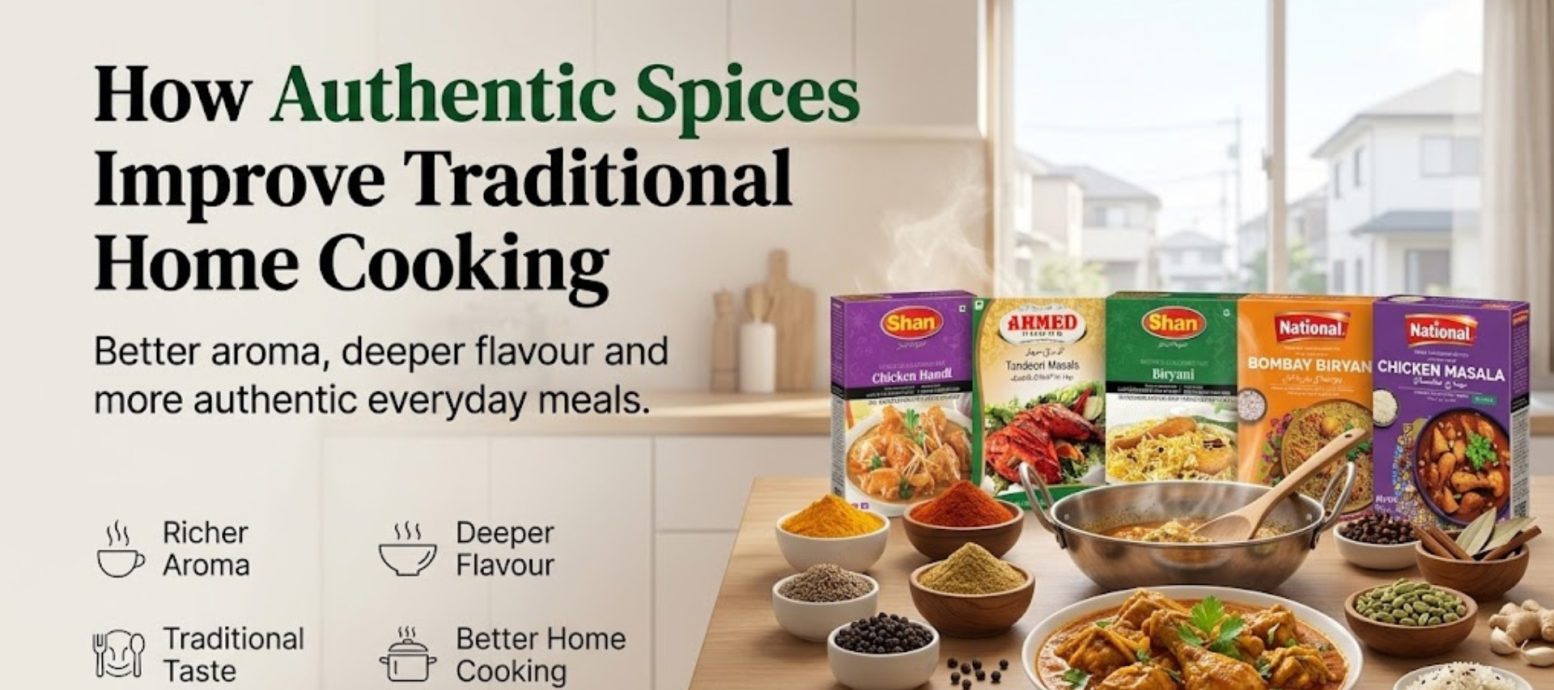
You prepare chicken curry in Japan using halal chicken, onions, tomatoes, and cooking oil, but the final dish still does not smell or taste like the curry you remember from home. The same thing may happen with daal, biryani, pulao, chana, or vegetable curry. The main ingredients are present, yet the meal feels flat or incomplete.
The difference often comes from the spices.
Understanding how authentic spices improve traditional home cooking helps families recreate the aroma, warmth, color, and balanced flavor associated with South Asian food. Authentic cooking is not about adding as much chilli as possible. It is about choosing the right whole and ground spices, using them at the correct stage, and storing them properly.
MTHalal helps customers in Japan shop for individual spices, traditional masala blends, rice, daal, halal meat, frozen foods, sauces, and other grocery essentials through one online platform.
Why Spices Matter in Traditional Cooking
Spices are not simply added to make food stronger. Each one has a different role.
Some spices create heat. Others add color, sweetness, earthiness, fragrance, bitterness, or a warm finishing aroma. Traditional recipes often combine several of these qualities to create balance.
A chicken curry may use turmeric for color, chilli for heat, coriander for body, cumin for warmth, and garam masala for the final aroma. Biryani may use whole cardamom, cloves, cinnamon, bay leaves, black pepper, and a recipe masala to create fragrance through every layer of rice.
Authentic Spices Help Create
They help create:
- Familiar aroma
- Balanced heat
- Rich color
- Deeper gravy
- Traditional texture
- Regional character
- Better marinades
- More satisfying family meals
Without the correct spices, even good quality meat, rice, or lentils may taste unfinished.
Authentic Spices Bring Familiar Aromas Into the Kitchen
Aroma is an important part of traditional food. The smell of cumin in hot oil, cardamom in tea, or cinnamon and cloves in rice can immediately remind people of family meals.
For South Asian families living in Japan, these aromas can make the kitchen feel more familiar.
Spices Known for Strong Aroma
Aromatic options include:
- Green cardamom
- Black cardamom
- Cloves
- Cinnamon
- Cumin seeds
- Black peppercorns
- Bay leaves
- Fennel seeds
- Garam masala
- Curry leaves
When these spices are reasonably fresh and used correctly, they can improve both simple weekday meals and special dishes.
Authentic Flavor Is More Than Chilli
Many people assume that traditional South Asian food must be extremely spicy. In reality, a good dish depends on balance.
Red chilli is only one part of the flavor.
Different Spices Add Different Qualities
- Turmeric adds earthiness and golden color
- Red chilli powder adds heat and color
- Coriander powder gives warmth and body
- Cumin adds a nutty, deep flavor
- Black pepper brings sharp warmth
- Cardamom adds fragrance and gentle sweetness
- Cloves provide strong aromatic warmth
- Cinnamon adds soft sweetness
- Garam masala gives a finishing aroma
- Chaat masala adds tanginess
- Kasuri methi adds a warm, slightly bitter fragrance
A traditional dish tastes better when these qualities support one another instead of one spice dominating everything.
Whole Spices Build the First Flavor Layer
Many South Asian recipes begin by heating whole spices in oil or ghee. This cooking step is often known as tempering, tadka, or baghar.
Heating whole spices releases their natural aroma into the oil. The flavored oil then carries that aroma throughout the dish.
Common Whole Spices Used at the Beginning
Home cooks may use:
- Cumin seeds
- Mustard seeds
- Cardamom
- Cloves
- Cinnamon
- Black peppercorns
- Bay leaves
- Dried red chillies
- Fenugreek seeds
- Fennel seeds
Why This Step Matters
Tempering can:
- Create a stronger aroma
- Flavor the cooking oil
- Improve daal and vegetable dishes
- Give rice a traditional fragrance
- Build depth before ground spices are added
Whole spices should be heated carefully. Burning them can make the entire meal taste bitter.
Ground Spices Create the Main Masala
Ground spices usually create the body of a curry, daal, vegetable dish, or marinade.
They are commonly cooked with onion, tomato, ginger, garlic, yogurt, or a small amount of water.
Basic Ground Masala
A traditional curry base may include:
- Turmeric
- Red chilli powder
- Coriander powder
- Cumin powder
- Black pepper
- Garam masala
Ground spices should normally be cooked briefly so they blend into the masala and lose their raw taste.
However, they can burn quickly. Adding tomato, yogurt, or a small amount of water helps protect them while the masala cooks.
Fresh Ginger and Garlic Support the Spices
Authentic spices work best when combined with fresh aromatics.
Ginger and garlic create depth and help connect the spices with meat, lentils, and vegetables.
Ginger and Garlic Are Useful In
They improve:
- Chicken curry
- Meat curry
- Daal
- Biryani
- Karahi
- Kebabs
- Marinades
- Soups
- Vegetable dishes
Using proper spices without ginger or garlic may still leave some traditional recipes incomplete.
Garam Masala Gives a Traditional Finishing Aroma
Garam masala is usually added near the end of cooking. It often contains aromatic spices such as cardamom, cinnamon, cloves, cumin, coriander, and black pepper.
Adding it too early may weaken its fragrance.
Garam Masala Works Well In
It can improve:
- Chicken curry
- Beef curry
- Mutton curry
- Keema
- Daal
- Chole
- Rajma
- Biryani
- Pulao
- Vegetable curry
Only a small amount is normally required. Too much can overpower the other spices.
Authentic Spices Improve Chicken Curry
Chicken curry depends on a balanced masala rather than only chilli and salt.
A traditional base may include onions, ginger, garlic, tomato, turmeric, coriander, cumin, chilli, and garam masala.
The Right Spices Help Create
They support:
- Better gravy color
- Richer aroma
- Balanced heat
- Less raw tomato flavor
- More depth
- A familiar home cooked finish
A general curry powder may not create the same result as individual spices or a suitable chicken masala.
Authentic Spices Make Daal More Comforting
Daal uses simple and affordable ingredients, but the final tempering can completely change its character.
A plain bowl of lentils becomes more aromatic when hot oil, cumin, garlic, chilli, mustard seeds, or curry leaves are added at the end.
A Simple Daal Tempering May Include
Use:
- Cumin seeds
- Garlic
- Dried red chilli
- Red chilli powder
- Mustard seeds
- Curry leaves
- Hing
- Garam masala
The exact combination depends on the household and regional style.
Authentic Spices Give Biryani Its Identity
Biryani is not simply rice mixed with meat. Its fragrance depends heavily on spices.
Whole spices perfume the rice and stock, while ground seasonings or a biryani blend flavor the meat masala.
Important Biryani Spices
Biryani may include:
- Cumin
- Green cardamom
- Black cardamom
- Cloves
- Cinnamon
- Bay leaves
- Black pepper
- Red chilli powder
- Coriander powder
- Garam masala
- Biryani masala
The aim is to create layers of aroma without making one spice too strong.
Authentic Spices Add Depth to Pulao
Pulao is often milder than biryani, which makes the quality of the whole spices especially important.
A light stock may be flavored with:
- Cumin
- Cardamom
- Cloves
- Cinnamon
- Black pepper
- Bay leaves
- Fennel where used
Because pulao contains fewer strong masalas, stale or weak spices can be more noticeable.
Authentic Spices Improve Chana and Rajma
Chickpeas and kidney beans have a mild natural flavor. Spices help turn them into rich and satisfying meals.
Useful Spices for Chana and Rajma
Use:
- Cumin
- Coriander powder
- Turmeric
- Red chilli
- Garam masala
- Amchur
- Chana masala
- Black pepper
- Bay leaves
A suitable recipe blend can help beginners, while individual spices allow families to control heat and salt.
Authentic Spices Improve Vegetable Cooking
Vegetables become more interesting when the spice combination changes.
Potatoes can be cooked with cumin and turmeric. Cauliflower can use coriander and chilli. Mixed vegetables may use mustard seeds, garam masala, or curry leaves.
Vegetables Can Be Flavored With
Try:
- Cumin seeds
- Mustard seeds
- Turmeric
- Coriander powder
- Chilli powder
- Garam masala
- Fenugreek
- Ajwain
- Curry leaves
- Amchur
This helps families prepare varied meals from simple ingredients.
Authentic Spices Improve Kebabs and Marinades
Kebabs, tikka, grilled chicken, and roasted meat need spices that can flavor the meat before cooking.
A good marinade combines spices with ingredients such as yogurt, ginger, garlic, lemon, or cooking oil.
Useful Marinade Spices
A marinade may include:
- Red chilli powder
- Cumin powder
- Coriander powder
- Black pepper
- Garam masala
- Tandoori masala
- Kebab masala
- Turmeric
- Chaat masala after cooking
Authentic recipe blends make preparation easier, while individual spices provide more control.
Recipe Masalas Help Busy Home Cooks
Traditional spice blends can save time for families, students, and working people.
Instead of measuring many spices separately, customers can choose a blend made for a specific dish.
Recipe Masalas May Be Used For
They can support:
- Biryani
- Pulao
- Chicken curry
- Korma
- Karahi
- Nihari
- Haleem
- Sambar
- Chole
- Kebabs
- Tandoori dishes
- Chaat
Benefits of Recipe Blends
They can offer:
- Faster preparation
- More consistent seasoning
- Clear cooking instructions
- Fewer ingredients to measure
- Easier cooking for beginners
Home cooks should still check the salt, chilli level, ingredients, and serving size.
Individual Spices Give Families More Control
Recipe mixes are convenient, but individual spices make it easier to adjust a dish.
Individual Spices Allow You to Control
You can control:
- Heat
- Salt
- Color
- Aroma
- Regional style
- Children’s preferences
- Family recipes
- Portion size
Many home cooks use both methods. They use basic individual spices and add a smaller quantity of recipe masala for extra aroma.
Authentic Spices Support Regional Recipes
South Asian cooking changes from region to region.
Using the correct regional ingredients helps dishes taste more familiar.
Regional Examples
- Curry leaves and mustard seeds support South Indian dishes
- Panch phoron supports Bengali recipes
- Black cardamom and fennel appear in some northern dishes
- Kasuri methi supports creamy North Indian and Pakistani gravies
- Chaat masala improves snacks and street food
- Ajwain is useful in pakora, paratha, and samosa dough
- Sambar masala supports South Indian lentil dishes
- Sindhi or Bombay biryani masala creates a more specific biryani style
The best spice collection reflects the recipes a household cooks regularly.
Authentic Spices Help Preserve Family Traditions
Traditional recipes are often learned from parents, grandparents, or relatives.
The recipe may not be written in exact measurements. Instead, the cook remembers the smell, color, texture, and balance.
Using the right spices helps families maintain these traditions while living in Japan.
Traditional Food Helps Preserve
It supports:
- Family memories
- Regional cooking styles
- Ramadan meals
- Eid dishes
- Weekend family dinners
- Cultural identity
- Childhood flavors
- Shared cooking knowledge
Children growing up in Japan can learn about family culture through familiar meals.
Freshness Makes a Major Difference
Spices do not remain equally strong forever.
Ground spices gradually lose aroma after opening, especially when exposed to heat, light, air, steam, or moisture.
Signs a Spice May Be Old
Look for:
- Weak aroma
- Faded color
- Hard lumps
- Moisture inside the packet
- Flat flavor
- Long opened storage
- Damage to the package
A spice may still add color while providing very little taste.
Pack Size Affects Freshness
Larger packs may cost less per gram, but they are not economical when most of the spice loses aroma before being used.
Smaller Packs Suit
Choose them for:
- Students
- Single residents
- Occasional cooking
- New spices
- Small kitchens
- Rarely used blends
Larger Packs Suit
Choose them for:
- Large families
- Daily cooking
- Frequently used spices
- Shared kitchens
- Proper airtight storage
Buy according to real household use.
Proper Storage Protects Authentic Flavor
Even good quality spices can lose their value when stored badly.
Store Spices
Keep them:
- In airtight containers
- In a cool cupboard
- Away from direct sunlight
- Away from the stove
- Away from steam
- Away from wet spoons
- Clearly labelled
- Separated into whole and ground sections
Do not leave open packets loosely folded in the cupboard.
Common Spice Mistakes to Avoid
Good spices may still produce disappointing food when used incorrectly.
Avoid These Mistakes
Avoid:
- Using very old spices
- Adding every spice in a large amount
- Burning cumin or mustard seeds
- Burning the ground masala
- Adding garam masala too early
- Ignoring salt already present in recipe mixes
- Using wet spoons
- Storing spices above the stove
- Buying blends for dishes you never cook
- Confusing cumin, fennel, and fenugreek
- Using Japanese curry powder as a direct replacement for every South Asian masala
Good cooking depends on both ingredients and technique.
Building a Basic Traditional Spice Box
A beginner can start with a small but flexible collection.
Ground Spices
Start with:
- Turmeric
- Red chilli powder
- Coriander powder
- Cumin powder
- Garam masala
- Black pepper
Whole Spices
Add:
- Cumin seeds
- Green cardamom
- Cloves
- Cinnamon
- Bay leaves
- Black peppercorns
Recipe Blends
Choose:
- Biryani masala
- Chicken masala
- Chaat masala
- Sambar masala or another regional blend
This collection can support many home meals.
Traditional Spices for Students
Students in Japan may have a small kitchen and limited budget.
A compact spice collection helps them cook simple meals without buying too many products.
Student Spice Set
Keep:
- Salt
- Turmeric
- Red chilli powder
- Coriander powder
- Cumin
- Garam masala
- Black pepper
- One chicken or curry masala
- One biryani blend
These products can support curry, daal, rice, chicken, vegetables, and quick meals.
Traditional Spices for Families
Families may need a wider collection because they cook more often.
Family Spice Set
Families may keep:
- Everyday ground spices
- Whole aromatic spices
- Mustard seeds
- Fenugreek seeds
- Kasuri methi
- Ajwain
- Chaat masala
- Biryani masala
- Chicken masala
- Meat masala
- Kebab masala
- Regional blends
The collection should match the family’s regular meals.
Buy Spices With Complete Meal Ingredients
Spices become useful when the main ingredients are also available.
Add to Your Order
Depending on the recipes, consider:
- Halal chicken
- Beef or mutton
- Basmati rice
- Daal and lentils
- Chickpeas
- Beans
- Cooking oil
- Flour
- Frozen paratha
- Ginger garlic paste
- Pickles
- Chutneys
- Sauces
- Tea and snacks
This helps customers prepare full meals without another shopping trip.
How MTHalal Supports Traditional Home Cooking
MTHalal offers individual spices, whole spices, and recipe masalas through its Masala & Spices range. Current listings include cumin, coriander powder, turmeric, chilli powder, black pepper, cloves, garam masala, biryani mixes, curry blends, sambar masala, and other regional seasonings.
Customers can also browse halal meat, rice, daal, oils, sauces, frozen foods, pickles, and pantry essentials.
MTHalal Helps With
- Ground spices
- Whole spices
- Pakistani masalas
- Indian masalas
- Regional blends
- Biryani masala
- Curry mixes
- Kebab masala
- Halal meat
- Rice and lentils
- Online ordering
- Delivery across Japan
Current ingredients, brands, pack sizes, stock, prices, and delivery terms should be reviewed on the live store.
Traditional Cooking Checklist
Before cooking, check:
- Are the spices still aromatic?
- Do I have the correct whole spices?
- Is the recipe mix suitable for the dish?
- Does the blend already contain salt?
- Is the chilli level suitable for my family?
- Should the whole spices be tempered first?
- Should garam masala be added near the end?
- Do I have fresh ginger and garlic?
- Are the spices protected from moisture?
- Do I have the rice, daal, meat, or vegetables needed?
This routine can improve consistency.
Internal Link Suggestion
[Internal Link Suggestion: Browse Masala & Spices on MTHalal]
FAQs
1. How do authentic spices improve traditional home cooking?
They improve aroma, color, warmth, balance, and depth. They help curry, daal, rice, kebabs, vegetables, and regional recipes taste more familiar.
2. Why does homemade curry sometimes taste flat?
The spices may be old, undercooked, unbalanced, or stored badly. The dish may also be missing proper tempering, fresh ginger and garlic, or a finishing spice such as garam masala.
3. Are whole spices better than ground spices?
Both are important. Whole spices build aroma through tempering and slow cooking, while ground spices form the main masala in curry, daal, and marinades.
4. Can ready-made masala mixes improve home cooking?
Yes. Recipe mixes can save time and provide balanced seasoning. Check the ingredients, salt, chilli level, and cooking instructions before use.
5. Where can I buy authentic South Asian spices in Japan?
You can check specialist South Asian stores, halal grocery shops, international supermarkets, and online grocery platforms such as MTHalal.
Final Thought
Understanding how authentic spices improve traditional home cooking makes it easier to recreate familiar family meals while living in Japan. Good results come from fresh spices, proper tempering, balanced quantities, suitable regional blends, and adding each ingredient at the correct stage.
MT Halal helps customers browse whole spices, ground seasonings, recipe masalas, halal meat, rice, daal, and other traditional grocery essentials through one online platform. With a practical spice box and careful storage, simple ingredients can become comforting meals that bring the familiar aroma and taste of home back into the kitchen.