Biryani Masala vs Garam Masala: What’s the Difference?
You’re preparing chicken biryani and find a packet of garam masala in your kitchen cupboard. The recipe calls for biryani masala, but the two blends seem to contain many of the same spices.
Can you use garam masala instead? Will the biryani taste the same?
This is a common question for Pakistani and Indian home cooks, especially when living in Japan, where finding specific South Asian spice blends may require shopping at a specialist grocery store.
The main difference between biryani masala and garam masala is their purpose. Biryani masala is a recipe-oriented seasoning blend designed for biryani, while garam masala is a more versatile aromatic spice blend used in curries, vegetables, lentils, and rice dishes.
Although their ingredients overlap, they are not always interchangeable.
Here’s how to distinguish them, choose the right blend, and make sensible substitutions when cooking Pakistani food at home.
Biryani Masala vs Garam Masala: Quick Comparison
Both blends are part of South Asian cooking, but their formulations and applications differ.
| Feature | Biryani Masala | Garam Masala |
|---|---|---|
| Main purpose | Seasoning biryani | Adding warm spice aroma to different dishes |
| Common ingredients | Cumin, coriander, cardamom, cinnamon, cloves and other spices | Cumin, coriander, cinnamon, cloves, cardamom, black pepper and others |
| Chili content | Some blends contain chili | Varies; many blends focus more on aromatic warmth |
| Salt | May contain added salt | Often salt-free, but check the label |
| Additional ingredients | Some mixes contain herbs, souring agents or other seasonings | Usually a blend of aromatic spices |
| Typical dishes | Chicken, beef, mutton or vegetable biryani | Curry, daal, vegetables, meat dishes and pulao |
| When added | According to the biryani recipe or packet instructions | Often near the later stages of cooking, depending on the recipe |
| Substitution | Usually more dish-specific | Can form part of a homemade biryani seasoning |
These are typical differences, not fixed formulas. Ingredients vary between brands, regions, and family recipes.
1. What Is Biryani Masala?
Biryani masala is a spice blend used to season biryani, a layered or mixed rice dish commonly prepared with basmati rice, meat or vegetables, aromatics, and other ingredients.
The blend is intended to complement the full dish, not just the meat or rice separately.
Depending on the brand, it may combine warm whole-spice flavors with ground chilies, coriander, cumin, herbs, and other seasonings.
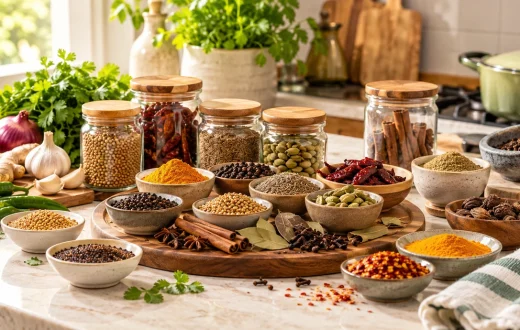
Common Biryani Masala Ingredients
Many blends use a selection of:
- Cumin
- Coriander
- Cinnamon
- Cardamom
- Cloves
- Black pepper
- Bay leaf
- Chili
- Turmeric
- Other recipe-specific spices
Some commercial mixes also include salt, dehydrated ingredients, or souring agents.
There is no single universal biryani masala recipe. A Sindhi-style blend may differ substantially from a Hyderabadi-style or Bombay-style preparation.
Always read the specific packet’s ingredient list.
What Does Biryani Masala Taste Like?
Biryani masala typically creates a layered aroma with warming, earthy, and sometimes spicy notes.
The precise taste depends on the blend.
Some are chili-forward, while others emphasize cardamom, cloves, cinnamon, and other aromatic ingredients.
A packet labeled biryani masala is not automatically extremely spicy.
For a milder result, start with a smaller amount and follow the recipe or manufacturer instructions.
2. What Is Garam Masala?
Garam masala is a mixture of aromatic spices commonly used throughout South Asian cooking.
The name is often associated with warming spices, although the blend itself does not necessarily produce a hot, chili-heavy flavor.
Traditional recipes vary across regions and households.
Common Garam Masala Ingredients
A blend might contain:
- Cinnamon
- Cloves
- Green or black cardamom
- Black pepper
- Cumin
- Coriander
- Nutmeg
- Other aromatic spices
Not every blend contains all these ingredients.
Some recipes use additional spices, while others keep the mixture simple.
What Does Garam Masala Taste Like?
Garam masala is usually valued for its fragrant, warm, and complex aroma.
Cloves and cinnamon may provide sweet, woody notes. Cardamom contributes fragrance, while pepper and cumin add warmth and depth.
The result is often aromatic rather than sharply spicy.
What Dishes Use Garam Masala?
Garam masala can be added to:
- Chicken curry
- Beef or mutton curry
- Daal
- Vegetable dishes
- Chana masala
- Keema
- Pulao
- Selected kebab preparations
Its flexibility makes it a useful ingredient for households that cook different Pakistani and Indian meals.
3. Are the Ingredients in Both Masalas the Same?
They can share several ingredients, but the proportions and additional seasonings may be different.
For example, both blends may contain cumin, cardamom, cloves, cinnamon, coriander, and black pepper.
However, a prepared biryani mix may also contain chili, turmeric, salt, dried herbs, or souring ingredients that are absent from a particular garam masala blend.
These differences affect how much of the seasoning should be used.
Why Spice Proportions Matter
Two mixtures can contain similar ingredients yet produce very different flavors.
A blend with a greater proportion of cloves may have a stronger, sharper aroma.
A blend emphasizing chili may taste noticeably hotter.
A blend containing salt can change the seasoning of the entire dish.
Therefore, choosing a masala based only on the ingredients listed on the front of the package is not enough.
Check the full ingredients and recommended quantity before using either blend.
4. Which Masala Is Better for Chicken Biryani?
For a standard biryani recipe designed around a ready-made seasoning packet, biryani masala is generally the more convenient option.
It is intended to provide a combination of spices suitable for the dish.
That said, you can also make biryani from individual spices and a carefully balanced amount of garam masala.
Using Ready-Made Biryani Masala
A typical chicken biryani preparation may combine:
- Halal chicken
- Basmati rice
- Onion
- Tomato or yogurt, depending on the recipe
- Ginger-garlic paste
- Biryani masala
- Oil or ghee
- Mint and coriander, where used
- Whole spices, if required by the recipe
The seasoning is often added while preparing the chicken masala, but the exact timing depends on the recipe.
Follow the packet instructions because some mixes already contain ingredients that would otherwise be added separately.
Using Garam Masala in Homemade Biryani
If you prefer to season from scratch, garam masala can contribute the warm aromatic portion of your spice mixture.
You may still need other ingredients, such as chili, turmeric, coriander, cumin, salt, and fresh herbs, depending on the recipe.
Using garam masala alone may not recreate the flavor of your preferred packaged biryani mix.
5. Can You Substitute Garam Masala for Biryani Masala?
Yes, but garam masala is not a direct one-to-one replacement for every biryani masala product.
It can provide part of the aromatic base, but you may need additional seasonings.
A Practical Substitute for a Home-Style Biryani
If your recipe calls for a biryani blend and you only have garam masala, start with:
- A modest amount of garam masala
- Cumin and coriander, if the recipe needs them
- Chili powder according to your preferred heat level
- Turmeric, where appropriate
- Salt to taste
- Fresh mint, coriander, or other aromatics called for by the recipe
Add seasonings gradually rather than trying to match a commercial blend tablespoon for tablespoon.
Why One-to-One Substitution Can Go Wrong
Commercial biryani masala may contain salt and chili in addition to aromatic spices.
Garam masala may be more concentrated in cloves, cinnamon, or cardamom.
Using the same quantity could make the dish too strongly aromatic while still missing some of the seasoning expected in biryani.
The safest approach for flavor is to begin with a smaller amount, taste the cooked masala, and adjust.
6. Can You Use Biryani Masala Instead of Garam Masala?
Sometimes, but this substitution is even more dependent on the product.
For example, if a curry recipe calls for a small amount of garam masala at the end, replacing it with a commercial biryani mix may also introduce extra chili, salt, or sourness.
That can change the finished curry.
When It Might Work
A small amount of biryani masala may suit a strongly seasoned meat curry if its ingredients complement the recipe.
When to Avoid It
Be cautious when preparing:
- A mild vegetable dish
- A delicately seasoned daal
- A curry that already has enough salt and chili
- A recipe where only a subtle aromatic finish is intended
In these situations, garam masala is usually more predictable.
7. When Should You Add Biryani Masala and Garam Masala?
The timing can influence the final aroma.
When to Add Biryani Masala
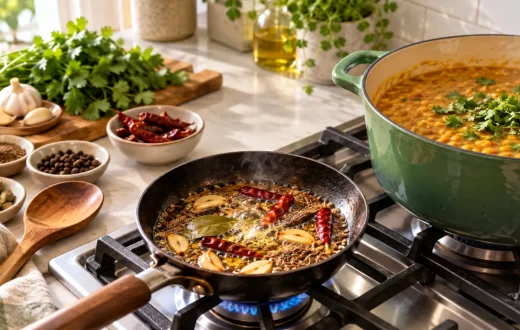
In many biryani recipes, the spice blend is added while cooking the meat or vegetable masala.
This gives the seasoning time to combine with onions, tomatoes, yogurt, oil, and the main ingredients.
Some recipes use additional whole spices in the rice water or during layering.
Follow the method appropriate to your chosen biryani style.
When to Add Garam Masala
Garam masala is frequently added near the end of cooking to give a curry a fragrant finish.
However, some traditional recipes add it earlier or use it in stages.
It is not restricted to one moment in the cooking process.
Quick Guide
| Dish | Common seasoning approach |
|---|---|
| Chicken biryani | Biryani masala during chicken masala preparation |
| Mutton biryani | Biryani masala as directed by the recipe |
| Chicken curry | Garam masala during or near the later cooking stages |
| Daal | Small amount of garam masala, if desired |
| Vegetable curry | Garam masala according to the recipe |
| Pulao | Often whole spices, sometimes garam masala |
8. How Much Masala Should You Use?
There is no reliable universal quantity for all biryani or garam masala brands.
The correct amount depends on:
- The product formulation
- Amount of meat, rice, or vegetables
- Chili and salt already in the recipe
- Your household’s preferences
- Whether other whole or ground spices are being used
For Packaged Biryani Masala
Begin with the quantity recommended on the product packaging.
If you’re preparing a smaller batch, reduce the seasoning proportionately when appropriate.
For Garam Masala
Start with a modest quantity and adjust to your recipe.
Because garam masala can contain strong spices, adding too much may overpower the main ingredients.
A useful cooking habit is to measure spices into a small dish before adding them to the pan.
This makes accidental over-seasoning less likely.
9. Which Masala Should You Keep in a Small Kitchen?
For someone living alone or cooking in a compact Japanese apartment, buying every spice blend may not be necessary.
Think about the dishes you make most often.
| Cooking habit | More practical choice |
|---|---|
| Frequent biryani cooking | Biryani masala |
| Regular curries and vegetable dishes | Garam masala |
| Daal and everyday Pakistani meals | Garam masala, according to recipe |
| Occasional biryani and frequent curries | Garam masala plus individual spices |
| Traditional biryani using a packet recipe | A suitable biryani seasoning mix |
| Wide variety of South Asian dishes | Both, if used regularly |
If you frequently cook biryani, keeping a dedicated biryani masala can simplify preparation.
If you mostly cook curries, garam masala may be the more versatile purchase.
The decision should reflect the meals your household actually prepares.
10. Are All Biryani Masala Brands the Same?
No. Brands can differ substantially in their recipes.
One product may be more chili-forward, another may include more whole-spice notes, and another may use additional souring or seasoning ingredients.
The same applies to garam masala.
Before buying, compare:
Ingredients: Check the complete list rather than relying on the product name.
Salt content: Some recipe mixes include salt, which affects the amount needed elsewhere in the dish.
Chili level: Don’t assume every biryani mix has the same heat.
Cooking directions: Some mixes are designed for specific quantities of rice and meat.
Package size: Choose a pack you can realistically use while its aroma remains good.
Halal suitability: For compound seasoning products, verify ingredients and relevant halal information when required.
11. What About Homemade Biryani Masala and Garam Masala?
Making a spice blend at home gives you more control over the ingredients and flavor.
For a basic garam masala, home cooks may grind a combination of cinnamon, cardamom, cloves, cumin, coriander, and black pepper.
For biryani masala, the recipe may include those aromatic spices alongside other seasonings selected for a particular biryani style.
Advantages of Homemade Blends
- More control over flavor
- Adjustable spice proportions
- Ability to avoid unwanted ingredients
- Opportunity to experiment with regional recipes
Advantages of Ready-Made Blends
- Convenient for occasional cooking
- No need to grind several spices
- Clear packet instructions in many products
- Often designed for a particular dish
Neither approach is automatically better.
A fresh homemade blend can be satisfying, while a suitable ready-made mix can save preparation time.
12. How to Store Biryani Masala and Garam Masala
Both blends gradually lose aroma after opening.
Store them in clean, dry, well-sealed containers away from heat, direct sunlight, and steam.
Practical Storage Tips
- Close packets or jars immediately after use.
- Avoid adding spices with wet spoons.
- Do not shake an open spice packet over a steaming pot.
- Keep spices away from a hot stove or cooker.
- Follow the manufacturer’s storage instructions.
- Buy pack sizes suited to your cooking frequency.
If a blend develops an unusual musty smell, visible mold, moisture damage, or signs of pest contamination, discard it.
A weak aroma may indicate declining culinary quality, but appearance and smell alone cannot guarantee product safety.
13. Buying Biryani Masala and Garam Masala in Japan
Pakistani and Indian cooking often relies on spices that are not always available in general Japanese supermarkets.
MT Halal Mart offers South Asian grocery products through its online shop with home delivery across Japan, alongside a physical grocery store in Yotsukaido, Chiba.
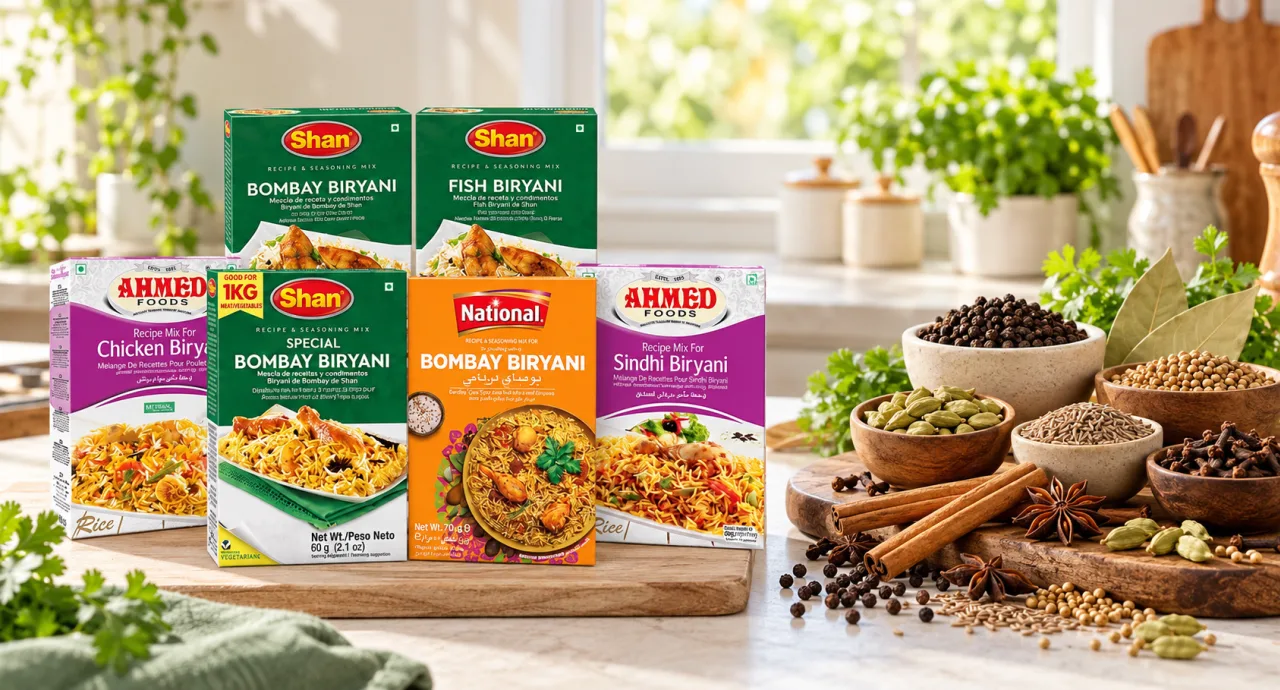
Its Masala & Spices category features whole spices, ground seasonings, and recipe mixes.
Browse the MT Halal Masala & Spices Category to check the current selection.
For a wider explanation of sourcing traditional seasonings, read Where to Find Authentic South Asian Spices While Living in Japan.
What to Buy Alongside Biryani Masala
If you’re planning biryani, you may also need:
- Basmati rice
- Halal chicken, beef, or mutton
- Onions
- Yogurt, depending on the recipe
- Ginger-garlic paste
- Cooking oil or ghee
- Mint and coriander
- Additional whole spices
For long-grain rice options, explore the MT Halal Rice Category.
Choose the seasoning and other ingredients according to your recipe rather than assuming that every spice mix includes everything required.
Frequently Asked Questions
Is biryani masala the same as garam masala?
No. Biryani masala is generally a dish-specific seasoning blend, while garam masala is a versatile aromatic spice mixture used in many South Asian recipes.
Can I make biryani using only garam masala?
You can use garam masala as part of homemade biryani seasoning, but it may not provide all the flavors of a recipe-specific biryani mix. Additional spices and ingredients may be necessary.
Is biryani masala spicier than garam masala?
Some biryani mixes contain more chili, but this varies by brand. Garam masala often emphasizes aromatic warmth rather than chili heat.
Does biryani masala contain salt?
Some packaged biryani masalas contain added salt. Others may not. Always check the product’s ingredients and preparation instructions.
Can garam masala be used in chicken curry?
Yes. Garam masala is commonly used in chicken curry to add aromatic spice notes.
Should garam masala be added at the beginning or end?
It depends on the recipe. Many dishes add garam masala toward the end for a fresh aromatic finish, while others incorporate it earlier.
Is homemade garam masala better than packaged masala?
Both can work well. Homemade blends allow customization, while ready-made products offer convenience. Flavor depends on the ingredients, freshness, and recipe.
Where can I buy South Asian masalas in Japan?
MT Halal Mart offers spices and seasoning mixes through its online grocery shop and its physical store in Yotsukaido, Chiba. Check the live catalog for current products.
Final Thoughts: Which Masala Should You Choose?
Biryani masala and garam masala share some spices, but they are designed for different roles in the kitchen.
Choose biryani masala when preparing a biryani recipe that calls for a dedicated seasoning blend.
Choose garam masala when you need a versatile aromatic spice mixture for curry, daal, vegetables, or other Pakistani and Indian dishes.
If you need to substitute one for the other, check the ingredients first and adjust gradually. Different blends may contain very different amounts of chili, salt, and aromatic spices.
By choosing the right seasoning for your recipe, you can prepare familiar South Asian meals with more confidence while living in Japan.
Explore the MT Halal Masala & Spices Category to find suitable spices and seasoning mixes for your next home-cooked meal.