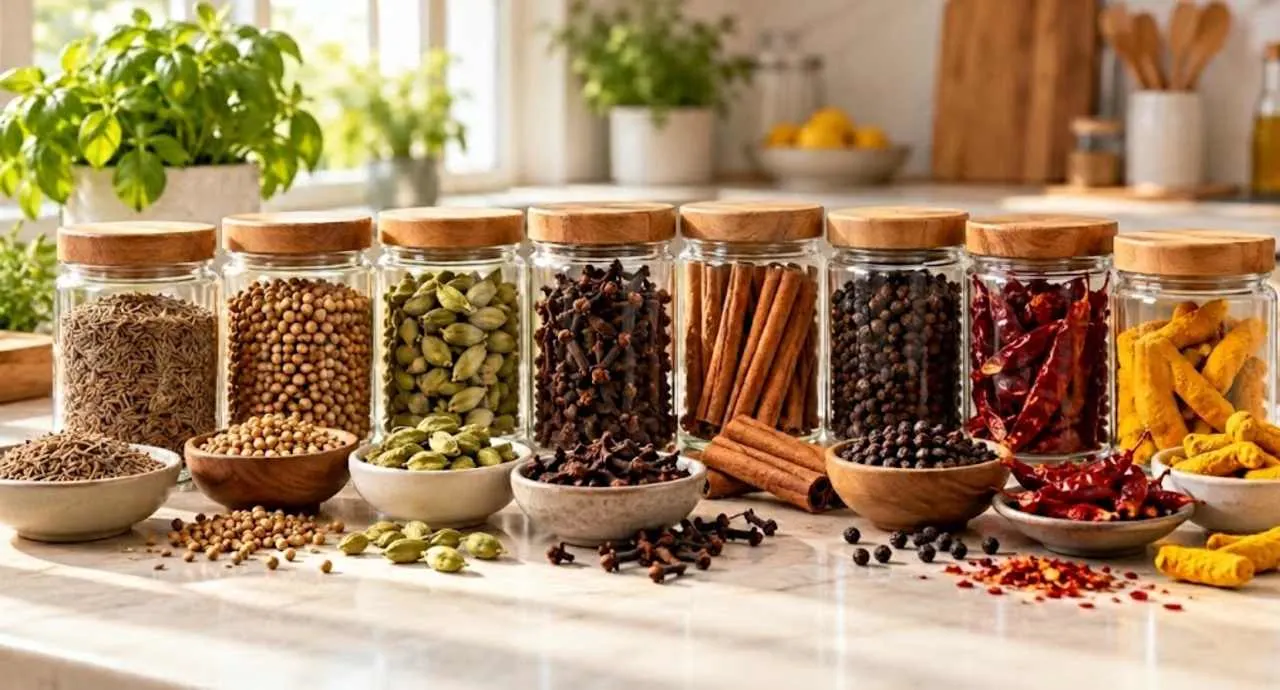
How to Tell If Your Spices Have Lost Their Aroma and Freshness
You open a packet of cumin powder to prepare daal, but the familiar warm aroma is barely noticeable. Your turmeric looks dull, or the garam masala you bought months ago no longer gives your curry the flavor you expect.
Does that mean your spices have expired, or have they simply lost their strength?
The easiest way to check spice freshness is to examine the aroma, appearance, texture, and storage condition. A spice that smells weak may have lost flavor, while visible mold, unexpected dampness, or signs of insects indicate a more serious problem.
For Pakistani and Indian households living in Japan, understanding these differences can help you avoid disappointing cooking results and unnecessary grocery waste.
This guide explains how to recognize stale spices, test whole and ground spices, and decide when replacement is the better option.
How Can You Tell If Spices Are No Longer Fresh?
Spices gradually lose their aromatic compounds after harvesting, processing, grinding, and storage.
A spice does not always become unsafe simply because its fragrance has weakened. In many cases, it becomes less effective at flavoring food.
Here are the most useful warning signs:
| What you notice | What it may indicate | What to do |
|---|---|---|
| Very weak aroma | Loss of flavor strength | Test and consider replacing |
| Dull, faded appearance | Aging or exposure to light | Check aroma and overall condition |
| Damp or unusually sticky powder | Moisture exposure | Discard if spoilage or contamination is suspected |
| Visible mold | Spoilage | Discard |
| Insects, larvae, or webbing | Pest contamination | Discard |
| Strange, musty, or rancid smell | Possible deterioration | Discard |
| Past best-before date | Quality may have declined | Check label and condition; do not rely on date alone |
Important: Smell and appearance cannot guarantee that a spice is microbiologically safe. If storage conditions are uncertain or contamination is suspected, do not use it.
1. Use the Aroma Test First
The most recognizable characteristic of many spices is their fragrance.
Fresh cumin should have a warm, earthy aroma. Cardamom should smell noticeably fragrant, while cloves usually have a strong, distinctive scent.
When these aromas become faint, the spice may no longer deliver the expected flavor.
How to Test Ground Spices
- Place a small amount of spice on a clean, dry spoon.
- Smell it from a comfortable distance.
- Compare the aroma with what you normally expect from that spice.
- Check whether it smells pleasantly characteristic, very weak, or unusual.
If cumin powder has almost no cumin aroma, it may be time to replace it.
Do not taste a spice that looks damp, moldy, infested, or otherwise suspicious.
How to Test Whole Spices
Whole spices often retain their aroma better than ground spices.
For a small quantity of cumin or coriander seeds, gently crush a few seeds with a clean, dry utensil.
The freshly broken surface should release a more noticeable aroma if the spice still has good flavor strength.
For cardamom, open one pod and examine the seeds.
You do not need to grind the entire jar to perform this test.
2. Check Whether the Color Has Changed
Color is another useful clue, although it should not be used alone.
Spices naturally vary in color depending on the variety, origin, processing, and brand.
Turmeric
Turmeric typically has a recognizable yellow-orange appearance.
If the powder looks unusually faded compared with a known fresh sample of the same product, its quality may have declined.
However, color alone cannot confirm freshness or safety.
Red Chili Powder
Chili powder can range from bright red to darker red-brown depending on the chili variety.
Noticeable fading may suggest exposure to light or aging.
Do not assume that darker or brighter chili powder is automatically better.
Coriander and Cumin Powder
Ground coriander and cumin may become less aromatic long before a dramatic color change is visible.
For these spices, smell is often a more useful quality indicator than appearance.
A Simple Rule
Compare the product with its original characteristics, not with a completely different brand or variety.
3. Check for Dampness, Clumps, and Mold
Powdered spices can absorb moisture from their surroundings.
This is particularly relevant in humid conditions.
A few loose clumps do not always mean the product is spoiled. Some fine powders naturally settle or compress.
However, unexpected wetness, persistent sticky clumps, musty odors, or visible growth should be treated seriously.
Signs That Require Extra Caution
- Moisture visible inside the container
- Powder stuck together in wet-looking masses
- Mold-like growth
- A strong musty or unpleasant smell
- Packaging damaged by water
- Evidence of insects or other contamination
If you suspect mold or contamination, discard the affected product rather than trying to dry it out and continue using it.
Removing only the visible mold is not a reliable solution.
4. Whole Spices vs Ground Spices: Which Lose Aroma Faster?
Whole and ground spices do not age in exactly the same way.
Grinding exposes more surface area to air, which can accelerate the loss of aromatic compounds.
As a result, ground spices generally lose their peak flavor sooner than comparable whole spices under similar storage conditions.
| Spice form | General freshness characteristic | Example |
|---|---|---|
| Whole seeds | Aroma often lasts longer | Cumin, coriander, mustard |
| Whole pods | Aromatic compounds remain more protected | Cardamom |
| Whole bark or pieces | Can retain fragrance well | Cinnamon sticks, cloves |
| Ground spice | Larger exposed surface area | Cumin powder, turmeric |
| Mixed masala powder | Flavor strength depends on the blend and storage | Garam masala, biryani masala |
This does not mean whole spices last indefinitely.
Their aroma can also weaken if they are stored for too long or exposed to heat, light, and moisture.
5. Practical Freshness Checks for Common Pakistani Spices
Different spices have different natural aromas, so checking them requires some familiarity.
| Spice | Freshness clue | Possible quality decline |
|---|---|---|
| Cumin seeds | Earthy aroma when gently crushed | Little fragrance after crushing |
| Coriander powder | Mild citrus-like, warm aroma | Flat or noticeably weakened scent |
| Cardamom pods | Strong fragrance when opened | Dry, faintly scented seeds |
| Cloves | Distinctive intense aroma | Greatly reduced fragrance |
| Cinnamon sticks | Warm, sweet woody scent | Barely noticeable aroma |
| Red chili powder | Characteristic chili aroma | Flat smell or unexpected mustiness |
| Turmeric powder | Characteristic earthy aroma | Very weak aroma or unusual deterioration |
| Garam masala | Recognizable balanced spice fragrance | Flat, indistinct scent |
These observations help assess culinary quality, not guarantee food safety.
A Special Note About Prepared Masala
Biryani masala, karahi masala, and garam masala may contain different combinations of ingredients.
Their aromas vary by recipe and manufacturer.
Compare a blend with its expected product characteristics rather than assuming all masalas should smell the same.
Also check the package instructions and ingredients for any specific storage requirements.
6. How Long Do Spices Usually Keep Their Flavor?
Spice shelf life varies by product, packaging, processing, and storage environment.
As general quality estimates, properly stored whole spices often retain useful flavor for longer than ground varieties.
| Spice type | Broad quality planning range |
|---|---|
| Many ground spices | Approximately 1–2 years |
| Many whole spices | Approximately 2–4 years |
| Ground spice blends | Often around 1–2 years |
| Dried leafy herbs | Often around 1–3 years |
These are general quality estimates, not guaranteed expiration periods.
A product may lose noticeable aroma earlier, especially after opening or exposure to unfavorable conditions.
Always follow the manufacturer’s best-before date, storage directions, and any shorter recommended period after opening.
Is a Best-Before Date the Same as an Expiry Date?
Not necessarily.
A best-before date generally refers to expected product quality under specified storage conditions.
It should not be interpreted as proof that food is safe regardless of its condition.
If a spice shows signs of contamination, discard it even if the date has not passed.
If the best-before date has passed, do not assume that the spice remains suitable simply because it looks normal. Consider the manufacturer’s guidance and how the product was stored.
7. Why Do Spices Lose Their Aroma?
Several everyday factors can reduce spice quality.
Exposure to Air
Frequent exposure to air allows volatile aromatic compounds to dissipate over time.
Ground spices are particularly vulnerable because of their larger exposed surface area.
Heat
Keeping spices beside an oven or stove exposes them to repeated warming.
This can accelerate the loss of desirable flavor compounds.
Sunlight
Direct light can contribute to color and quality changes.
A closed cupboard is generally preferable to an open shelf exposed to strong sunlight.
Moisture
Steam, condensation, and damp utensils can introduce moisture into spice containers.
Moisture creates quality problems and, in some circumstances, conditions that support spoilage.
Time After Opening
A sealed commercial package may preserve aroma better than a frequently opened jar.
Once opened, storage conditions become especially important.
8. How to Check Spices in Japan’s Humid Weather
Some seasons in Japan bring high humidity, including periods of the rainy season and hot summer weather.
If your kitchen becomes humid, pay closer attention to container seals and moisture exposure.
Try a Simple Cupboard Check
Inspect where your spices are stored.
Ask yourself:
- Is the cupboard close to steam from a kettle or rice cooker?
- Are spice jars beside the stove?
- Does the cabinet become warm during cooking?
- Are containers properly sealed?
- Do you sometimes use wet measuring spoons?
- Is moisture forming inside any jar?
If the answer to several questions is yes, your storage location may need improvement.
Keep Cooking Steam Away
Avoid shaking spices directly from an open jar over a steaming pot.
Instead, measure the quantity into a clean, dry spoon or small dish before adding it to the recipe.
This reduces moisture entering the main spice container.
For small Japanese apartment kitchens, keeping spice containers inside a closed, dry cabinet away from the cooking area is often practical.
9. Can You Restore the Flavor of Old Spices?
Sometimes a spice that has lost a little aroma can release more fragrance when prepared appropriately.
For example, gently heating suitable whole cumin seeds as part of a recipe can help release their remaining aromatic compounds.
However, heating cannot restore aromatic compounds that have already been lost.
A nearly flavorless spice will not become fully fresh again just because it is toasted.
When You Might Still Use a Spice
A dry spice with no signs of contamination but slightly reduced aroma may still have culinary value, provided its packaging and storage information support continued use.
It may simply deliver a milder flavor.
When Replacement Is Better
Replace the spice if:
- Its characteristic aroma is almost completely gone.
- The flavor is noticeably poor.
- There is a strange or rancid smell.
- Moisture damage is suspected.
- Mold or pest contamination appears.
- The manufacturer’s instructions indicate it should no longer be used.
Do not attempt to rescue potentially spoiled spices through frying, roasting, or mixing them with fresh ingredients.
10. How to Avoid Buying More Spices Than You Can Use
A large spice packet may offer a lower price per gram, but that doesn’t necessarily make it the better purchase.
If you cook only occasionally, a smaller pack may help you use the spice while its aroma is stronger.
Match Pack Size to Your Cooking Routine
| Cooking habit | Practical buying approach |
|---|---|
| Cooking for one person occasionally | Smaller spice packets |
| Preparing daal and curry several times weekly | Regularly used spices in moderate quantities |
| Large family cooking every day | Larger packs for frequently used ingredients |
| Testing a new spice blend | Small trial pack |
| Preparing special dishes occasionally | Buy only the amount you realistically expect to use |
You do not need to replace every spice in your kitchen at once.
Start with those that have clearly lost their characteristic flavor or developed signs of deterioration.
11. Create a Simple Monthly Spice Freshness Check
A short kitchen check can help you identify problems before they affect cooking.
You can use the following routine once a month or whenever reorganizing the cupboard.
| Check | What to look for |
|---|---|
| Packaging | Broken seals, damaged bags, moisture |
| Aroma | Noticeably weak or unusual smell |
| Appearance | Unusual changes, mold, insects |
| Labels | Product identity and date information |
| Storage | Heat, sunlight, steam exposure |
| Quantity | Large amounts unlikely to be used |
| Priority | Which products should be used or replaced first |
This is a quality-management habit rather than a formal food-safety test.
Use Older Products First
When purchasing a replacement spice, place the newer pack behind the older suitable pack.
If the older spice has spoiled, discard it rather than keeping it for the sake of using it first.
Label Opened Containers
If you transfer spices into reusable jars, record the spice name and opening date.
Preserve important package information, including the original best-before date and any storage instructions.
This makes it easier to track how long a product has been open.
12. Buying Replacement Spices in Japan
If several spices in your kitchen have become weak or unsuitable for use, focus on replacing the ingredients you cook with most often.
For Pakistani home cooking, these may include cumin, coriander, turmeric, chili powder, cardamom, cinnamon, and selected spice mixes.
MT Halal Mart operates as a halal store in Japan with an online grocery shop offering delivery across Japan and a physical store in Yotsukaido, Chiba.
Its grocery catalog includes whole spices, ground spices, and prepared masala products. Current stock and pack sizes vary.
Explore the MT Halal Masala & Spices Category to review the available selection.
For more guidance on sourcing South Asian seasonings, read Where to Find Authentic South Asian Spices While Living in Japan.
What to Check Before Ordering
When choosing replacement products, review:
- Correct spice name and form
- Ingredients, especially for seasoning mixes
- Package weight
- Manufacturer’s date information
- Sealed packaging
- Storage instructions
- Current availability
- Halal suitability where relevant
Single-ingredient spices and prepared masala mixes are not necessarily the same from an ingredient-verification perspective.
Read blended-seasoning labels carefully if you have specific halal requirements.
Frequently Asked Questions
How do you know when spices are stale?
Spices may be stale when their characteristic aroma becomes very weak or the flavor they provide is noticeably reduced. Check appearance, packaging, and storage condition as well.
Do spices become unsafe after their best-before date?
Not automatically. Best-before dates generally concern quality, but safety depends on the product and storage history. Follow manufacturer instructions and discard spices showing spoilage or contamination.
Can ground spices lose flavor before their best-before date?
Yes. Exposure to air, heat, and moisture can reduce aroma even when the printed date has not passed.
Do whole spices stay fresh longer than ground spices?
Generally, whole spices retain aroma longer because less surface area is exposed to air. The actual period varies by spice and storage conditions.
Can you still use spices that have lost their smell?
A spice with weakened aroma may have lost much of its culinary value. If storage conditions are uncertain or there are signs of deterioration, replace it rather than relying on smell alone.
Should you refrigerate ground spices in Japan?
Usually, a cool, dry, sealed cupboard is a practical choice. Refrigeration can introduce condensation when containers are frequently opened. Follow specific product instructions.
How can you tell if garam masala is old?
Compare its aroma with the normal fragrance of that particular blend. If it smells unusually faint, stale, musty, or rancid, assess its condition and consider replacing it.
Where can you buy spices for Pakistani cooking in Japan?
MT Halal Mart offers whole spices, ground spices, and prepared masalas through its online grocery store and physical location in Yotsukaido, Chiba. Check current listings for product availability.
Final Thoughts: Good Spice Flavor Starts with Freshness
You don’t need professional equipment to assess the condition of spices in your kitchen.
Start with the aroma, check the appearance and texture, review the date information, and consider how the product has been stored.
Remember that a weak spice is not necessarily spoiled, but a contaminated spice should not be used.
Whole spices often keep their flavor longer, while ground spices may require closer attention after opening.
By choosing suitable pack sizes, avoiding moisture, and checking your cupboard periodically, you can enjoy more consistent flavor in Pakistani daal, curry, biryani, and everyday meals while living in Japan.
If it’s time to replenish your seasonings, visit the MT Halal Masala & Spices Category to explore currently available products.