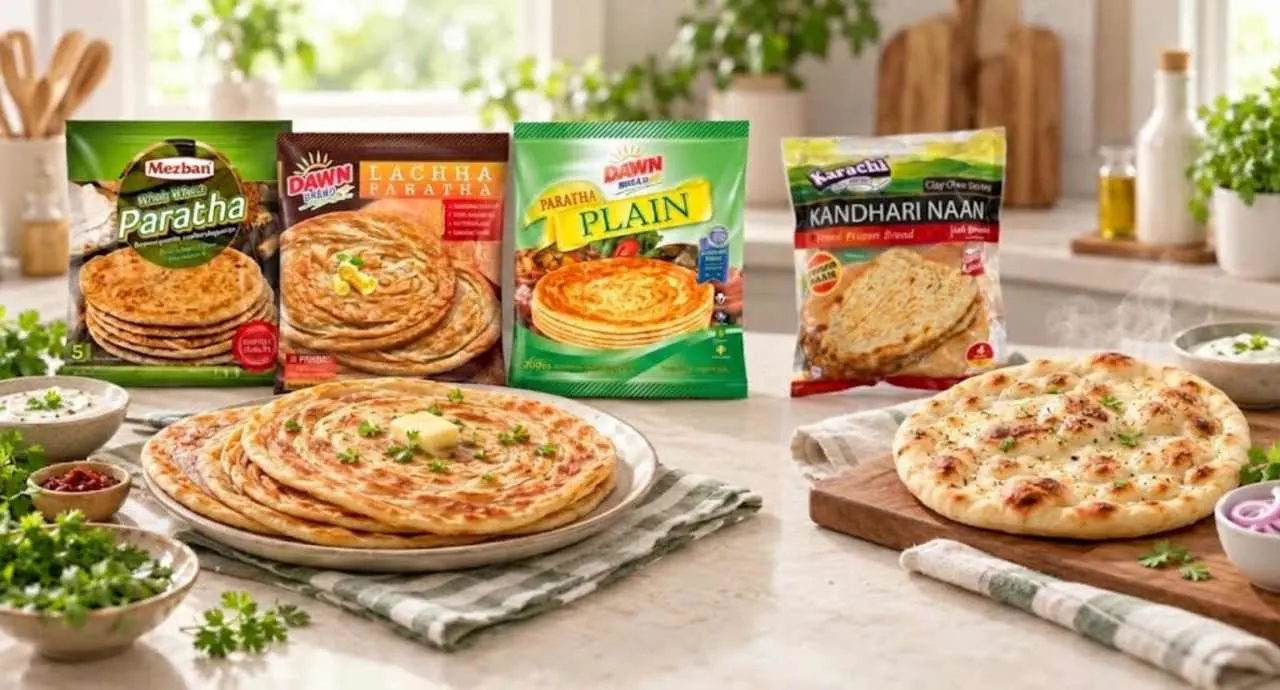
Frozen Naan vs Frozen Paratha: How to Prepare Each at Home
You open your freezer and find two familiar options: frozen naan and frozen paratha. Both are convenient for a quick Pakistani meal, but should you heat them the same way?
Not quite.
Frozen naan usually needs gentle reheating to stay soft, while frozen paratha often needs direct pan heat to become golden and crisp. The best method also depends on whether the product is fully cooked, partially cooked, or supplied as raw frozen dough.
For Pakistani and Indian households in Japan, these ready-to-prepare breads make everyday meals easier. They are also useful halal products in Japan for people who want familiar flatbreads without making dough from scratch.
This guide compares frozen naan and paratha, explains how to heat each one, and helps you avoid common mistakes.
Frozen Naan vs Frozen Paratha: Quick Comparison
Naan and paratha may look similar in a packet. However, their dough, texture, and cooking methods are different.
| Feature | Frozen Naan | Frozen Paratha |
|---|---|---|
| Bread style | Often soft and slightly chewy | Often layered, rich, or flaky |
| Dough | Usually wheat-based, sometimes leavened | Usually wheat-based, often with oil or ghee |
| Main texture goal | Soft center with light browning | Golden exterior with cooked layers |
| Common heating method | Pan or oven | Tawa or frying pan |
| Added oil | Usually not needed for reheating | Depends on product instructions |
| Common meals | Curry, karahi, kebabs | Breakfast, eggs, curry, tea |
| Typical mistake | Becoming dry or hard | Remaining soggy or doughy |
The exact result depends on the brand and the type of frozen bread.
For example, plain naan, roghni naan, plain paratha, and stuffed aloo paratha may require different heating instructions.
1. What Is Frozen Naan?
Naan is a South Asian flatbread commonly served with curry, kebabs, and other savory dishes.
Traditional naan is often cooked in a tandoor. However, frozen versions let you enjoy a similar bread at home using ordinary kitchen equipment.
Frozen naan products may be fully cooked or partially cooked before freezing. Some are designed for reheating, while others need further cooking.
What Should Properly Heated Naan Feel Like?
A good reheated naan should have:
- A warm, soft center
- A flexible texture
- Light browning where appropriate
- No cold or frozen patches
- Enough moisture to avoid becoming dry
Naan should not become cracker-like unless you deliberately want a crisp result.
Popular Ways to Serve Frozen Naan
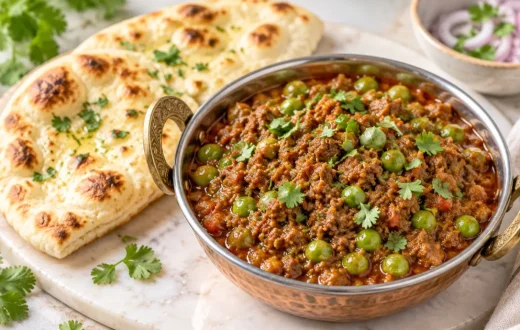
Frozen naan works well alongside chicken karahi, beef curry, daal, seekh kebabs, and other Pakistani dishes.
It can also be served with yogurt-based dips or suitable chutneys.
2. What Is Frozen Paratha?
Paratha is another popular South Asian flatbread, but it often contains fat within or between layers of dough.
As the bread cooks, those layers can separate slightly and develop a rich texture.
Unlike naan, paratha is frequently cooked directly on a hot tawa or frying pan.
What Should Properly Cooked Paratha Feel Like?
Depending on the variety, cooked paratha may have:
- Lightly crisp, golden patches
- Soft inner layers
- A flaky or layered texture
- A fully cooked center
- No cold or doughy sections
Stuffed parathas may have a softer center because of their filling.
Plain Paratha vs Aloo Paratha
Plain paratha is generally a wheat-based flatbread with added fat.
Aloo paratha contains a potato filling. As a result, it may need more careful heating to ensure the middle is thoroughly hot.
MT Halal lists both Plain Paratha and Aloo (Potato) Paratha in its grocery catalog. Availability may change.
3. How to Heat Frozen Naan in a Frying Pan
A frying pan is one of the easiest options for a Japanese apartment kitchen.
This method is especially useful for frozen naan that is already cooked and simply needs reheating.
Always check the packaging first. The following method is a general approach for ready-cooked naan, not a replacement for instructions on raw or partially cooked products.
Step-by-Step Pan Method
- Place a nonstick or heavy-bottomed pan over medium-low heat.
- Allow the pan to warm gently.
- Place the naan in the pan, following the packet’s thawing directions.
- Heat the first side until warm and lightly browned.
- Turn the naan and heat the second side.
- Check that the middle is hot, not cold.
- Remove the naan before it becomes dry.
If the packet allows it, a very small amount of water in the pan followed by brief covered heating may help soften ready-cooked naan. Avoid excess water, which can make the surface sticky.
How Long Should You Heat Frozen Naan?
Many ready-cooked naan products can be reheated in a few minutes. However, thickness, size, pan temperature, and starting condition affect the time.
Therefore, use the manufacturer’s stated cooking time where available rather than relying on one universal duration.
A Product-Specific Example
MT Halal’s Frozen Roghni Naan 800g listing describes pan preparation from frozen, with both sides heated in a frying pan.
That guidance applies to the named product. It should not automatically be applied to every frozen naan brand.
4. How to Cook Frozen Paratha on a Tawa
For many commercially frozen plain parathas, pan cooking produces a better texture than microwave heating.
The direct heat helps develop golden patches and properly cook the layers.
Step-by-Step Paratha Method
- Read the package to confirm whether the paratha should be cooked from frozen.
- Heat a flat tawa or frying pan over medium heat.
- Place the paratha on the pan.
- Wait until the bottom starts cooking and the bread can be turned safely.
- Flip it and cook the other side.
- Continue turning as needed for even browning.
- Use gentle pressure with a spatula where appropriate.
- Remove once the center is fully cooked and the outside is golden.
Some frozen parathas already contain enough oil or ghee in the dough. Therefore, additional oil may not be necessary.
Other products may recommend a small amount.
Follow the packet instructions rather than adding extra oil automatically.
Should You Thaw Frozen Paratha First?
Many commercial frozen parathas are designed to go directly from the freezer to a preheated pan.
Thawing these products can make the dough sticky or difficult to handle.
However, not every frozen paratha follows the same method. Always check the product label.
5. Can You Prepare Frozen Naan in an Oven?
Yes, oven reheating can work well for many fully cooked frozen naan products.
It is particularly helpful when preparing several pieces for a family meal.
General Oven Method
- Preheat the oven according to the product instructions.
- Arrange the naan on an oven-safe tray or rack as directed.
- Leave enough space for even heating.
- Warm until the center is hot.
- Remove promptly to prevent excessive drying.
- Serve while warm.
Oven temperature and timing depend on the product.
Avoid using a high temperature simply to make the process faster. The outside may become too dry before the middle is heated.
How to Keep Naan Soft
If the manufacturer’s directions permit, covering ready-cooked naan loosely during part of reheating can help reduce moisture loss.
Do not wrap bread in material that is unsafe for your oven or heating appliance.
Also, avoid leaving cooked naan uncovered on a hot tray for too long.
6. Can You Cook Frozen Paratha in an Air Fryer?
An air fryer can work for some fully cooked or specifically air-fryer-compatible frozen parathas.
However, it may not produce the same layered texture as a tawa.
For raw or partially cooked frozen paratha, the manufacturer’s recommended method is generally more reliable.
Air Fryer Tips
- Check whether the product allows air frying.
- Preheat only if instructed.
- Arrange the bread in a single layer.
- Do not overcrowd the basket.
- Check the center as well as the surface.
- Turn the bread if required by the appliance or packaging.
Because air fryers circulate hot air, the edges may become crisp quickly.
If your paratha becomes too dry, a pan may be the better option next time.
7. Can You Microwave Frozen Naan or Paratha?
Microwaves are convenient, but they don’t brown bread like a pan or oven.
For many ready-cooked naan products, microwave reheating can work when the packaging permits it.
However, overheating may make the bread tough or rubbery.
Microwave Frozen Naan
Use a microwave-safe plate and follow the packet’s power and timing instructions.
Heat only until the naan is warm throughout.
If the product permits it, a microwave-safe cover may help limit moisture loss.
Microwave Frozen Paratha
Microwaving may warm a ready-cooked paratha, but it often produces a softer, less crisp result.
For a flaky texture, a frying pan is usually preferable.
Do not assume a microwave can fully cook a raw frozen paratha unless the manufacturer specifically provides that method.
8. Which Heating Method Gives Better Results?
The best method depends on the bread and texture you want.
| Method | Frozen naan | Frozen paratha |
|---|---|---|
| Tawa or frying pan | Good for controlled heating | Often the best option for golden layers |
| Oven | Useful for several ready-cooked pieces | Depends on product |
| Air fryer | Can create crisp edges | Suitable for some products |
| Microwave | Quick, but may affect softness | Often less crisp |
| Toaster | Only for compatible products and equipment | Not recommended unless specifically instructed |
Best Option for a Small Japanese Kitchen
A nonstick frying pan is a practical starting point.
It requires little equipment and gives you control over the heat.
Moreover, you can prepare one piece at a time without heating a large oven.
9. Common Frozen Naan Problems and How to Fix Them
Even a good frozen product can turn out poorly if the heat is wrong.
Problem: Naan Becomes Hard
Possible cause: Excessive heat or cooking for too long.
Solution: Use a gentler reheating method and remove the bread as soon as it is thoroughly hot.
Problem: The Outside Is Hot but the Middle Is Cold
Possible cause: The pan is too hot or the naan is particularly thick.
Solution: Lower the heat and allow more time for the center to warm.
Problem: Naan Becomes Wet and Sticky
Possible cause: Too much added moisture or condensation.
Solution: Use less water and avoid trapping excessive steam.
Problem: Uneven Brown Spots
Possible cause: Poor contact with the pan or uneven heating.
Solution: Use a flat pan and turn the naan when necessary.
10. Common Frozen Paratha Problems and How to Fix Them
Paratha has different cooking challenges because of its layers and fat content.
| Problem | Possible cause | Better approach |
|---|---|---|
| Outside burns quickly | Pan too hot | Reduce heat |
| Center stays doughy | Not cooked long enough | Continue cooking according to instructions |
| Paratha becomes oily | Unnecessary added oil | Check whether the product already contains fat |
| Layers feel soggy | Low heat or excess moisture | Use appropriate pan heat |
| Bread tears before cooking | Unnecessary thawing | Follow package directions |
| Edges dry out | Excessive cooking | Remove once fully cooked |
Why Is My Paratha Not Crispy?
The pan may be too cool, or the bread may have been heated in a microwave.
For a product designed for tawa cooking, moderate direct heat usually gives a better surface texture.
However, crispness varies by brand and type.
11. Frozen Naan or Frozen Paratha: Which Is Better for Different Meals?
Both are useful, but they suit different situations.
For Breakfast
Paratha is a common choice with eggs, yogurt, tea, or savory fillings.
A plain or stuffed paratha can make breakfast convenient without preparing dough.
For Chicken Karahi
Naan is often a good match because its soft texture works well with thick curry.
For Daal
Both breads can work.
Choose naan if you prefer a softer bread. Alternatively, select paratha if you want a richer, more layered texture.
For Kebabs
Naan is practical for eating with seekh kebabs, grilled chicken, and chutney.
Paratha may also work for certain wraps or rolls.
For Lunchboxes
Allow the cooked bread to cool appropriately before packing. Keep any perishable fillings or sides under suitable temperature control.
For food that needs reheating, use appropriate storage and reheating practices.
12. How to Store Frozen Naan and Paratha Properly
Frozen bread should remain frozen according to its packaging instructions.
For products intended for freezer storage, follow the stated storage temperature and best-before guidance.
Practical Freezer Tips
- Keep the package properly closed.
- Avoid leaving frozen bread at room temperature during meal preparation.
- Take out only the quantity needed when the packaging allows.
- Protect the bread from freezer exposure and drying.
- Follow any instructions about thawing or refreezing.
- Do not use bread with damaged packaging or suspected contamination.
Can You Refreeze Thawed Naan or Paratha?
Follow the product’s instructions.
Refreezing can affect texture, and safety depends on how the food was thawed and handled.
Do not assume every product is suitable for refreezing.
If a frozen item has been left at room temperature for an extended period and its safety is uncertain, discard it.
13. Buying Frozen Naan and Paratha in Japan
Frozen South Asian flatbreads are useful for anyone who wants a convenient meal without preparing dough every day.
MT Halal Mart offers online grocery shopping across Japan and has a physical store in Yotsukaido, Chiba.
Its catalog includes different naan and paratha products. Examples listed include Frozen Naan (5 Pieces), Plain Paratha, Aloo Paratha, and Frozen Roghni Naan.
You can explore the MT Halal Flour & Atta Category, which currently includes several frozen naan and paratha listings.
For a ready-cooked naan option, see Frozen Roghni Naan 800g and read the preparation information on its product page.
What Should You Check Before Ordering?
Look at:
- Product type and name
- Whether it is fully cooked or requires cooking
- Pack quantity
- Wheat and other allergen ingredients
- Cooking method
- Storage instructions
- Halal information where relevant
- Current availability
For example, some naan products contain dairy, butter, or sesame. Stuffed parathas may have additional ingredients and allergens.
Therefore, it’s important to read the actual product label rather than assuming every flatbread has the same recipe.
Plan a Simple Frozen Bread Grocery Basket
For everyday Pakistani meals, you might pair frozen naan or paratha with halal meat, daal, vegetables, yogurt, or suitable chutney.
To browse additional grocery essentials, visit the MT Halal Shop.
If you’re new to shopping for South Asian food in Japan, the Top 10 Essential Halal Grocery Items Every Kitchen Needs guide can help you plan a basic pantry.
Frequently Asked Questions
What is the difference between frozen naan and frozen paratha?
Frozen naan is generally intended to have a soft, slightly chewy texture. Frozen paratha is often richer and layered, with golden or crisp areas after cooking.
Should frozen naan be thawed before heating?
It depends on the product. Some ready-cooked naan can be heated from frozen, while other products have different instructions.
Can you cook frozen paratha without oil?
Many packaged frozen parathas contain fat in their dough and may not need extra oil. Follow the brand’s preparation directions.
Is a frying pan better than a microwave for frozen paratha?
A frying pan generally produces better browning and texture for products designed for pan cooking. Microwaves tend to soften rather than crisp the bread.
Why does frozen naan become hard?
High heat, long heating times, and moisture loss can make naan dry or tough.
Can frozen naan be reheated in an air fryer?
Some products can be heated in an air fryer. Check the manufacturer’s instructions and avoid overheating.
Is frozen aloo paratha cooked the same way as plain paratha?
Not always. Aloo paratha has a filling, so it may require different heating times and careful attention to the center.
Where can I buy frozen naan and paratha in Japan?
MT Halal Mart lists frozen naan and paratha products through its online grocery shop and operates a physical store in Yotsukaido, Chiba. Check current availability and cooking directions before ordering.
Final Thoughts: Choose the Right Heat for the Right Bread
Frozen naan and frozen paratha are both convenient options for Pakistani cooking in Japan. However, they need different handling to achieve their best texture.
For frozen naan, aim for a soft, warm bread without excessive drying.
For frozen paratha, use the cooking method recommended on the packet, often a tawa or frying pan, to develop a golden surface and fully cooked layers.
Most importantly, check whether your product is ready-cooked, partially cooked, or raw before choosing a heating method.
With the right preparation, you can enjoy familiar flatbreads at home without making fresh dough every time.
Explore frozen bread options through the MT Halal Flour & Atta Category and choose products that match your cooking routine.