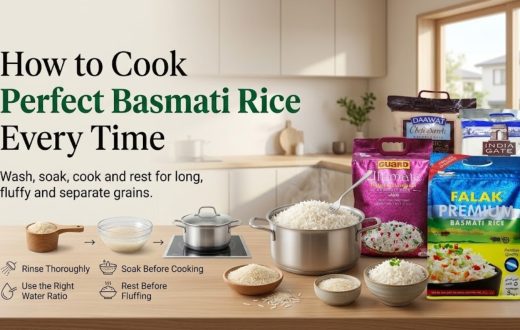
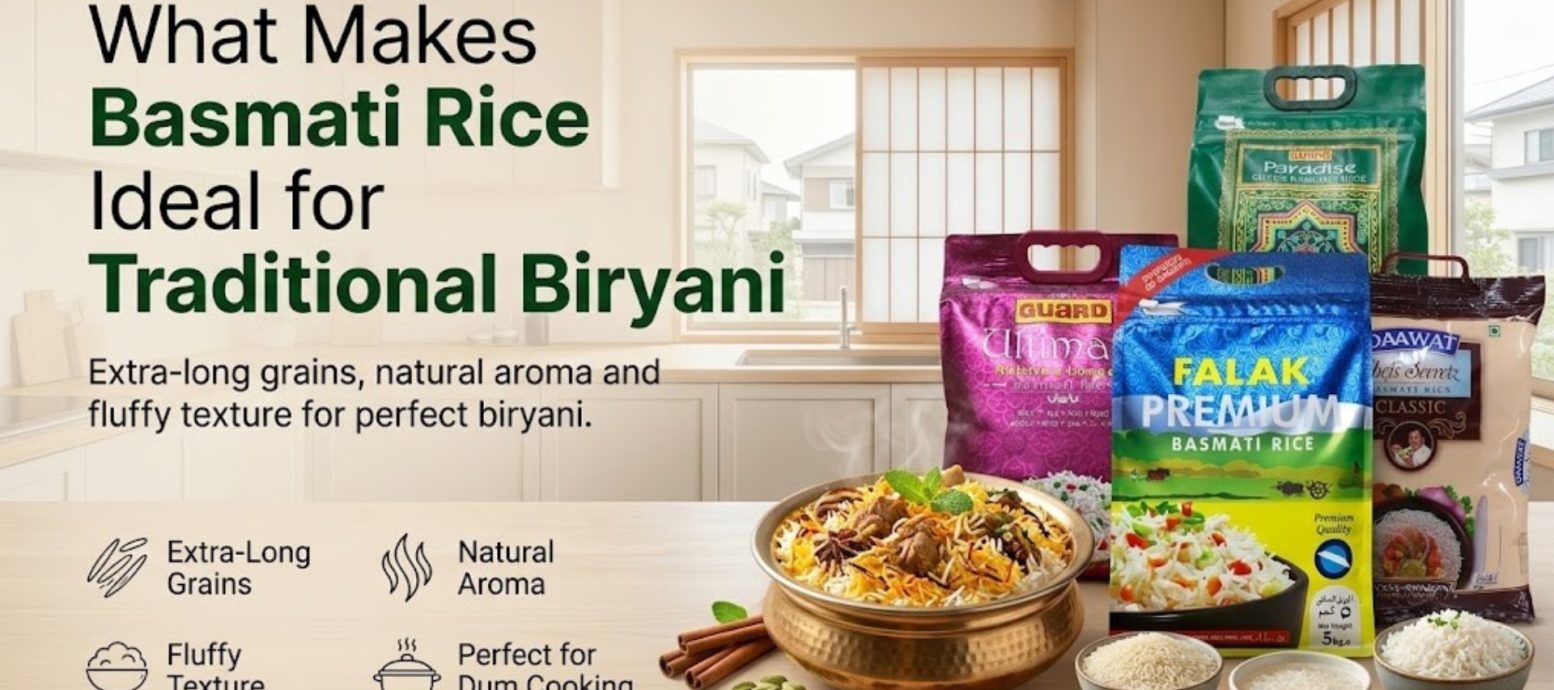
Preparing traditional biryani in Japan can become disappointing when the rice turns sticky, breaks during layering, or becomes too soft during dum. You may have halal chicken, the correct biryani masala, fried onions, yogurt, and whole spices, but the final result still depends heavily on the rice.
Understanding what makes Basmati rice ideal for traditional biryani helps home cooks choose a grain that can handle washing, soaking, partial boiling, layering, and steam cooking without losing its shape.
Good Basmati rice is known for its long grains, natural aroma, light texture, and ability to remain separate when cooked properly. It can absorb the flavor of meat, spices, stock, and herbs while still allowing each grain to remain visible.
MTHalal helps customers in Japan browse Basmati, aged Basmati, Sella rice, biryani masala, halal meat, spices, oils, and related grocery essentials through one online platform.
Biryani Needs a Different Rice Texture
Traditional biryani is not meant to have the same texture as sushi rice, rice porridge, or a soft rice bowl.
The grains should usually remain:
- Long
- Separate
- Light
- Aromatic
- Firm enough for layering
- Soft enough to eat comfortably
- Able to absorb masala without becoming mushy
This is why short-grain Japanese rice is generally not the first choice for South Asian biryani.
Japanese rice is naturally stickier and is excellent for sushi, onigiri, donburi, and local meals. Basmati is better suited to biryani because its grains can remain more separate after cooking.
1. Basmati Rice Has Long, Slender Grains
Grain length is one of the most recognizable features of Basmati rice.
Before cooking, the grains are long and narrow. During proper cooking, they lengthen further instead of becoming wide and sticky.
Long Grains Improve Biryani Presentation
Extra-long rice grains help create the classic appearance of biryani.
They allow the cook to see:
- White and colored rice layers
- Meat pieces
- Fried onions
- Herbs
- Whole spices
- Separate grains coated with masala
A biryani made with broken or short rice may still taste good, but it may not create the same traditional appearance.
2. Basmati Rice Has a Natural Aroma
Basmati is valued for its fragrance.
The aroma becomes noticeable during soaking, boiling, and dum cooking. It combines with cardamom, cloves, cinnamon, bay leaves, cumin, fried onions, mint, and biryani masala.
Aroma Is Important Because
Biryani is experienced through smell before the first bite.
The fragrance should come from several layers:
- Natural rice aroma
- Whole spices
- Meat or vegetable masala
- Fried onions
- Fresh herbs
- Steam from dum cooking
Aromatic Basmati helps bring these elements together without depending only on strong spice mixes.
3. The Grains Can Stay Separate
Traditional biryani should not become a sticky rice mixture.
Good Basmati rice has a lower tendency to clump when it is washed, soaked, and cooked correctly.
Separate Grains Help With
They make it easier to:
- Layer rice and masala
- Mix gently before serving
- Maintain a light texture
- Distribute meat and spices
- Reheat portions
- Present biryani neatly
Rice that becomes sticky can compress the layers and make the dish feel heavy.
4. Basmati Can Absorb Flavor Without Losing Shape
Biryani rice must absorb flavor from:
- Meat stock
- Curry masala
- Yogurt
- Whole spices
- Fried onions
- Mint
- Coriander
- Cooking oil or ghee
- Steam
At the same time, it should not become overly soft.
This balance is one of the main reasons Basmati is suitable for biryani. The grains can carry flavor while still remaining recognizable.
5. Aged Basmati Is Especially Useful for Biryani
Aged Basmati rice has been stored under controlled conditions before sale.
This process can reduce moisture inside the grain and improve cooking performance.
Aged Basmati May Provide
It can offer:
- Better grain elongation
- Stronger aroma
- Firmer texture
- Improved separation
- Lower risk of stickiness
- Better performance during dum
Aged rice is often preferred for special biryani, pulao, weddings, Eid meals, and guest dinners.
However, it may require slightly more water or soaking than newer rice, depending on the brand and cooking method.
6. Sella Rice Can Handle Longer Cooking
Sella rice is parboiled before milling.
This strengthens the grain and helps it remain firm during boiling, layering, and reheating.
Sella Rice Works Well For
It may be useful for:
- Large biryani pots
- Catering-style cooking
- Meal preparation
- Biryani served later
- Rice that must remain separate
- Cooks worried about overcooking
Sella rice usually has a firmer texture than regular white Basmati.
Some families prefer this firm result, while others like the softer texture of white aged Basmati.
White Basmati vs Sella Rice for Biryani
Both can produce good biryani, but the final texture is different.
White Basmati Rice
White Basmati usually provides:
- Softer grains
- Traditional aroma
- Lighter texture
- Faster cooking
- A delicate biryani finish
It is useful for home-style biryani and smaller family meals.
Sella Basmati Rice
Sella rice usually provides:
- Firmer grains
- Strong grain separation
- Better resistance to breaking
- Good performance in large batches
- A longer cooking tolerance
It is useful for catering, large gatherings, and cooks who prefer firm rice.
The best option depends on household preference.
7. Basmati Handles Partial Boiling
Traditional biryani rice is often boiled separately until it is partly cooked.
The rice may be cooked around 70 to 80 percent before being layered with the meat masala. It then finishes cooking during dum.
Basmati is suitable for this method because the grains can remain firm during the first boil.
Partial Cooking Helps Prevent
It can reduce:
- Mushy rice
- Broken grains
- Overcooked bottom layers
- Uneven texture
- Heavy biryani
The rice should still have a slight firmness when it is drained.
8. Basmati Works Well With Dum Cooking
Dum cooking uses trapped steam to finish the rice and combine the layers.
The biryani pot is covered tightly so the steam remains inside.
During dum:
- The rice finishes cooking
- The masala moves into the grains
- Whole-spice aroma spreads
- Meat and rice flavors combine
- The layers settle
Basmati performs well because it can continue cooking in steam without immediately collapsing into a soft mass.
9. Basmati Creates Better Biryani Layers
Biryani is built in layers.
A typical arrangement may include:
- Meat or vegetable masala
- Partly cooked Basmati rice
- Fried onions
- Mint and coriander
- Colored or saffron-infused liquid
- Another rice layer
- Oil or ghee where used
Long, separate grains help keep these layers clear.
When the pot is opened, the rice should show different colors and aromas rather than becoming one uniform mixture.
10. Basmati Pairs Well With Whole Spices
Traditional biryani uses aromatic whole spices such as:
- Green cardamom
- Black cardamom
- Cloves
- Cinnamon
- Bay leaves
- Cumin seeds
- Black peppercorns
- Star anise where preferred
Basmati has a mild natural flavor that supports these spices without competing with them.
The rice becomes fragrant while still allowing the taste of the meat or vegetables to remain clear.
Different Biryani Styles Still Use Basmati
South Asian biryani changes from region to region.
Different styles may vary in heat, sourness, meat, potatoes, herbs, and cooking method.
Basmati Can Be Used For
It works well in:
- Chicken biryani
- Mutton biryani
- Beef biryani
- Sindhi biryani
- Bombay biryani
- Hyderabadi biryani
- Fish biryani
- Vegetable biryani
- Egg biryani
- Prawn biryani
The masala may change, but the need for long, aromatic, separate rice remains important.
How to Choose Basmati Rice for Biryani
Not every Basmati product performs in exactly the same way.
Before buying, check several details.
Check the Product Type
Look for words such as:
- Basmati rice
- Aged Basmati
- Premium Basmati
- Extra-long grain
- Sella Basmati
- Parboiled Basmati
- Biryani rice
Check the Grain Description
Choose rice described as:
- Long or extra-long
- Slender
- Aromatic
- Fluffy
- Non-sticky
- Suitable for biryani
- Firm after cooking
Check the Pack Size
A smaller pack is helpful when testing a new brand.
A 5kg or larger bag may be practical for families who cook rice regularly.
Check the Origin
Basmati is strongly connected to rice-growing regions of Pakistan and India.
Origin can help identify the rice tradition, but grain type, ageing, processing, and cooking performance are also important.
How Much Rice Should You Buy?
The right amount depends on:
- Household size
- Number of biryani meals
- Everyday rice use
- Storage capacity
- Ramadan and Eid plans
- Frequency of guests
A family that cooks rice several times a week may find a 5kg bag practical.
A student or single resident may prefer a smaller pack until they know which rice they like.
How to Wash Basmati Rice for Biryani
Wash the rice gently before soaking.
This removes surface starch and helps reduce stickiness.
Simple Washing Method
- Place the rice in a large bowl
- Add cool water
- Move the grains gently with your fingers
- Drain the cloudy water
- Repeat until the water becomes clearer
Do not rub the grains aggressively because this can increase breakage.
Why Soaking Matters
Soaking helps the grains absorb water evenly before boiling.
It can support:
- Better grain elongation
- More even cooking
- Reduced breakage
- Faster boiling
- A lighter final texture
Soaking time depends on the rice.
Regular white Basmati may need a shorter soak, while aged or Sella rice may need a different period.
Follow the product instructions where available and adjust after testing.
Use Enough Water for Boiling
Biryani rice is often cooked using the boil-and-drain method.
The rice is placed in a large pot of salted boiling water, cooked partly, and then drained.
Using enough water allows the grains to move freely.
This can help prevent clumping and uneven cooking.
Add Whole Spices to the Boiling Water
Some cooks add aromatic spices to the rice water.
These may include:
- Bay leaves
- Green cardamom
- Cloves
- Cinnamon
- Cumin
- Black pepper
This gives the rice a light fragrance before it is layered with the masala.
Do not add so many spices that they overpower the dish.
Do Not Fully Cook the Rice Before Layering
Fully cooked rice can become mushy during dum.
The correct level depends on the recipe, rice type, meat masala, and dum time.
As a general guide, the grains should be partly cooked but still slightly firm in the center.
A test grain can be pressed between the fingers to check its texture.
Drain the Rice Carefully
Once the rice reaches the correct stage, drain it promptly.
Leaving it in hot water can continue the cooking process.
Use a colander large enough for the quantity and handle the grains gently.
Avoid heavy stirring.
Control Moisture in the Meat Masala
Even the best Basmati rice can become soft when the meat masala contains too much water.
The masala should have enough moisture to finish the rice during dum, but it should not be watery.
Too Much Moisture Can Cause
It may lead to:
- Soft bottom layers
- Sticky rice
- Uneven texture
- Broken grains
- Loss of clear layering
Cook the masala to the right consistency before adding rice.
Use Gentle Heat During Dum
High heat can burn the bottom while leaving the upper rice undercooked.
Many home cooks begin with slightly higher heat to create steam and then reduce it.
A heat diffuser or heavy pan under the biryani pot can help spread heat more evenly.
The correct method depends on the pot and stove.
Let Biryani Rest Before Serving
After dum, allow the biryani to rest for a few minutes.
This helps:
- Steam settle
- Grains firm slightly
- Flavors combine
- Layers become easier to serve
Opening and mixing immediately can break the grains.
Serve Biryani Gently
Use a flat or wide serving spoon.
Lift rice from different layers rather than stirring the entire pot aggressively.
This helps preserve:
- Long grains
- Meat pieces
- Colored layers
- Fried onions
- Herbs
The aim is to combine the layers lightly while maintaining the biryani’s appearance.
Common Basmati Rice Mistakes in Biryani
Avoid these common problems:
- Using sticky short-grain rice
- Skipping washing
- Soaking for the wrong amount of time
- Fully cooking rice before layering
- Using too little boiling water
- Leaving rice in hot water after cooking
- Making the meat masala too watery
- Stirring the rice heavily
- Using very high heat during dum
- Serving immediately without resting
- Testing a new rice brand during an important event
A small test batch can help prevent mistakes.
Test New Rice Before a Special Occasion
Do not use an unfamiliar rice for the first time when cooking for Eid, guests, or a large gathering.
Cook a small batch first.
A Test Batch Helps You Learn
It shows:
- Required soaking time
- Boiling speed
- Grain strength
- Aroma
- Texture
- Dum tolerance
- Family preference
Keep notes so future cooking becomes more consistent.
Choosing Rice for Home Biryani
For home cooking, many families prefer a rice that balances:
- Aroma
- Long grains
- Soft but separate texture
- Reasonable cooking time
- Practical price
- Easy availability
Aged white Basmati often suits this style.
Choosing Rice for Large Biryani Pots
For a large gathering, Sella or firmer aged Basmati may be easier to manage.
It can tolerate:
- Larger quantities
- Longer handling
- Layering
- Reheating
- Delayed serving
However, the firmer texture should match the household’s preference.
Basmati Rice for Students in Japan
Students may want to prepare biryani occasionally without buying a very large bag.
A smaller Basmati pack can be easier to store and test.
Students should look for rice that is:
- Clearly labelled Basmati
- Suitable for biryani
- Easy to cook
- Available in a manageable pack
- Within budget
Recipe masala and a smaller halal chicken portion can help create a simple biryani without a large grocery order.
Basmati Rice for Families
Families may use Basmati for both biryani and daily meals.
A 5kg pack may be practical when rice is cooked regularly.
Family priorities may include:
- Price per kilogram
- Grain consistency
- Aroma
- Children’s texture preference
- Storage space
- Biryani frequency
- Pulao and curry use
Some families keep premium rice for biryani and a more affordable Basmati for everyday meals.
Plan Rice Early for Ramadan and Eid
Biryani is common during Ramadan, Eid, family visits, and community meals.
Rice demand may increase during these periods.
Check stock early and order before the cooking day.
Also review:
- Halal meat
- Biryani masala
- Whole spices
- Cooking oil
- Fried onions
- Pickles
- Drinks
- Desserts
Planning the complete meal avoids last-minute shopping.
How MTHalal Helps With Biryani Ingredients
MTHalal offers a Rice category with Basmati, aged premium Basmati, and Sella rice options depending on current stock.
Customers can also browse ingredients commonly used for biryani, including:
- Halal chicken
- Beef or mutton
- Biryani masala
- Whole spices
- Cooking oil
- Ginger garlic paste
- Pickles
- Drinks
- Desserts
Current brands, pack sizes, prices, manufacturing information, stock, and delivery conditions should be checked on the live product pages.
Traditional Biryani Rice Checklist
Before buying rice, check:
- Is it clearly Basmati?
- Is it white Basmati or Sella?
- Is it aged?
- Are the grains long or extra-long?
- Is it described as aromatic?
- Does it remain fluffy and separate?
- Is it suitable for biryani?
- Is the pack size practical?
- Can you store it properly?
- Does the price fit your budget?
- Is it currently in stock?
- Have you tested the brand before?
- Did you check delivery charges?
- Do you have the meat and spices needed?
This checklist helps make biryani preparation more reliable.
Internal Link Suggestion
[Internal Link Suggestion: Browse Rice on MTHalal]
FAQs
1. Why is Basmati rice better for biryani?
Basmati rice has long grains, a natural aroma, and a light texture. When cooked properly, the grains remain separate and absorb biryani flavors without becoming overly sticky.
2. Is aged Basmati good for biryani?
Yes. Aged Basmati often provides better grain elongation, stronger aroma, firmer texture, and improved separation during boiling and dum cooking.
3. Is Sella rice suitable for biryani?
Yes. Sella rice is firm, less sticky, and resistant to breaking. It is especially useful for large batches, catering-style biryani, and meals served later.
4. Can Japanese rice be used for biryani?
Japanese rice can be cooked with biryani spices, but its short, sticky grains will produce a different texture. Traditional biryani usually works better with long-grain Basmati.
5. Where can I buy Basmati rice for biryani in Japan?
Customers can check South Asian grocery stores, halal food shops, and online platforms such as MTHalal, which lists different Basmati and Sella rice options depending on current availability.
Final Thought
What makes Basmati rice ideal for traditional biryani is its combination of long grains, natural aroma, light texture, and ability to remain separate while absorbing meat, stock, spices, and herbs.
The right rice must also be cooked correctly. Gentle washing, suitable soaking, partial boiling, balanced masala moisture, careful layering, and controlled dum heat all help protect the grains.
MT Halal helps families, students, and South Asian food lovers in Japan browse Basmati, aged Basmati, Sella rice, halal meat, biryani masala, and related grocery essentials through one online platform. With the right rice and a small test batch, traditional biryani can become more fragrant, visually appealing, and consistent at home.