Frozen halal meat is useful for preparing everyday meals, especially when beef, lamb or mutton is purchased ahead of time. However, taking meat directly from the freezer and leaving it on the kitchen counter is not a safe way to prepare it for cooking.
Learning how to thaw frozen halal meat properly helps prevent harmful bacteria from multiplying while protecting the meat’s texture and quality.
Whether you are making beef curry, mutton karahi, pulao or a slow-cooked stew, the thawing method should match your cooking schedule and the type of meat.
This guide explains three safe thawing methods, common mistakes, recommended handling practices and what to do when meat has been completely defrosted.
What Is the Safest Way to Thaw Frozen Halal Meat?
The safest general method is to thaw frozen meat in the refrigerator at 4°C or below. This keeps the meat cold while allowing it to defrost gradually.
According to the USDA Food Safety and Inspection Service, three methods are considered safe for thawing meat:
- Refrigerator thawing
- Cold-water thawing
- Microwave thawing
The main difference is the amount of time and attention each requires.
Quick Comparison of Meat Thawing Methods
| Thawing Method | Convenience | Main Requirement | After Thawing |
|---|---|---|---|
| Refrigerator | Best when planning ahead | Keep meat at 4°C or below | Refrigerate within recommended limits or cook |
| Cold water | Faster, requires supervision | Leakproof bag; change cold water every 30 minutes | Cook immediately |
| Microwave | Fastest for suitable portions | Use defrost setting and microwave-safe equipment | Cook immediately |
Never use warm water, direct sunlight or the kitchen counter to thaw raw meat.
1. Refrigerator Thawing: The Recommended Method
Refrigerator thawing is generally the most reliable choice when preparing halal beef, lamb or mutton for a planned meal.
The meat remains chilled throughout the process, reducing the risk of bacterial growth.
How to Thaw Meat in the Refrigerator
Follow these steps:
- Remove the frozen meat from the freezer.
- Keep it in suitable, secure packaging.
- Place the package inside a tray or container to catch leaking juices.
- Put the container on the refrigerator’s bottom shelf, below ready-to-eat foods.
- Maintain the refrigerator temperature at 4°C or below.
- Allow sufficient time for the meat to thaw completely.
A small package may thaw within a day, while large roasts or thick bone-in cuts can require two days or longer.
These are estimates rather than guaranteed thawing times.
Why Refrigerator Thawing Works Well
This method provides a controlled temperature environment.
It also allows some flexibility. When raw beef, lamb or mutton has been safely thawed in the refrigerator, it may remain refrigerated for a limited period before cooking, depending on the cut.
Refrigerator thawing is particularly convenient for meals that require advance preparation, such as mutton pulao or slow-cooked beef curry.
2. Cold-Water Thawing: A Faster Alternative
Cold-water thawing is useful when there is not enough time for overnight refrigerator thawing.
It requires more attention because the water must remain cold, and the meat must be cooked immediately afterward.
Step-by-Step Cold-Water Thawing
- Check that the meat is inside a completely leakproof package or food-safe bag.
- Fill a clean container with cold tap water.
- Submerge the sealed package completely.
- Replace the water every 30 minutes to keep it cold.
- Continue until the meat is fully thawed.
- Cook the meat immediately.
The packaging is important because it prevents water from contacting the meat and helps limit contamination.
How Long Does Cold-Water Thawing Take?
Thawing time depends on the package’s size, thickness and shape.
A small package of meat may thaw in an hour or less. A large roast can require several hours.
Avoid relying on a fixed time for every product.
For example, a thin package of boneless beef cubes may thaw differently from a thick, bone-in mutton cut.
Important: Do not leave meat submerged in the same water for hours without changing it. Cold-water thawing should be actively supervised.
3. Microwave Thawing: Suitable When Cooking Immediately
Microwave thawing can be convenient when meat must be cooked without much advance preparation.
However, microwaves may heat food unevenly. Some sections can become warm or begin cooking while other areas remain frozen.
How to Defrost Meat in a Microwave
- Remove packaging that is not microwave-safe.
- Place the meat in a microwave-safe container.
- Select the defrost setting or follow the manufacturer’s low-power instructions.
- Rotate or separate pieces when recommended by the microwave instructions.
- Cook the meat immediately once thawing is complete.
Microwave thawing can be practical for smaller portions of boneless meat or mince.
Larger bone-in pieces may be harder to thaw evenly.
Do not place microwave-thawed raw meat back in the refrigerator for cooking much later. Begin cooking immediately.
4. How Thawing Differs for Beef, Lamb and Mutton
The same food-safety rules apply to all three meats, but their size, shape and packaging affect the thawing process.
Frozen Beef
Beef mince, cubes, steaks and roasts may require different amounts of time.
Thin packages of mince generally thaw more quickly than large roasts.
If the beef is intended for keema, a small, securely packaged portion can be easier to manage than a thick frozen block.
Frozen Lamb
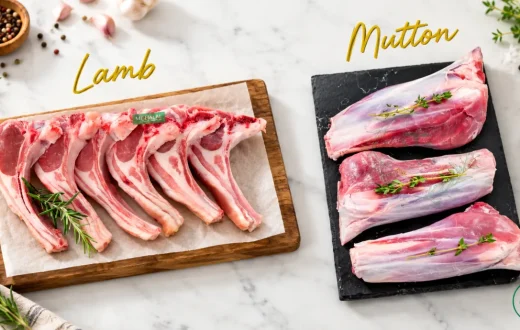
Lamb chops and smaller cuts are often easier to handle than a large lamb leg.
For thicker cuts, refrigerator thawing allows time for the center to defrost without exposing the exterior to unsafe temperatures.
Frozen Mutton
Bone-in mutton pieces can have irregular shapes and varying thicknesses.
Refrigerator thawing is useful when preparing larger portions for karahi, curry or pulao.
For urgent cooking, cold-water thawing may be an alternative if the packaging remains leakproof and the meat is cooked immediately.
The important factor is not simply the animal species but the actual cut and package thickness.
5. Common Meat Thawing Mistakes to Avoid
Several familiar kitchen practices can create unnecessary food-safety risks.
Leaving Meat on the Kitchen Counter
The outside of frozen meat may reach temperatures that support bacterial growth even when the center remains frozen.
Therefore, overnight countertop thawing is unsafe.
Using Hot Water
Hot water can warm the meat’s outer surface too quickly while the inside remains frozen.
Use cold water instead, following the sealed-package method.
Thawing Near a Stove or Heater
Putting frozen meat beside a heat source is not a safe shortcut.
Uneven heating can leave the exterior at unsafe temperatures.
Ignoring Packaging Damage
Leaking bags can allow raw meat juices to contaminate sinks, containers or nearby foods.
Always inspect the packaging and use an additional leakproof bag when necessary.
Washing Raw Meat After Thawing
Washing raw meat is unnecessary and may spread bacteria through splashing water.
Handle the meat hygienically, clean contaminated surfaces and cook it thoroughly.
6. Can You Refreeze Halal Meat After Thawing?
Whether meat can be refrozen depends on how it was thawed.
Meat Thawed in the Refrigerator
Under USDA guidance, meat thawed safely in the refrigerator can generally be refrozen without cooking, provided it has remained properly refrigerated.
However, repeated freezing and thawing can reduce eating quality.
Meat Thawed in Cold Water
Meat thawed using the cold-water method should be cooked immediately.
If you want to freeze it again, cook it thoroughly first.
Meat Thawed in the Microwave
Microwave-thawed meat must also be cooked immediately.
After proper cooking, it can be cooled safely and frozen as a cooked food.
If meat has been left at unsafe temperatures, do not assume that freezing will make it safe again.
7. How Long Can Meat Stay Refrigerated After Thawing?
The recommended period varies according to the meat type and cut.
For meat thawed in the refrigerator, USDA guidance provides the following general recommendations:
| Raw Meat Type | Recommended Refrigerated Period After Thawing |
|---|---|
| Ground beef or ground lamb | 1–2 days |
| Beef steaks, chops or roasts | 3–5 days |
| Lamb chops or roasts | 3–5 days |
| Raw poultry | 1–2 days |
These time frames assume safe, continuous refrigeration at 4°C or below.
Follow any shorter product-specific use-by period or handling instruction.
Meat thawed in cold water or a microwave should be cooked immediately instead of being stored raw for these additional periods.
8. Can You Cook Halal Meat Directly from Frozen?
Some cuts of meat can be safely cooked directly from frozen when the cooking method allows the food to reach the correct internal temperature throughout.
However, cooking directly from frozen usually takes longer.
For example, smaller frozen portions may be suitable for certain stovetop or oven methods.
Large frozen meat cuts may cook unevenly without proper planning.
Do not place raw frozen meat directly into a slow cooker. It may remain too long at temperatures where harmful bacteria can grow.
For dishes such as karahi, curry and pulao, thawing first may also make seasoning and cooking more manageable.
Always check product-specific instructions before choosing to cook from frozen.
9. Buying Frozen Halal Meat in Japan
When purchasing frozen halal meat, consider both product information and how it will be handled at home.
MT Halal Mart offers a variety of products within its Meat & Poultry Collection.
For example, the store lists Sadia Chicken Whole 1000g as a frozen halal chicken product. Its listing advises freezer storage at -18°C or below and refrigerator thawing before cooking.
The website also lists Halal Wagyu Beef 1kg with frozen-storage instructions.
Check individual product pages for current availability, storage requirements and prices rather than assuming every meat product has the same instructions.
For separate guidance on preparing meat portions before freezing, see How to Portion Halal Meat Before Freezing for Small Households.
Quick Checklist Before Thawing Meat
Before beginning, make sure that:
- The meat has been stored at the appropriate freezer temperature.
- Its packaging is intact and suitable for the chosen thawing method.
- The refrigerator is maintained at 4°C or below.
- Raw meat cannot drip onto ready-to-eat foods.
- Cold-water thawing can be supervised.
- Microwave- or cold-water-thawed meat can be cooked immediately.
- The chosen cooking method will heat the meat thoroughly.
Following these practices helps make everyday cooking safer and more manageable.
Frequently Asked Questions
1. What is the safest way to thaw frozen halal meat?
Refrigerator thawing at 4°C or below is generally the safest method. It keeps meat cold throughout defrosting and offers more flexibility than cold-water or microwave methods.
2. Can I thaw frozen halal meat overnight on the kitchen counter?
No. Meat should not be thawed at room temperature. Its outer layers can become warm enough for harmful bacteria to multiply while the center remains frozen.
3. How can I thaw frozen mutton quickly?
Place the mutton in a leakproof bag and submerge it in cold water. Change the water every 30 minutes and cook the meat immediately after thawing.
4. Is microwave thawing safe for halal meat?
Yes, when used correctly. Follow the microwave’s defrost instructions and cook the meat immediately afterward because parts may begin warming or partially cooking during thawing.
5. Can I refreeze halal beef after thawing?
Beef thawed safely in the refrigerator can generally be refrozen without cooking, although quality may decrease. Beef thawed in cold water or a microwave should be fully cooked before refreezing.
6. Does thawing change the halal status of meat?
No. Thawing does not independently change halal status. Halal suitability depends on factors such as the permissible animal source, slaughter requirements and any added ingredients.
7. Can I cook frozen halal meat without thawing it?
Some products can be cooked from frozen with appropriate methods and sufficient cooking time. However, large cuts may require thawing, and raw frozen meat should not be placed directly into a slow cooker.
Conclusion
Understanding how to thaw frozen halal meat safely is an essential part of preparing beef, lamb, mutton and poultry at home.
Refrigerator thawing is usually the most dependable option, while cold water and microwave thawing offer alternatives when time is limited.
The right method depends on the meat’s size, the preparation schedule and whether you can cook it immediately after thawing.
For shoppers in Japan, MT Halal Mart offers meat and poultry products that can be reviewed according to their individual storage instructions and current availability.
Editorial Verification: Confirm product-specific freezer temperatures, thawing instructions, halal information, packaging, stock and URLs before publication. Follow reliable food-safety guidance and use a food thermometer to verify safe cooking temperatures. Do not treat freezing or thawing as a substitute for hygienic handling.