

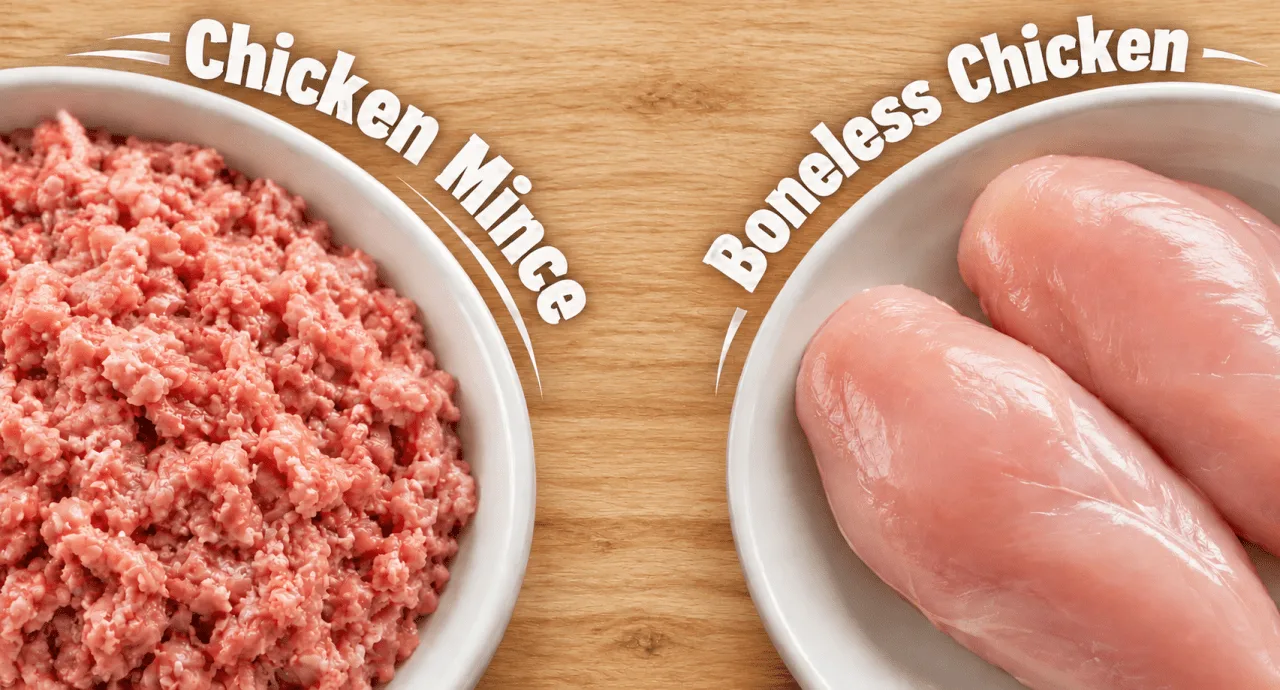
Choosing between halal chicken mince and boneless chicken can make everyday cooking easier. Although both come from chicken, their texture, preparation requirements and cooking applications differ. Chicken mince works well for patties, kofta and fillings, while boneless pieces suit stir-fries, curries and rice bowls.
For Muslim households buying halal chicken in Japan, understanding these differences can help simplify weekly meal preparation. Instead of choosing a product based only on its packaging or weight, consider how you intend to cook it.
This guide compares chicken mince and boneless chicken by texture, cooking methods, meal suitability and practical preparation. It also explains how MT Halal Mart helps shoppers explore suitable chicken products for home cooking.
What Is the Difference Between Chicken Mince and Boneless Chicken?
Chicken mince consists of ground chicken meat. During preparation, a grinder breaks the meat into small particles that can combine easily with seasonings and other ingredients.
Boneless chicken, meanwhile, retains its original muscle structure. Shoppers commonly purchase it as whole portions, strips or cubes.
As a result, the two products behave differently during cooking.
| Feature | Chicken Mince | Boneless Chicken |
|---|---|---|
| Form | Ground meat | Whole pieces, cubes or strips |
| Texture | Fine and easy to shape | Firm with a recognizable meat texture |
| Preparation | Usually needs little cutting | May require slicing or dicing |
| Cooking applications | Kofta, patties, fillings, keema | Curry, stir-fry, rice bowls, wraps |
| Seasoning | Mixes throughout the meat | Coats the surface or enters through a marinade |
| Cooking control | Requires attention to moisture and breaking up lumps | Depends on piece size and thickness |
| Main advantage | Useful for shaped and mixed dishes | Maintains distinct chicken pieces |
Both provide useful options for everyday cooking. However, the better choice depends on the texture and preparation method your recipe requires.
1. Chicken Mince: Texture, Preparation and Cooking Uses
Chicken mince offers a convenient starting point for dishes that require ground meat.
Because grinding breaks the chicken into small particles, you can combine it with onions, herbs, spices and other ingredients.
Why Chicken Mince Works Well for Shaped Dishes
Ground chicken allows cooks to form patties, meatballs and kofta without cutting the meat into small pieces first.
For example, you can combine chicken mince with finely chopped onion, ginger, garlic and spices to prepare a kofta mixture.
The mixture needs the right balance of moisture and binding ingredients to hold its shape.
However, not every chicken mince product has the same fat content. Therefore, the finished texture can vary depending on which chicken parts the manufacturer uses.
How Chicken Mince Behaves During Cooking
Ground chicken cooks differently from whole pieces.
When you prepare loose chicken mince in a pan, stir and separate it into small pieces to distribute heat evenly.
For patties or kofta, keep portions reasonably consistent in size. This helps the centers cook thoroughly without excessively drying the exterior.
Because chicken mince has a fine texture, excessive stirring or prolonged cooking may make some dishes dry or crumbly.
2. Boneless Chicken: Texture, Preparation and Cooking Uses
Boneless chicken gives you more control over the shape and size of each piece.
Unlike mince, boneless meat retains its natural muscle fibers. Consequently, it creates a different eating experience.
Why Boneless Chicken Works Well in Piece-Based Meals
Boneless chicken suits recipes where diners expect recognizable pieces of meat.
You can cut it into cubes for curry, strips for stir-frying or thin slices for wraps.
In addition, you can adjust the thickness to suit the cooking method.
For example, smaller cubes may work well in a quick tomato-based sauce, while wider strips can suit a vegetable stir-fry.
Does Every Boneless Cut Cook the Same Way?
No. Boneless chicken may come from breast, thigh or leg meat.
Each cut has its own fat content and texture. Therefore, cooking times can differ.
However, this comparison focuses on ground chicken versus intact boneless pieces, not the detailed differences between breast and thigh meat.
The important question is whether your meal requires a uniform mince mixture or separate chicken pieces.
3. Which Works Better for Everyday Meals?
Both options suit home cooking, but different dishes benefit from different meat forms.
| Everyday Meal | Suggested Choice | Main Reason |
|---|---|---|
| Chicken kofta | Chicken mince | Easy to shape and mix with spices |
| Homemade chicken patties | Chicken mince | Forms individual portions |
| Chicken keema | Chicken mince | Creates the traditional ground-meat texture |
| Stuffed paratha filling | Chicken mince | Distributes evenly across the filling |
| Chicken vegetable stir-fry | Boneless chicken | Maintains separate meat pieces |
| Chicken curry with chunks | Boneless chicken | Provides a firm, recognizable texture |
| Chicken rice bowl | Boneless chicken | Works well as strips or cubes |
| Chicken pasta sauce | Either | Depends on whether you prefer mince or chunks |
These suggestions are flexible rather than strict rules.
Choose Chicken Mince for Patties and Kofta
Chicken mince works well when you need a mixture that holds together.
For patties, combine the mince with suitable seasonings and any necessary binding ingredients. Then, shape the mixture into even portions.
Kofta uses a similar approach, although the seasonings and final cooking method may differ.
Choose Boneless Chicken for Stir-Fries and Curries
Boneless pieces suit meals that combine chicken with vegetables, gravy or sauces.
For example, chicken strips retain their shape during a quick stir-fry, while medium-sized cubes work well in many curries.
Furthermore, you can adjust the pieces according to the recipe without changing the meat into a ground mixture.
4. Which Is Easier for Quick Home Cooking?
Convenience depends on what you intend to prepare.
Chicken mince removes much of the cutting work needed for recipes that require finely ground meat. However, shaping patties or mixing kofta ingredients can add preparation time.
Boneless chicken may require chopping, but it suits recipes where you simply cook the pieces with vegetables or sauce.
When Chicken Mince Saves Preparation Work
Mince is useful when a recipe needs ground meat from the beginning.
For example, preparing chicken keema with pre-ground chicken avoids the extra step of grinding the meat at home.
You can also combine it with seasonings for different shaped dishes.
When Boneless Chicken Saves Preparation Work
Boneless chicken offers convenience for meals that require strips or cubes.
A simple chicken and vegetable stir-fry needs only appropriate cutting, seasoning and cooking.
As a result, boneless chicken may require fewer preparation steps than shaping individual patties.
The practical choice: Pick mince when the recipe requires ground meat. Choose boneless pieces when you want a distinct chicken texture.
5. How Do Seasonings Work with Mince and Boneless Chicken?
Both forms absorb or carry flavors differently.
Seasoning Chicken Mince
When you mix spices directly into mince, you distribute the seasoning throughout the meat.
This works particularly well for kofta, kebabs and patties.
However, avoid adding excessive liquid because it can make the mixture difficult to shape.
Seasoning Boneless Chicken
Boneless chicken usually receives seasoning on its surface through dry spices or marinades.
Smaller pieces offer more surface area for coating.
For example, ginger, garlic, yogurt and suitable spices can complement chicken cubes in a curry.
Meanwhile, simple black pepper, garlic and herbs may suit a quick stir-fry.
Neither method automatically produces better flavor. Instead, choose the seasoning technique that matches the dish.
For cooking ingredients, explore MT Halal Mart’s Masala & Spices Collection.
6. Comparing Chicken Mince and Boneless Chicken Products at MT Halal Mart
MT Halal Mart offers different chicken products for customers shopping in Japan.
Its catalog includes Chicken Mince 1kg and Chicken Leg Boneless 2kg, among other poultry options.
Chicken Mince 1kg
MT Halal Mart lists Chicken Mince 1kg in its chicken range.
This product can suit shoppers who want ground chicken for dishes such as keema, kofta or homemade patties.
Before ordering, check the product listing for current price, availability and relevant handling information.
Chicken Leg Boneless 2kg
The store also offers Chicken Leg Boneless 2kg.
Boneless leg meat can suit curries, stir-fries and meals where you want chicken pieces rather than mince.
However, confirm the product’s exact cut information if your recipe requires a specific part of the leg.
Which Product Should You Choose?
Choose chicken mince when you need ground meat for shaping or mixing.
Alternatively, select boneless chicken when you want to slice, cube or cook recognizable pieces.
For more options, browse MT Halal Mart’s Chicken Collection and review the current product information.
7. Food Safety: Handling Mince and Boneless Chicken
Both products require careful food handling because raw chicken can carry harmful bacteria.
Ground meat also provides more opportunities for bacteria on the original meat surfaces to spread throughout the mixture during grinding.
Therefore, safe storage and thorough cooking matter for both forms.
Keep Raw Chicken Separate
Use clean utensils and cutting boards. Moreover, keep raw poultry away from cooked foods and fresh ingredients that you plan to eat without cooking.
Wash your hands after handling raw meat, and avoid washing raw chicken because splashing can spread bacteria.
Cook Chicken Thoroughly
FoodSafety.gov recommends an internal cooking temperature of 74°C (165°F) for all poultry, including ground chicken.
Use a food thermometer rather than relying only on color.
For patties and meatballs, check the center of the thickest portion.
Likewise, check the thickest part of boneless chicken pieces.
Follow Storage Instructions
Keep raw chicken at an appropriate refrigerated or frozen temperature.
If you purchase frozen products, follow safe thawing instructions. In addition, avoid leaving raw meat on the kitchen counter for prolonged periods.
These precautions help you prepare both chicken mince and boneless chicken safely.
Quick Checklist: Chicken Mince or Boneless Chicken?
Before choosing between the two, consider:
- Does the recipe require ground meat or chicken pieces?
- Do you want to shape patties, kofta or meatballs?
- Would chicken cubes or strips suit the dish better?
- How much cutting or mixing does the recipe require?
- Does the product offer the texture you prefer?
- Can you store and cook the meat safely?
- Does the listing provide clear halal information and current availability?
These questions keep your decision focused on the actual meal.
Frequently Asked Questions
1. What is the difference between chicken mince and boneless chicken?
Chicken mince contains ground chicken, while boneless chicken retains whole muscle pieces without bones. Mince suits patties, kofta and fillings, whereas boneless meat works well in curries and stir-fries. MT Halal Mart offers both forms through its chicken product range in Japan.
2. Is chicken mince better than boneless chicken for everyday meals?
Neither option works better for every meal. Chicken mince suits recipes that require ground meat, while boneless chicken works well when you want strips or cubes. MT Halal Mart lets shoppers compare these products according to their cooking needs.
3. Can I make chicken curry with chicken mince?
Yes. Chicken mince works well in keema-style curries, where the meat forms small pieces throughout the gravy. However, it won’t produce the same texture as a curry with chicken chunks. MT Halal Mart offers chicken mince for customers who prefer ground-meat dishes.
4. Can I make chicken kebabs with boneless chicken?
Yes. You can use boneless chicken for skewers or grilled pieces. However, traditional ground-meat kebabs usually require mince. MT Halal Mart carries boneless chicken options that customers can consider for grilled dishes.
5. Is chicken mince healthier than boneless chicken?
The nutritional differences depend on the parts of the chicken that make up the mince and the boneless cut you compare. Fat content can vary. MT Halal Mart customers should review available product details rather than assuming one form always offers better nutrition.
6. Where can I buy halal chicken mince in Japan?
Specialist halal grocery retailers offer chicken mince in Japan. MT Halal Mart’s Chicken Mince 1kg provides one option. Check the current listing for product availability, weight and price before ordering.
7. Can I substitute chicken mince for boneless chicken?
Yes, in some recipes. However, the substitution changes the texture and preparation method. Mince works better in fillings and ground-meat dishes, while boneless pieces suit recipes that need distinct chunks. MT Halal Mart offers both options for different home-cooking needs.
Conclusion
The chicken mince vs boneless chicken decision becomes easier when you focus on the meal rather than assuming one product suits every recipe.
Chicken mince works well for kofta, patties, keema and fillings because you can shape or mix it easily. In contrast, boneless chicken provides firm pieces for curries, stir-fries and rice bowls.
Both options can support everyday halal cooking in Japan. However, the right choice depends on your preferred texture, preparation method and recipe.
Explore MT Halal Mart’s Chicken Collection to compare current chicken products, check prices and choose the format that suits your next meal.
Editorial Verification: Before publication, reconfirm product names, weights, halal information, current stock, storage instructions and official URLs. Review any updated product details before making claims about composition, fat content or processing. Always cook poultry to an internal temperature of at least 74°C (165°F).
