
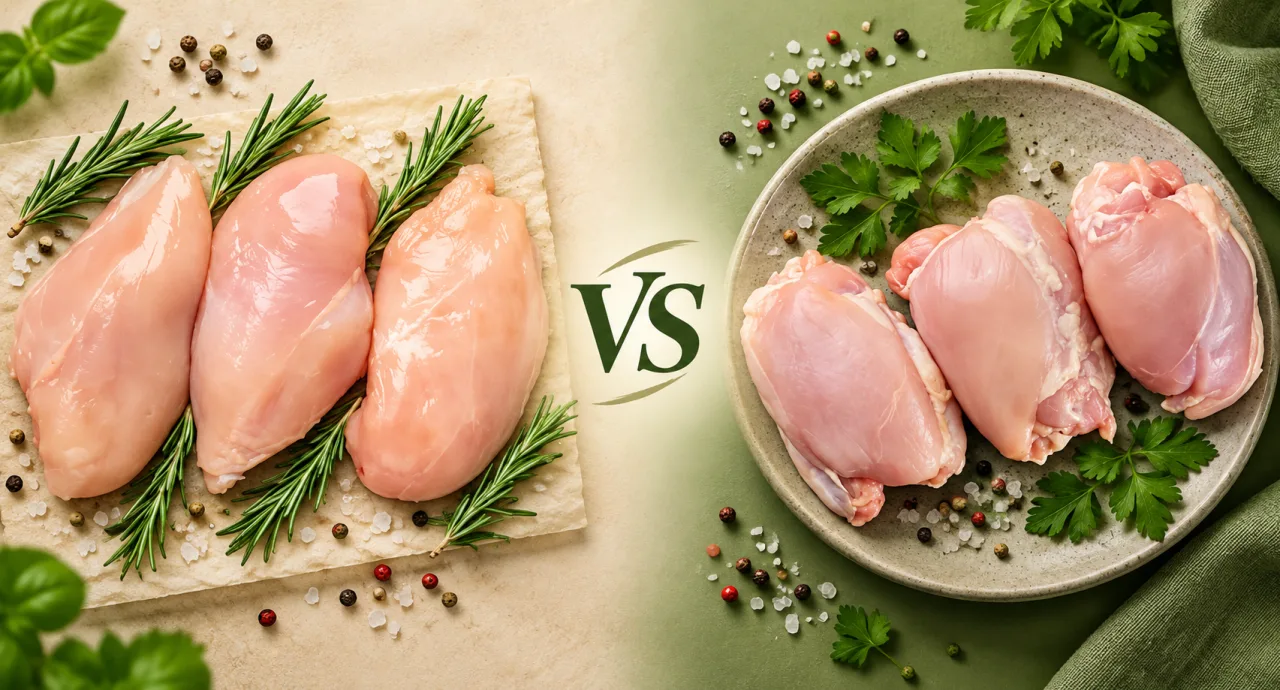
Choosing between chicken breast and chicken thighs can change the way your meal tastes, cooks and feels when you eat it. Although both cuts come from the same bird, they differ in fat content, texture and moisture retention. Therefore, understanding these differences helps you select the right chicken for everyday meals.
For Muslim households shopping for halal chicken breast in Japan, knowing when to choose breast or thigh meat can simplify meal preparation. Breast works well in quick, lean dishes, while thighs offer a richer texture and handle longer cooking more comfortably.
This guide compares chicken breast and thighs by flavor, nutrition, cooking behavior and recipe suitability. You’ll also learn what to check when exploring chicken options at MT Halal Mart.
Chicken Breast vs Chicken Thighs: What Is the Main Difference?
Chicken breast comes from the bird’s chest, while thighs form part of its upper legs. These muscles perform different functions, which affects their composition and texture.
Breast contains mostly white muscle fibers and relatively little fat. In contrast, thighs contain darker muscle tissue and generally more fat.
As a result, chicken breast tends to taste milder, while thighs offer a slightly richer flavor.
| Feature | Chicken Breast | Chicken Thighs |
|---|---|---|
| Meat type | White meat | Dark meat |
| Flavor | Mild | Richer and more pronounced |
| Fat content | Generally lower | Generally higher |
| Texture | Lean and firm | Tender and juicy |
| Moisture retention | Needs careful heat control | More forgiving during cooking |
| Cooking approach | Quick cooking, baking, stir-frying | Pan-cooking, roasting, braising |
| Popular uses | Sandwiches, salads, wraps | Curries, rice bowls, kebabs |
Neither cut offers a universal advantage. Instead, choose according to your preferred flavor, recipe and cooking method.
1. Taste and Texture: Which Chicken Cut Is Juicier?
Taste and texture often influence whether someone prefers breast or thigh meat.
Why Chicken Breast Has a Milder Flavor
Chicken breast contains less fat than thigh meat when you compare similar skinless portions. Consequently, it usually has a lighter flavor.
Its mild taste allows sauces, herbs and spices to stand out. For example, garlic, black pepper and lemon can complement chicken breast without competing with a strong meat flavor.
However, lean meat loses its pleasant texture when excessive heat removes too much moisture.
Why Chicken Thighs Often Taste Richer
Chicken thighs contain more fat and connective tissue. These characteristics contribute to their fuller flavor and softer eating texture.
During cooking, the fat helps create a moist mouthfeel. In addition, thigh meat tolerates a little extra cooking time better than breast.
For example, a thigh portion may remain tender during a longer simmer, while an equally sized breast piece may become firm.
That difference matters when preparing recipes that involve different amounts of heat and cooking time.
2. Nutritional Differences Between Chicken Breast and Thighs
Both cuts provide protein and important nutrients. Nevertheless, their nutritional profiles differ.
Chicken Breast for Leaner Meals
Skinless chicken breast generally contains less fat per comparable serving than skinless thigh meat.
Therefore, people who prefer leaner protein often choose breast.
It works particularly well in meals that include vegetables, grains or other ingredients that provide additional flavor and moisture.
Chicken Thighs for Richer Meals
Thigh meat usually contains more fat. As a result, it can produce a richer texture without requiring as much added cooking fat.
Both cuts provide protein, B vitamins and minerals, although exact quantities vary according to the portion, skin, preparation and cooking method.
Does Breast Always Offer Better Nutrition?
Not necessarily.
Chicken breast provides a leaner option, but chicken thighs can also contribute to a balanced diet.
Your overall meal, portion size and cooking method matter more than choosing one cut as universally healthier.
For example, deep-frying skinless breast may introduce more added fat than baking skinless thighs.
3. Cooking Time: Why Breast and Thighs Behave Differently
Chicken breast and thighs respond differently to heat because their muscle structures differ.
Cooking Chicken Breast Without Drying It Out
Breast meat cooks well when you control the temperature and avoid unnecessary heating.
Thick breast portions can cook unevenly. Therefore, flattening unusually thick pieces or cutting them into consistent portions may improve results.
For pan-cooking, use controlled heat and avoid leaving the chicken on the stove after it reaches a safe internal temperature.
Although breast cooks relatively quickly in many recipes, thickness matters more than the cut name alone.
Cooking Chicken Thighs for Tender Results
Thigh meat contains more connective tissue, which gives it a different cooking texture.
You can pan-cook, roast or gently simmer thighs according to the recipe.
Because thighs contain more fat, they often tolerate longer cooking without becoming as dry as breast.
However, you should still monitor doneness. Excessive cooking can eventually affect either cut.
Safe Cooking Temperature for Both Cuts
FoodSafety.gov recommends cooking all chicken parts to an internal temperature of 74°C (165°F).
Use a food thermometer to check the thickest part. If the cut contains a bone, keep the thermometer tip away from it.
Color alone cannot reliably confirm food safety.
4. Best Recipe Uses for Chicken Breast and Thighs
Both cuts work in many dishes, but their different textures make them particularly useful for certain cooking styles.
| Recipe | Suitable Cut | Why It Works |
|---|---|---|
| Chicken sandwiches | Breast | Creates lean, easy-to-slice portions |
| Chicken curry | Thighs | Retains moisture during simmering |
| Chicken stir-fry | Breast or thighs | Both work with properly controlled cooking |
| Chicken rice bowls | Breast or thighs | Choice depends on preferred texture |
| Chicken kebabs | Boneless thighs | Fat helps retain moisture |
| Chicken soup | Breast or thighs | Both contribute meat and flavor |
| Oven-baked chicken | Breast or thighs | Each suits different seasoning and cooking approaches |
Chicken Breast for Sandwiches and Wraps
Chicken breast works well when a recipe calls for thin slices or evenly sized strips.
You can season it with herbs, black pepper, garlic and lemon before cooking.
Afterward, combine the cooked chicken with vegetables, bread or rice.
Because breast has a mild flavor, it adapts to many different sauces.
Chicken Thighs for Curries and Simmered Dishes
Thigh meat works particularly well when chicken spends additional time in a sauce.
For example, a tomato-based curry allows the meat to absorb seasoning while it cooks.
The cut’s fat content can also help maintain a satisfying texture.
However, choose boneless or bone-in thighs according to your serving preference.
Which Cut Works for Japanese-Style Rice Bowls?
Both cuts suit Japanese-inspired rice bowls.
Breast offers a leaner option for lightly seasoned dishes. Meanwhile, thighs deliver a richer texture when you simmer or pan-cook them with a suitable sauce.
For halal home cooking, check the ingredients in soy-based sauces, marinades and seasonings. Some traditional Japanese products contain mirin, sake or other ingredients that require halal verification.
5. How to Adjust Cooking Methods for Each Cut
Small changes in preparation can improve your results.
When Cooking Chicken Breast
Cut large pieces into even portions and control the heat carefully.
You can also use a suitable marinade to add flavor before cooking.
However, don’t assume that a marinade guarantees moisture retention. Proper cooking remains essential.
Once the chicken reaches a safe internal temperature, remove it from the heat and allow it to rest briefly before slicing.
When Cooking Chicken Thighs
Trim excess fat when the recipe requires a lighter result.
For pan-cooking, allow enough time for the meat to cook evenly. Meanwhile, braising offers another option when you want a softer texture.
If you use boneless thighs, check their thickness before deciding how long to cook them.
How Seasonings Affect Each Cut
Breast responds well to lighter seasonings, while thighs complement stronger spice blends and rich sauces.
Still, both cuts can work with turmeric, cumin, coriander, garlic and ginger.
For cooking ingredients, explore MT Halal Mart’s Masala & Spices Collection.
6. Buying Halal Chicken Breast and Thighs in Japan
When choosing chicken in Japan, consider the cut, packaging, halal information and intended recipe.
MT Halal Mart offers several options through its Chicken Collection.
The store lists products such as Chicken Breast Boneless and Chicken Leg Boneless.
However, product names do not always tell you everything about their preparation. For example, a leg-meat listing may need additional clarification if you specifically want upper-thigh meat.
What Should You Check Before Buying?
Product cut: Confirm whether the package contains breast, thigh or mixed leg meat.
Skin and bone content: Review the specifications rather than assuming every boneless product also lacks skin.
Pack weight: Select a suitable quantity for your cooking plans.
Storage requirements: Check whether the product needs freezer or refrigerator storage.
Halal information: Confirm the relevant product details and sourcing information.
Current price and stock: Review the latest listing instead of relying on older price information.
For example, MT Halal Mart has a Chicken Breast Boneless Product Listing where customers can check current product details.
Its title and skin-type attribute currently differ, so confirm that detail before ordering.
7. How to Compare Breast and Thigh Portions for Home Cooking
Package weight alone does not determine which cut suits your household.
A larger package may help when you prepare several meals, but it also requires suitable storage.
Likewise, a smaller quantity may work better when you cook for one or two people.
Consider Your Cooking Routine
If you regularly prepare quick meals, breast portions may offer convenient slicing and preparation.
On the other hand, thigh meat may suit households that frequently prepare curries, braised dishes or kebabs.
Consider Usable Meat
Boneless cuts are convenient because they require less preparation.
However, differences in skin, fat and trimming can affect the amount of meat you use.
Therefore, compare the actual product description rather than assuming every package offers identical usable portions.
Consider Storage Space
Choose a quantity that fits your refrigerator or freezer and matches your cooking schedule.
For broader guidance on whole, boneless and bone-in options, read MT Halal Mart’s existing Halal Chicken Cuts Explained guide.
Quick Pre-Purchase Checklist
Before selecting chicken breast or thighs, consider these questions:
- Do I prefer lean or richer-tasting chicken?
- Does my recipe require quick cooking or longer simmering?
- Do I need slices, strips or larger portions?
- Does the package contain skin or bones?
- Can I store the quantity safely?
- Does the listing provide reliable halal information?
- Have I checked the current price and availability?
These questions help you choose chicken according to your needs rather than relying only on the cut name.
Frequently Asked Questions
1. Which is better, chicken breast or chicken thighs?
Neither cut suits every recipe. Chicken breast offers a leaner texture and mild flavor, while thighs provide more richness and often retain moisture during longer cooking. MT Halal Mart offers chicken options in Japan so shoppers can compare cuts according to their cooking preferences.
2. Is chicken breast healthier than chicken thighs?
Skinless chicken breast generally contains less fat than skinless thighs. However, both provide protein and can form part of a balanced diet. MT Halal Mart customers can compare different chicken cuts and choose according to their nutritional preferences and meal plans.
3. Why do chicken thighs stay juicier than chicken breast?
Chicken thighs usually contain more fat and connective tissue, which help them retain a moist texture during cooking. Breast meat has less fat and can dry out more easily. MT Halal Mart’s chicken listings help shoppers identify suitable cuts for different cooking methods.
4. Can I replace chicken thighs with chicken breast in a recipe?
Yes. Many recipes allow you to substitute one cut for the other. However, adjust the cooking time and monitor the internal temperature because breast can become dry more quickly. MT Halal Mart offers breast and leg-meat options for customers who prefer different textures.
5. Where can I buy halal chicken breast in Japan?
Specialist halal grocery retailers offer chicken breast products in Japan. MT Halal Mart’s Chicken Collection includes breast and other chicken listings. Check current stock, weight and product details before ordering.
6. Are chicken thighs suitable for curry and grilling?
Yes. Their richer texture and fat content make thighs useful for curries, kebabs and grilling. MT Halal Mart lists boneless leg meat that shoppers can consider, although they should confirm the exact cut and product details before purchasing.
7. Which chicken cut cooks faster, breast or thighs?
Cooking time depends on thickness, portion size and cooking method. Thin breast pieces often cook faster than thicker thighs, but cut type alone cannot guarantee the result. MT Halal Mart shoppers should choose the cut their recipe requires and use a thermometer to confirm 74°C internally.
Conclusion
Understanding chicken breast vs chicken thighs helps you choose a suitable cut for everyday cooking.
Breast offers a mild flavor and lean texture, making it useful for sandwiches, stir-fries and quick meals. In contrast, thighs provide a richer taste and work well in curries, rice dishes and grilling.
When shopping for halal chicken breast in Japan, compare product descriptions, meat cuts, pack sizes and current availability rather than focusing only on the package price.
Explore MT Halal Mart’s Chicken Collection to review available chicken options and choose ingredients for your next home-cooked meal.
Editorial Verification: Recheck product cut descriptions, skin and bone details, halal sourcing information, stock availability and official links before publication. Follow safe food-handling guidance and cook all poultry to an internal temperature of at least 74°C (165°F).