How to Substitute Missing South Asian Spices When Cooking in Japan
You’re halfway through making chicken curry when you realize the coriander powder has finished. Or perhaps you’re preparing daal, but the recipe calls for cumin seeds that you couldn’t find at your local Japanese supermarket.
Fortunately, a missing spice doesn’t always mean you have to cancel dinner.
You can substitute many South Asian spices with ingredients already in your kitchen. However, the best replacement depends on what the original spice contributes: heat, color, aroma, or flavor.
For Pakistani and Indian households in Japan, this skill is especially useful when specialist ingredients aren’t immediately available nearby.
If you’re looking to buy halal spices in Japan, MT Halal Mart offers online grocery shopping and a dedicated spice selection. Meanwhile, this guide will help you manage a missing ingredient until you can buy the exact spice your recipe needs.
What Can You Use Instead of Missing South Asian Spices?
Start by identifying the role of the missing ingredient. For example, red chili powder adds heat, turmeric adds color and earthy flavor, while cumin creates a warm, distinctive aroma.
A substitute may replace one of these functions without reproducing the original flavor exactly.
Quick South Asian Spice Substitution Chart
| Missing ingredient | Possible substitute | What to expect |
|---|---|---|
| Cumin seeds | Ground cumin | Similar flavor, but less texture and a different cooking method |
| Coriander powder | Freshly ground coriander seeds | Closest practical replacement |
| Red chili powder | Suitable ground chili or chili flakes | Adjust quantity because heat levels vary |
| Turmeric powder | A small amount of suitable curry powder | Changes flavor as well as color |
| Garam masala | A small homemade blend of available warm spices | Can provide similar aromatic warmth |
| Green cardamom | A tiny amount of ground cardamom | Suitable if it’s the same green-cardamom spice |
| Cloves | A very small amount of ground cloves | Strong flavor; easy to overuse |
| Cinnamon sticks | Ground cinnamon | Similar aroma, but use much less |
| Fresh ginger | Ginger paste or suitable ground ginger | Changes freshness and intensity |
| Fresh garlic | Garlic paste or garlic powder | Adjust carefully to taste |
These aren’t all equal, one-to-one substitutions. Where the replacement contains different ingredients, begin with a small amount.
Also, if a recipe’s main flavor depends on one particular spice, leaving it out temporarily may be better than using an unsuitable replacement.
1. What to Use Instead of Cumin Seeds
Cumin seeds, also called zeera, are widely used in Pakistani daal, vegetable dishes, curry, and rice.
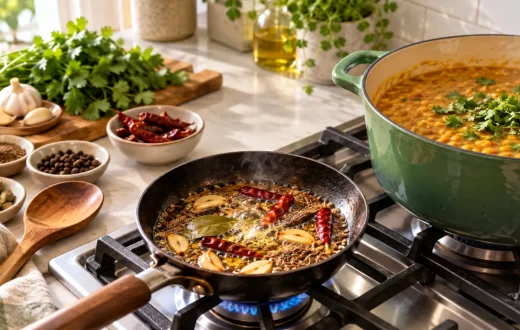
They provide a warm, earthy aroma, particularly when heated briefly in oil.
Best Substitute: Ground Cumin
If the recipe calls for whole cumin seeds and you only have ground cumin, you can often use the ground version.
For example, if the recipe asks for one teaspoon of cumin seeds, begin with about half to three-quarters of a teaspoon of ground cumin and adjust.
Ground cumin releases flavor faster and may burn more easily than whole seeds.
Therefore, avoid leaving it in very hot oil for too long. It’s often easier to add it after onions, tomatoes, or another moist ingredient enters the pan.
Can You Use Caraway Instead?
Caraway seeds look somewhat similar to cumin, but their flavor is different.
If you’re making a Pakistani daal where cumin is essential, caraway isn’t an ideal direct replacement.
In that situation, a smaller amount of ground cumin—or omitting cumin until you can purchase it—may produce a more predictable result.
2. What to Use Instead of Coriander Powder
Ground coriander adds mild citrus-like and earthy notes to many Pakistani curries.
It also helps round out the flavor of an onion-and-tomato masala.
Best Substitute: Whole Coriander Seeds
If you have whole coriander seeds, grind them using a spice grinder or mortar and pestle.
This is a close replacement because you’re using the same spice in another form.
Can You Use Fresh Coriander Leaves?
Fresh coriander leaves and coriander seeds come from the same plant, but their flavors are different.
Leaves add a fresh, herbal taste. Ground seeds provide warmer, deeper notes.
As a result, fresh leaves are not a direct replacement for coriander powder.
You can still add them as a garnish, but your curry may taste different.
What If You Have Neither?
For a simple curry, you may be able to reduce or omit coriander powder.
Then balance the dish with the other ingredients already in the recipe.
Avoid replacing a large amount of coriander powder with an equally large amount of garam masala. Garam masala is generally stronger and more aromatic.
3. How to Replace Red Chili Powder
Red chili powder is commonly used in Pakistani curry, karahi, daal, and other savory dishes.
Its main role is usually to add heat, although some chili varieties also contribute color and a distinctive flavor.
Possible Alternatives
Ground chili from a Japanese supermarket: This can work, but check the ingredient list and spice level.
Chili flakes: These may add heat with a coarser texture.
Fresh green chili: Useful when you want fresh chili flavor, although it may not create the same color or taste.
Paprika: Some varieties add red color with relatively little heat. Hot paprika behaves differently.
How Much Should You Use?
There is no universal conversion because chili products vary greatly in strength.
Start with less than you think you need. Then taste and adjust after the seasoning has mixed into the dish.
If a recipe calls for one teaspoon of red chili powder, don’t automatically add one teaspoon of an unfamiliar Japanese chili product.
Also, check whether the product contains salt or other seasonings.
4. What Can Replace Turmeric Powder?
Turmeric, or haldi, contributes a warm yellow color and an earthy, slightly bitter flavor.
It’s commonly used in daal, curry, and vegetable dishes.
Can Japanese Curry Powder Replace Turmeric?
Sometimes, a small amount of a suitable curry powder can add color. However, Japanese curry powder normally contains multiple spices.
Therefore, the finished dish may taste different.
Start with a small quantity and check the ingredients before using it.
Can You Use Saffron Instead?
Saffron can create a yellow-golden color, but it has a different aroma and is usually much more expensive.
It isn’t a practical flavor substitute for turmeric in everyday daal.
Is It Better to Skip Turmeric?
In some recipes, yes.
If you’re preparing a simple chicken curry and don’t have turmeric, you can often continue without it.
The color and flavor will change slightly, but you won’t necessarily ruin the meal.
For a recipe strongly associated with turmeric, however, buying the correct ingredient is preferable.
5. What to Use Instead of Garam Masala
Garam masala is an aromatic blend commonly used in Pakistani and Indian cooking.
It may contain cinnamon, cloves, cardamom, cumin, coriander, black pepper, and other spices.
Because blends vary, there is no single perfect substitute.
Make a Small Homemade Alternative
If you have individual spices available, try a simple aromatic mixture using:
- ½ teaspoon ground cumin
- ¼ teaspoon ground coriander
- A small pinch of ground cinnamon
- A tiny pinch of ground cloves
- A pinch of black pepper
Mix the spices in a small bowl. Use a little at a time and adjust according to your dish.
This is a basic emergency combination, not a precise replacement for a particular garam masala brand.
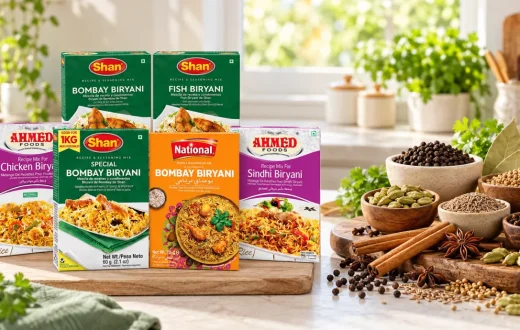
Can You Use Biryani Masala Instead?
Sometimes, but carefully.
Biryani masala may contain additional chili, salt, herbs, or other ingredients.
For example, adding biryani masala to a mild vegetable curry could make it much spicier than expected.
Before substituting, read the ingredient list and begin with a small amount.
6. How to Replace Missing Whole Spices
Whole spices are especially important in pulao, yakhni, biryani, and some Pakistani meat curries.
However, ground versions may be suitable when you understand the flavor difference.
| Missing whole spice | Possible replacement | Important adjustment |
|---|---|---|
| Cinnamon stick | Ground cinnamon | Use a small pinch rather than equal volume |
| Whole cloves | Ground cloves | Very concentrated; start tiny |
| Green cardamom pods | Ground green cardamom | Use a small amount and check the product type |
| Whole black pepper | Ground black pepper | Add according to desired pepperiness |
| Coriander seeds | Ground coriander | Use less and add at an appropriate cooking stage |
| Cumin seeds | Ground cumin | Avoid prolonged frying in very hot oil |
Why Ground Spices Need Different Timing
Whole spices can release their aroma gradually while heating in oil or simmering in liquid.
Ground spices have more exposed surface area. Consequently, they can release flavor quickly and may scorch if added to very hot oil.
For a curry, it’s often better to add ground spices once onions or other moist ingredients are cooking.
This helps prevent bitterness.
7. Which Substitutes Work for Daal, Curry, and Biryani?
Not every dish is equally flexible.
A simple weekday daal can often tolerate a missing seasoning. In contrast, biryani may depend on a carefully balanced mixture of whole and ground spices.
For Daal
If cumin seeds are missing, ground cumin is a practical option.
Likewise, you can leave out a finishing pinch of garam masala if the daal already has enough flavor.
Garlic, onion, and a suitable tempering can still create a satisfying result.
For Chicken Curry
Curry offers some flexibility.
If coriander powder is unavailable, use freshly ground coriander seeds if possible.
However, don’t add large amounts of unrelated spice blends to compensate. Instead, let the onions, tomatoes, ginger, garlic, and remaining seasonings develop their flavor.
For Biryani
Biryani requires more careful substitution.
If you have no biryani masala, you can build a seasoning mix from individual spices and follow a suitable homemade recipe.
Nevertheless, replacing all the required whole spices with Japanese curry roux will create a very different dish.
When the recipe depends on a specific biryani masala, purchasing that blend is often the more reliable option.
8. Can Japanese Supermarket Spices Work in Pakistani Recipes?
Yes, some can.
Japanese supermarkets often sell ingredients such as black pepper, cinnamon, ground chili, garlic powder, ginger powder, and curry powder.
However, the products may have different ingredients or flavor profiles from those used in Pakistani cooking.
What to Check on Japanese Spice Labels
| Japanese label | English meaning |
|---|---|
| クミン | Cumin |
| コリアンダー | Coriander |
| ターメリック | Turmeric |
| シナモン | Cinnamon |
| クローブ | Clove |
| カルダモン | Cardamom |
| チリパウダー | Chili powder |
| ブラックペッパー | Black pepper |
| カレー粉 | Curry powder |
These terms can help when searching supermarket shelves.
Still, labels such as chili powder or curry powder may refer to blends rather than single ingredients. Always check the full product description.
What About Japanese Curry Roux?
Japanese curry roux is not the same as South Asian curry powder.
Roux blocks commonly contain flour, fats, seasonings, and other ingredients. They also thicken the sauce.
Therefore, they are not suitable one-to-one substitutes for cumin, coriander, garam masala, or biryani masala.
If you’re checking halal suitability, carefully review the ingredients and relevant product information.
9. What Should You Avoid Substituting?
Some substitutions change a dish so much that the original recipe loses its distinctive character.
Avoid treating these as direct equivalents:
| Original ingredient | Not a direct equivalent | Why |
|---|---|---|
| Ground coriander | Fresh coriander leaves | Different flavor |
| Cumin seeds | Caraway seeds | Different aroma |
| Garam masala | Japanese curry roux | Different ingredients and cooking function |
| Turmeric | Saffron | Different flavor and price |
| Biryani masala | Any random curry mix | Different proportions and seasonings |
| Green cardamom | Black cardamom | Different smoky and aromatic qualities |
| Kashmiri chili powder | Very hot chili powder | Heat and color may differ substantially |
Sometimes, the safest cooking decision is to omit a small amount of the missing ingredient rather than add a stronger or unfamiliar substitute.
10. How to Test a Spice Substitute Without Ruining Dinner
When experimenting, make changes gradually.
Follow These Five Steps
- Identify the missing flavor. Is the ingredient used mainly for heat, color, warmth, or aroma?
- Choose the closest substitute. Prefer another form of the same spice when possible.
- Start with a small amount. Different spices vary in strength.
- Add at the right cooking stage. Ground spices may burn faster than whole spices.
- Taste and adjust. Let the substitute mix into the food before adding more.
For instance, if you’re replacing cumin seeds with ground cumin in a tomato-based curry, begin with a small amount after the onions and tomatoes have started cooking.
This gives you greater control than adding a large quantity directly to very hot oil.
11. What to Do When a Spice Is Central to the Recipe
Not every missing ingredient needs an immediate shopping trip.
However, some dishes depend on a distinctive seasoning.
For example, a small amount of missing turmeric may be manageable in an everyday curry. On the other hand, omitting several core biryani spices can noticeably change the entire dish.
Use this simple rule:
Substitute when the missing spice plays a supporting role. Buy the correct ingredient when it defines the dish’s main aroma or flavor.
This approach helps you decide whether to improvise or wait until you have the right ingredient.
12. Buy Halal Spices in Japan for Your Next Pakistani Meal
Substitutions help during emergencies, but keeping a few frequently used South Asian spices at home makes cooking more consistent.
For example, cumin, coriander, turmeric, chili powder, black pepper, and a suitable garam masala can support many everyday Pakistani recipes.
MT Halal Mart offers a dedicated spice selection through its online grocery store, along with a physical grocery shop in Yotsukaido, Chiba.
Explore the MT Halal Masala & Spices Category to browse available whole spices, ground seasonings, and recipe mixes.
For more information on finding traditional seasonings, read Where to Find Authentic South Asian Spices While Living in Japan.
What to Buy First
Rather than purchasing every spice at once, prioritize the ingredients you use most often.
For many Pakistani households, a practical starting selection may include cumin, coriander, turmeric, chili powder, and one suitable seasoning blend.
Then add whole cardamom, cloves, cinnamon, and other specialty spices according to your favorite recipes.
Before ordering, check pack sizes, ingredient labels, current availability, and any halal information required for prepared mixes.
Frequently Asked Questions
What can I use instead of cumin seeds in Pakistani curry?
Ground cumin is usually the closest convenient replacement. Use a smaller amount initially and avoid frying it for too long in very hot oil.
Can I replace coriander powder with fresh coriander?
Fresh coriander leaves add a different flavor. Ground coriander seeds are a closer substitute for coriander powder.
Can Japanese curry powder replace garam masala?
It may add some spice flavor, but it is not an exact replacement. Japanese curry powder blends vary and can contain different proportions of ingredients.
What can I use if I don’t have biryani masala?
You can prepare a homemade seasoning with suitable whole and ground spices. However, the result depends on your recipe and may differ from a commercial biryani mix.
Is paprika a substitute for red chili powder?
Paprika can contribute color and some chili flavor, but many paprika varieties are much milder than hot red chili powder.
Can I make daal without turmeric?
Yes. Turmeric adds color and flavor, but many simple daal recipes can still be prepared without it.
Are all spice mixes sold in Japan halal?
Not necessarily. Single-ingredient spices and mixed seasoning products are different. Check ingredients and relevant halal information, particularly for blends containing additives.
Where can I buy South Asian spices in Japan?
MT Halal Mart offers whole spices, ground spices, and recipe seasonings through its online store with delivery across Japan and its physical grocery store in Yotsukaido, Chiba. Product availability varies.
Final Thoughts: Substitute Carefully and Keep Cooking
A missing spice does not always mean you have to abandon a Pakistani recipe.
First, understand what the ingredient contributes. Then choose the closest available alternative and adjust the quantity gradually.
Ground cumin can replace whole cumin in many dishes. Freshly ground coriander seeds work in place of coriander powder. Meanwhile, some recipes can simply be prepared without a small amount of an optional seasoning.
However, for biryani and other dishes built around distinctive spices, buying the correct ingredients often produces a more familiar result.
When you need to restock, visit the MT Halal Masala & Spices Category and choose the seasonings that match your regular cooking needs in Japan.