
You may have halal chicken, Basmati rice, onions, tomatoes, and cooking oil ready in your kitchen in Japan, but the biryani still lacks aroma or the curry tastes flatter than the food you remember from home. In many cases, the missing difference is not the main ingredient. It is the spice combination.
South Asian cooking depends on more than one general curry powder. Biryani uses aromatic whole spices and balanced recipe masalas. Curry often needs turmeric, coriander, cumin, chilli, and garam masala. Daal, pulao, kebabs, chana, and traditional meat dishes each use spices differently.
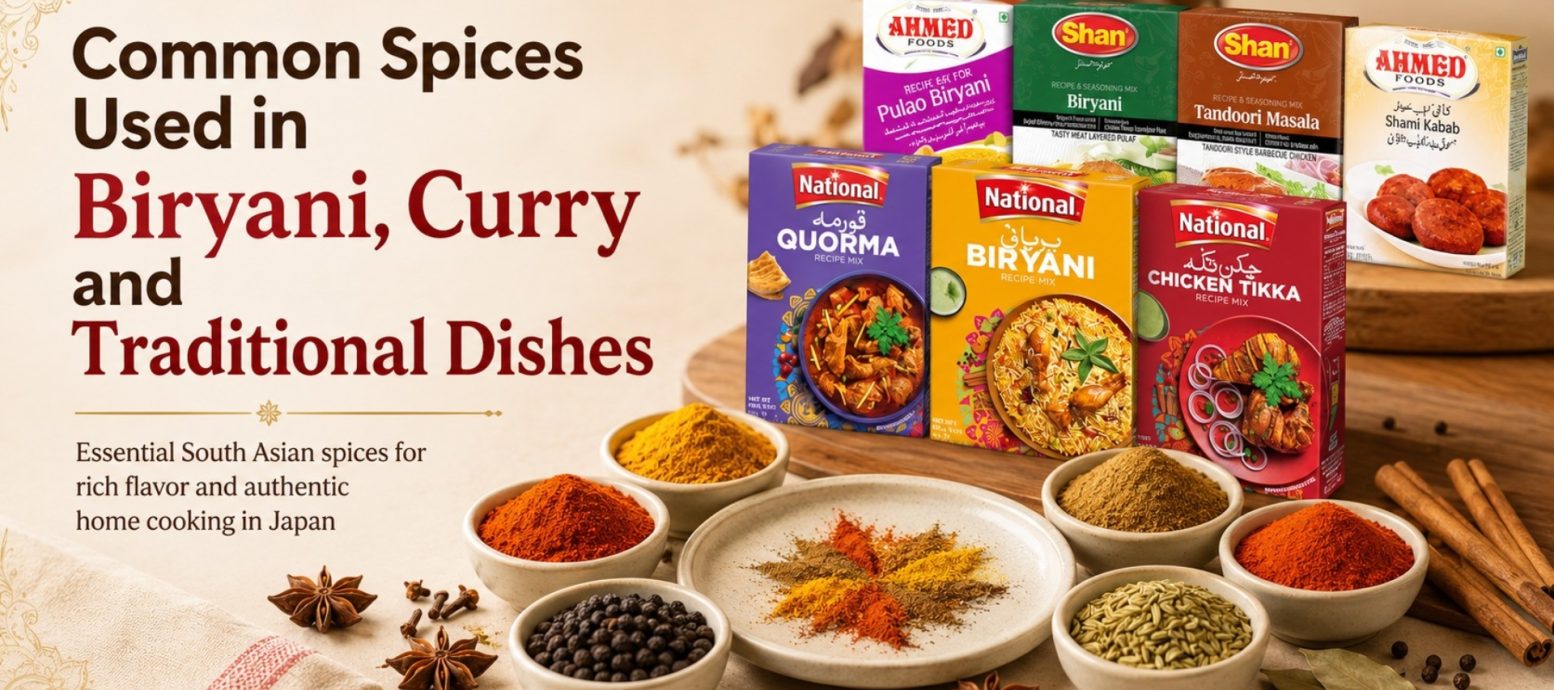
Understanding the common spices used in biryani and curry makes it easier to prepare familiar meals with better aroma, color, and depth. MTHalal helps customers in Japan browse whole spices, ground seasonings, recipe blends, rice, daal, halal meat, frozen foods, and pantry essentials through one online grocery platform.
Why Traditional Dishes Need Different Spices
Every traditional dish has its own flavor structure.
Biryani should be fragrant, layered, and aromatic. Curry needs a balanced masala that blends with onion, tomato, ginger, garlic, meat, lentils, or vegetables. Pulao is usually milder and depends strongly on whole spices and stock. Kebabs need spices that can flavor the meat during marination and cooking.
Using the same masala in every dish can make different recipes taste too similar.
Spices Can Add
They may add:
- Heat
- Color
- Warmth
- Earthiness
- Fragrance
- Tanginess
- Sweet aroma
- Smoky depth
- A traditional finishing taste
The best results come from understanding what each spice contributes.
Whole Spices vs Ground Spices
South Asian kitchens normally use both whole and ground spices.
Whole Spices
Whole spices are often added to hot oil, ghee, rice water, stock, or slow-cooked dishes.
They include:
- Cumin seeds
- Cardamom
- Cloves
- Cinnamon
- Black peppercorns
- Bay leaves
- Star anise
- Fennel seeds
- Dried red chillies
Whole spices create aroma and slowly release flavor.
Ground Spices
Ground spices form the main masala in curry, daal, vegetables, and marinades.
They include:
- Turmeric
- Red chilli powder
- Coriander powder
- Cumin powder
- Black pepper powder
- Garam masala
Ground spices blend more easily into gravy and coat meat or vegetables.
Common Whole Spices Used in Biryani
Biryani is one of the most aromatic South Asian dishes. Its fragrance usually begins with whole spices.
1. Green Cardamom
Green cardamom adds a sweet and floral aroma.
It is often added to:
- Chicken biryani
- Mutton biryani
- Beef biryani
- Pulao
- Zarda
- Kheer
Lightly crushing the pod can help release its aroma.
2. Black Cardamom
Black cardamom has a deeper, smokier flavor than green cardamom.
It works well in:
- Mutton biryani
- Beef biryani
- Yakhni pulao
- Meat curry
- Nihari
Use it carefully because the flavor is strong.
3. Cloves
Cloves provide intense warmth and fragrance.
A few cloves can improve:
- Biryani
- Pulao
- Korma
- Meat curry
- Yakhni
Too many cloves can make a dish bitter or medicinal, so use them in small quantities.
4. Cinnamon
Cinnamon adds gentle sweetness and warmth.
Whole cinnamon sticks are commonly used in:
- Biryani
- Pulao
- Curry
- Yakhni
- Korma
A small piece is usually enough for one pot.
5. Bay Leaves
Bay leaves give rice and curry a mild background aroma.
They are useful in:
- Biryani
- Pulao
- Meat curry
- Daal
- Chole
- Rajma
Remove them before serving.
6. Black Peppercorns
Whole black pepper adds sharp warmth.
It is often used in:
- Pulao
- Biryani
- Yakhni
- Meat curry
- Soup
- Garam masala
It provides warmth without the same flavor as red chilli.
7. Cumin Seeds
Cumin seeds add a warm, nutty aroma.
They can be used in:
- Biryani masala
- Pulao
- Jeera rice
- Curry
- Daal tempering
When heated in oil, they form a strong aromatic base.
8. Star Anise
Star anise has a sweet and liquorice-like aroma.
Some biryani and rice recipes use a small piece to add depth.
It should be used lightly because its flavor can become dominant.
9. Fennel Seeds
Fennel seeds add gentle sweetness.
They appear in some:
- Biryani recipes
- Kashmiri-style dishes
- Meat curries
- Pulao
- Regional spice blends
They are not required in every biryani, but they support certain traditional styles.
Ground Spices Commonly Used in Biryani
Whole spices provide aroma, while ground seasonings flavor the meat and masala.
10. Red Chilli Powder
Red chilli powder adds heat and color.
The quantity should match family preference. Some powders are hotter than others, so begin carefully.
11. Turmeric
Turmeric may be used in small amounts in the meat masala.
It adds:
- Golden color
- Mild earthiness
- Warm visual depth
Too much turmeric can reduce the bright appearance of biryani and create bitterness.
12. Coriander Powder
Coriander powder adds body and balance to the biryani masala.
It works especially well with:
- Onion
- Tomato
- Yogurt
- Ginger
- Garlic
- Meat
13. Cumin Powder
Ground cumin gives the masala a warm and slightly smoky depth.
It can support both meat and vegetable biryani.
14. Garam Masala
Garam masala is often added toward the end of preparing the meat masala.
It may contain:
- Cardamom
- Cinnamon
- Cloves
- Black pepper
- Cumin
- Coriander
A small amount can strengthen the final aroma.
Recipe Blends for Different Biryani Styles
Ready biryani masalas help combine several spices in suitable proportions.
Different styles may include:
- Chicken biryani masala
- Mutton biryani masala
- Beef biryani masala
- Sindhi biryani masala
- Bombay biryani masala
- Fish biryani masala
- Pulao biryani masala
- Vegetable biryani masala
Each blend may have different chilli, salt, sourness, and aroma levels.
Check Before Using a Biryani Mix
Review:
- Ingredient list
- Salt content
- Chilli level
- Recommended meat quantity
- Rice quantity
- Cooking instructions
- Serving size
Do not automatically add a full packet without checking the instructions.
Common Ground Spices Used in Curry
Curry can refer to many different dishes, but several ground spices appear regularly.
15. Turmeric Powder
Turmeric is commonly used in:
- Chicken curry
- Beef curry
- Mutton curry
- Daal
- Vegetable curry
- Chana
- Fish curry
It is usually added near the beginning with the main masala.
16. Coriander Powder
Coriander powder is one of the most useful curry spices.
It gives gravy:
- Warmth
- Body
- Balance
- A mild traditional flavor
It works well in both meat and vegetable curries.
17. Red Chilli Powder
Red chilli controls the heat of the curry.
Home cooks can reduce it for children or increase it for stronger dishes while keeping the other spices balanced.
18. Cumin Powder
Cumin adds depth and warmth.
It is useful in:
- Chicken curry
- Meat curry
- Chana masala
- Rajma
- Vegetable curry
- Marinades
19. Garam Masala
Garam masala adds final fragrance.
It is often used near the end in:
- Chicken curry
- Keema
- Daal
- Chole
- Rajma
- Paneer curry
- Meat dishes
20. Black Pepper
Black pepper is useful in:
- White curry
- Soup
- Grilled chicken
- Korma
- Kebabs
- Light gravies
- Rasam
It adds sharp warmth without making the dish taste exactly like red chilli.
Whole Spices Used in Curry
Some curries begin with whole spices heated in oil.
Common Curry Tempering Spices
These include:
- Cumin seeds
- Mustard seeds
- Cardamom
- Cloves
- Cinnamon
- Bay leaves
- Dried red chillies
- Fenugreek seeds
- Curry leaves
The exact combination depends on the regional recipe.
Common Spices Used in Chicken Curry
A basic chicken curry may include:
- Turmeric
- Red chilli powder
- Coriander powder
- Cumin
- Garam masala
- Black pepper
- Bay leaves
- Cardamom where used
Fresh ginger, garlic, onions, and tomatoes help these spices form a complete gravy.
Chicken Curry Masala
A ready chicken curry blend can help:
- Beginners
- Students
- Busy families
- People with limited spice storage
- Cooks wanting consistent results
The blend should still be combined with fresh ingredients for a more complete flavor.
Common Spices Used in Meat Curry
Beef and mutton curries often need stronger warming spices because the meat cooks for longer.
Useful spices include:
- Coriander powder
- Cumin
- Turmeric
- Red chilli
- Black pepper
- Garam masala
- Black cardamom
- Cloves
- Cinnamon
- Bay leaves
- Meat masala
Slow cooking allows the spices to blend deeply into the meat and gravy.
Common Spices Used in Daal
Daal usually uses a simple spice base followed by tempering.
Spices Cooked With the Lentils
These may include:
- Turmeric
- Red chilli powder
- Coriander powder
- Salt
- Garam masala where preferred
Spices Used in Daal Tadka
The final tempering may contain:
- Cumin seeds
- Mustard seeds
- Dried red chillies
- Garlic
- Curry leaves
- Hing
- Red chilli powder
The tempering gives daal its strongest aroma.
Common Spices Used in Pulao
Pulao is generally milder than biryani.
Its flavor often comes from stock and whole spices rather than a heavy ground masala.
Common Pulao Spices
Use:
- Cumin seeds
- Green cardamom
- Black cardamom
- Cloves
- Cinnamon
- Bay leaves
- Black peppercorns
- Fennel seeds where preferred
A pulao masala blend can make the process easier, especially for beginners.
Common Spices Used in Kebabs
Kebabs need spices that blend well with minced or sliced meat.
Useful Kebab Spices
These include:
- Cumin powder
- Coriander powder
- Red chilli powder
- Black pepper
- Garam masala
- Chaat masala
- Ajwain where used
- Kebab masala
- Tandoori masala
Fresh onion, ginger, garlic, coriander leaves, and green chilli may also be added.
Recipe Blends for Kebabs
Popular options may include:
- Seekh kebab masala
- Shami kebab masala
- Chapli kebab masala
- Bihari kebab masala
- Tandoori masala
Choose the blend that matches the kebab style.
Common Spices Used in Nihari
Nihari depends on warm, slow-cooked spices.
A nihari blend may include:
- Fennel
- Cumin
- Coriander
- Black pepper
- Cloves
- Cinnamon
- Cardamom
- Nutmeg
- Mace
- Dried ginger
- Chilli
Because the combination is complex, ready nihari masala can be practical.
Common Spices Used in Haleem
Haleem combines grains, lentils, and meat.
Its spice mix may contain:
- Cumin
- Coriander
- Black pepper
- Red chilli
- Garam masala
- Cinnamon
- Cloves
- Cardamom
- Dried ginger
A haleem masala blend can simplify preparation.
Common Spices Used in Chana and Rajma
Chickpeas and kidney beans need spices that add depth to their naturally mild flavor.
Use:
- Cumin
- Coriander powder
- Turmeric
- Red chilli
- Garam masala
- Amchur
- Black pepper
- Bay leaves
- Chana masala
- Rajma masala
Amchur or another sour ingredient helps balance the richness.
Common Spices Used in Vegetable Dishes
Vegetables can taste completely different depending on the spice combination.
Useful Vegetable Spices
Keep:
- Cumin seeds
- Mustard seeds
- Turmeric
- Coriander powder
- Red chilli
- Garam masala
- Amchur
- Ajwain
- Fenugreek
- Curry leaves
Potatoes, cauliflower, peas, okra, spinach, and mixed vegetables can each use a different combination.
Common Spices Used in Sambar and Rasam
South Indian lentil dishes require a different flavor profile.
Sambar May Use
It may include:
- Mustard seeds
- Fenugreek seeds
- Dried red chilli
- Turmeric
- Coriander
- Cumin
- Curry leaves
- Hing
- Sambar masala
Rasam May Use
It may include:
- Black pepper
- Cumin
- Dried red chilli
- Coriander
- Mustard seeds
- Curry leaves
- Hing
- Rasam powder
These dishes depend heavily on proper tempering.
Common Spices Used in Chaat and Snacks
Chaat needs tangy, salty, spicy, and fresh flavors.
Helpful Chaat Spices
Use:
- Chaat masala
- Roasted cumin powder
- Red chilli powder
- Black salt
- Amchur
- Jal jeera masala
- Black pepper
These spices work well with chickpeas, potatoes, yogurt, fruit, pakora, and salads.
Individual Spices vs Ready Masala Blends
Both have a useful place in the kitchen.
Individual Spices Provide
They give:
- Better control over chilli
- Control over salt
- Flexibility across recipes
- Easier adjustment for children
- Traditional family variation
- More freedom for regional cooking
Ready Masala Blends Provide
They offer:
- Faster preparation
- Easier measurements
- Consistent flavor
- Recipe-specific seasoning
- Support for beginners
- Less need for many separate packets
Many home cooks use both. They prepare the main base with individual spices and add a smaller amount of recipe masala.
How to Choose Spices for Your Kitchen
Do not buy every masala available.
Begin with the dishes you cook regularly.
For a Basic Biryani and Curry Kitchen
Keep:
- Turmeric
- Red chilli powder
- Coriander powder
- Cumin seeds
- Cumin powder
- Garam masala
- Black pepper
- Green cardamom
- Black cardamom
- Cloves
- Cinnamon
- Bay leaves
- One biryani masala
- One curry masala
This collection can support biryani, curry, daal, pulao, chana, and vegetables.
Choosing the Right Pack Size
Spices lose aroma after opening.
Choose Smaller Packs When
Small packs are better when:
- You live alone
- You cook occasionally
- The spice is used rarely
- You are testing a new blend
- Storage is limited
Choose Larger Packs When
Larger packs may suit:
- Large families
- Daily home cooking
- Frequently used spices
- Shared households
- Customers with airtight storage
The largest packet is not economical when most of it remains unused.
How to Store Biryani and Curry Spices
Protect spices from air, moisture, heat, steam, and sunlight.
Good Storage Habits
Store spices:
- In airtight containers
- In a cool cupboard
- Away from the stove
- Away from windows
- Away from wet spoons
- With clear labels
- With opening dates where useful
- Separated into whole and ground sections
Good storage helps preserve aroma and color.
Common Spice Mistakes to Avoid
Even good spices can produce disappointing food when used incorrectly.
Avoid:
- Burning whole spices
- Burning ground masala
- Using too much turmeric
- Adding too many cloves
- Using stale garam masala
- Adding garam masala too early
- Ignoring salt in recipe blends
- Using the full masala packet without checking instructions
- Storing spices beside the stove
- Confusing cumin, fennel, and fenugreek
- Buying blends that are never used
Balanced quantities are more important than using many spices.
Buy Complete Meal Ingredients Together
A spice order becomes more practical when the main meal ingredients are also available.
For Biryani
Add:
- Basmati rice
- Halal chicken or meat
- Yogurt where available
- Cooking oil
- Fried onions
- Ginger garlic paste
For Curry
Add:
- Halal chicken, beef, or mutton
- Daal
- Cooking oil
- Rice
- Frozen paratha or naan
- Tomato products
- Ginger garlic paste
For Kebabs
Add:
- Minced halal meat
- Flour or binding ingredients
- Frozen paratha
- Chutneys
- Sauces
- Salad ingredients
MTHalal helps customers browse spices and related grocery categories in one place.
How MTHalal Helps With Biryani and Curry Spices
MTHalal offers individual spices, whole seasonings, and recipe blends through its Masala & Spices category.
Its current range includes products such as:
- Cumin seeds
- Coriander powder
- Turmeric
- Red chilli powder
- Black pepper
- Green cardamom
- Cloves
- Cinnamon
- Garam masala
- Chicken biryani masala
- Mutton biryani masala
- Sindhi biryani masala
- Pulao biryani masala
- Chicken curry masala
- Meat curry masala
- Kebab blends
- Nihari masala
- Haleem masala
Customers can also browse halal meat, Basmati rice, daal, flour, oils, sauces, frozen foods, pickles, and other pantry products.
Current brands, pack sizes, prices, ingredients, and stock should be checked on the live listings.
Biryani and Curry Spice Checklist
Ground Spices
- Turmeric
- Red chilli powder
- Coriander powder
- Cumin powder
- Garam masala
- Black pepper
Whole Spices
- Cumin seeds
- Green cardamom
- Black cardamom
- Cloves
- Cinnamon
- Bay leaves
- Black peppercorns
- Star anise where used
Recipe Blends
- Chicken biryani masala
- Mutton biryani masala
- Sindhi or Bombay biryani masala
- Pulao masala
- Chicken curry masala
- Meat masala
- Kebab masala
- Nihari masala
- Haleem masala
This collection supports many traditional family dishes.
Internal Link Suggestion
[Internal Link Suggestion: Browse Masala & Spices on MTHalal]
FAQs
1. What are the main spices used in biryani?
Common biryani spices include cardamom, cloves, cinnamon, bay leaves, cumin, black pepper, chilli powder, coriander powder, garam masala, and a suitable biryani blend.
2. What basic spices are used in curry?
Most curries use turmeric, red chilli powder, coriander powder, cumin, garam masala, and black pepper. Whole spices may also be used depending on the recipe.
3. Is biryani masala necessary?
It is not always necessary if you understand how to combine individual spices. However, a ready biryani masala can save time and help beginners achieve more consistent seasoning.
4. Can the same spices be used for curry and biryani?
Some spices overlap, including cumin, coriander, chilli, garam masala, cardamom, and cloves. However, the quantities and cooking methods are different.
5. Where can I buy biryani and curry spices in Japan?
You can check specialist South Asian grocery stores, halal food shops, international supermarkets, and online platforms such as MTHalal.
Final Thought
Understanding the common spices used in biryani and curry makes traditional cooking easier and more consistent. Whole spices create fragrance, ground spices build the main masala, and recipe blends help simplify complex dishes such as biryani, nihari, haleem, and kebabs.
MT Halal helps families, students, and South Asian food lovers in Japan browse individual spices, whole seasonings, recipe blends, halal meat, rice, daal, and other cooking essentials through one online platform. With the right spice collection, balanced quantities, and proper storage, biryani, curry, and traditional dishes can taste much closer to the meals you know and enjoy.