
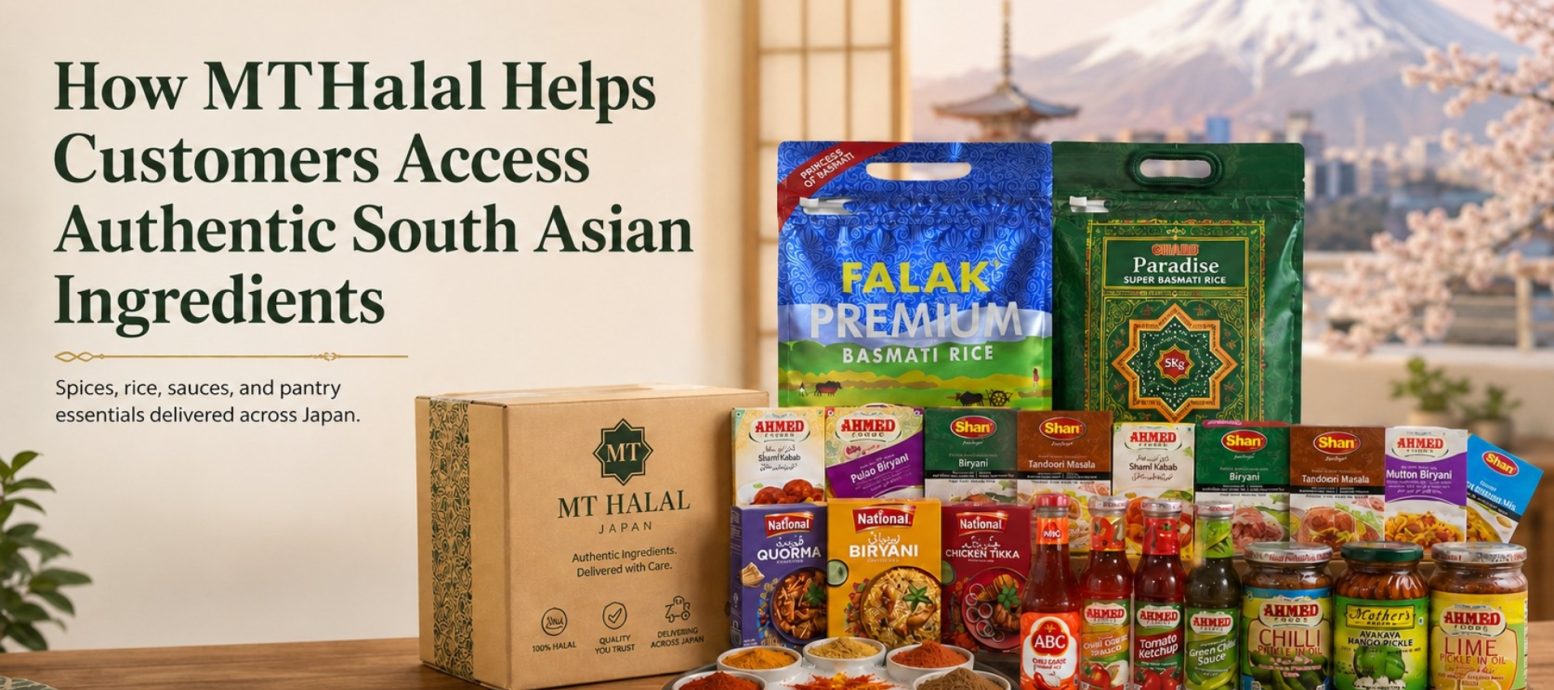
Living in Japan can make everyday South Asian cooking more difficult than expected. You may want to prepare chicken curry, biryani, daal, chole, kebabs, sambar, paratha, or a simple cup of familiar tea, but the nearest supermarket may not carry the ingredients you normally use.
Even when a product looks similar, the variety, spice balance, rice texture, or ingredient list may be different. Japanese-only labels can add another challenge, especially when Muslim shoppers need to check halal suitability.
Access to authentic South Asian ingredients in Japan helps families, students, working professionals, and new residents continue preparing familiar meals at home. MTHalal supports this need by bringing halal meat, rice, daal, masala, spices, flour, frozen breads, pickles, sauces, snacks, and other grocery essentials together through one online platform.
Why South Asian Ingredients Can Be Hard to Find in Japan
Japanese supermarkets offer excellent products for local cooking, but their selection is naturally based on Japanese household needs.
Products such as Japanese rice, curry roux, miso, soy sauce, dashi, and local seasonings are widely available. South Asian cooking, however, often requires different rice, lentils, flour, spice blends, pickles, sauces, frozen breads, and halal meat.
Common Challenges Customers Face
South Asian and Muslim customers in Japan may experience:
- Limited halal meat in regular supermarkets
- Few Pakistani, Indian, or Bangladeshi brands
- Difficulty finding Basmati rice
- Limited daal and bean varieties
- Small spice selections
- Japanese-only ingredient labels
- Unclear halal status
- Few specialist shops outside major cities
- Long travel to international grocery stores
- Difficulty buying all meal ingredients in one place
Online grocery access can reduce many of these difficulties.
MTHalal Brings Different Grocery Categories Together
One of the main ways MTHalal helps customers is by offering more than one type of product.
A South Asian meal rarely depends on a single ingredient. Biryani needs rice, halal meat, spices, oil, and sometimes fried onions or sauces. Daal needs lentils, turmeric, cumin, chilli, and rice or bread. Kebabs may require minced meat, recipe masala, chutney, and paratha.
Bringing these categories together makes shopping more practical.
Customers Can Look for
Depending on current stock, customers may browse:
- Halal meat and poultry
- Basmati and long-grain rice
- Daal, beans, and pulses
- Masala and spices
- Flour and atta
- Cooking oil
- Frozen naan, roti, and paratha
- Pickles and chutneys
- Food pastes
- Sauces
- Ready-to-eat foods
- Frozen snacks
- Tea and drinks
- Desserts and sweets
This makes it easier to build complete meals instead of buying one ingredient from several different shops.
Access to Halal Meat and Poultry
For Muslim customers, meat is one of the most important and difficult grocery categories to verify.
Regular supermarket chicken or beef may look clean and fresh, but appearance alone does not confirm halal status. Customers may also struggle to understand slaughtering, sourcing, or handling information from Japanese packaging.
MTHalal provides a halal-focused meat and poultry category for customers looking for products intended for Muslim households.
Meat and Poultry Can Support
These products can be used for:
- Chicken curry
- Beef curry
- Mutton curry
- Biryani
- Pulao
- Keema
- Kebabs
- Soup
- Karahi
- Grilled dishes
Customers should read each current product listing for the meat type, cut, weight, frozen or chilled condition, and storage details.
Basmati Rice for Traditional Meals
Japanese rice is ideal for sushi, onigiri, donburi, and local meals. It is usually short-grain and naturally sticky.
South Asian dishes such as biryani and pulao normally need a different texture. Long-grain Basmati rice is valued because the grains can remain more separate and aromatic after cooking.
Basmati Rice Is Useful For
It works well in:
- Chicken biryani
- Mutton biryani
- Beef biryani
- Pulao
- Daal chawal
- Curry and rice
- Fried rice
- Family meals
- Ramadan and Eid cooking
MTHalal’s rice category helps customers compare available pack sizes and products without depending only on local Japanese rice.
Daal, Lentils, and Beans
Daal is one of the most practical ingredients in a South Asian kitchen. It is affordable, filling, easy to store, and suitable for both simple and traditional meals.
However, local stores may not carry the same lentil varieties used in Pakistani, Indian, Bangladeshi, or Nepali cooking.
Useful Daal and Pulse Products May Include
Customers may look for:
- Red lentils
- Yellow lentils
- Moong daal
- Chana daal
- Masoor daal
- Chickpeas
- Kidney beans
- Black chickpeas
- Mixed lentils
- Boiled beans
These products can support quick student meals, family dinners, meat-free days, lunch boxes, and budget-friendly cooking.
Authentic Masala and Spices
Spices are central to South Asian cooking. They create the aroma, color, warmth, and balance that make a dish feel familiar.
A general curry powder cannot always replace individual spices or traditional recipe masalas.
Basic Ground Spices
A South Asian kitchen may need:
- Turmeric
- Red chilli powder
- Coriander powder
- Cumin powder
- Garam masala
- Black pepper
Whole Spices
Useful whole spices include:
- Cumin seeds
- Cardamom
- Cloves
- Cinnamon
- Bay leaves
- Black peppercorns
- Mustard seeds
- Fenugreek seeds
- Fennel seeds
Recipe Masala Blends
Customers may also need:
- Chicken masala
- Meat masala
- Biryani masala
- Kebab masala
- Nihari masala
- Haleem masala
- Chaat masala
- Sambar masala
- Curry masala
MTHalal’s spice range helps customers find both everyday seasonings and recipe-specific blends.
Flour and Atta for Home Cooking
Many South Asian households use flour for roti, chapati, paratha, puri, pakora, samosa pastry, and desserts.
Japanese supermarkets may stock different flour types, but customers may prefer atta or flour products intended for familiar South Asian recipes.
Flour and Atta Can Be Used For
They support:
- Roti
- Chapati
- Paratha
- Puri
- Pakora
- Samosa
- Halwa
- Homemade bread
- Traditional snacks
Buying flour with daal, meat, spices, and oil helps create a more complete household order.
Frozen Naan, Roti, and Paratha
Not every household has time to prepare fresh bread every day.
Students, busy professionals, and families may use frozen naan, roti, or paratha as convenient meal options.
Frozen Breads Work Well With
Serve them with:
- Chicken curry
- Daal
- Keema
- Chana
- Kebab
- Vegetable curry
- Eggs
- Tea
- Quick breakfast meals
These products can reduce cooking time while keeping familiar foods available at home.
Pickles, Chutneys, and Sauces
South Asian meals often include a small side item that adds sourness, spice, or freshness.
Pickles and chutneys can make simple meals more satisfying.
Useful Options May Include
Customers may look for:
- Mango pickle
- Mixed pickle
- Chilli pickle
- Lime pickle
- Tamarind sauce
- Mint chutney
- Garlic sauce
- Chilli sauce
- Ginger garlic paste
- Cooking pastes
These products work well with rice, daal, paratha, biryani, kebabs, snacks, and sandwiches.
Frozen and Ready-to-Cook Foods
Frozen foods are useful when customers have limited time or cannot cook from scratch every day.
They can help students, working professionals, parents, and people living alone keep simple meals available.
Frozen Products May Support
Depending on stock, customers may find products for:
- Quick dinners
- Iftar snacks
- School lunch boxes
- Weekend meals
- Student cooking
- Unexpected guests
- Busy workdays
Examples may include kebabs, paratha, naan, samosas, ready-to-cook chicken products, and other frozen snacks.
Customers should check ingredients, cooking instructions, storage requirements, and halal information on each listing.
Traditional Tea, Snacks, and Desserts
South Asian grocery shopping is not only about main meals.
Tea, biscuits, namkeen, sweets, desserts, and drinks are often part of family routines, gatherings, Ramadan, Eid, and guest hospitality.
Familiar Products Can Help With
They support:
- Morning tea
- Evening tea
- Guest serving
- Children’s snacks
- Ramadan preparation
- Eid gatherings
- Travel food
- Family celebrations
Finding these familiar items can make daily life in Japan feel more comfortable.
Online Access Reduces the Need for Multiple Store Visits
Without an online South Asian grocery platform, a customer may need to visit several shops.
One store may have rice. Another may have spices. A halal butcher may be located in a different area. Frozen paratha may require another journey.
MTHalal helps reduce this problem by allowing customers to browse different grocery categories through one website.
This Can Help Customers Save
It may reduce:
- Travel time
- Train or fuel costs
- Multiple store visits
- Heavy grocery carrying
- Last-minute ingredient shortages
- Confusion about where to find products
- Time spent searching unfamiliar stores
This is especially helpful for households outside Tokyo, Osaka, or other major shopping areas.
Delivery Helps Customers Outside Major Cities
Specialist South Asian and halal grocery stores are easier to find in some large cities than in smaller towns or regional areas.
Online delivery helps make product access less dependent on location.
Delivery Can Support
It can help:
- Families living in smaller cities
- International students near regional universities
- Workers in industrial areas
- Customers without a car
- New residents
- People with limited free time
- Muslim households far from halal shops
Customers should confirm delivery coverage, charges, timing, and any current shipping conditions during checkout.
Clear Categories Make Shopping Easier
When products are organized into categories, customers can build a grocery list more easily.
Instead of searching randomly, they can move through meat, rice, daal, spices, flour, frozen foods, sauces, and snacks.
A Simple Shopping Order
Customers can follow this routine:
- Add halal meat or the main meal ingredient
- Add rice, daal, or flour
- Check spices and recipe masalas
- Add cooking oil and food pastes
- Add frozen bread or quick meal products
- Add pickles and sauces
- Add tea, snacks, or drinks
- Review storage and delivery needs
- Check the final cart
This approach reduces forgotten ingredients.
Product Information Supports Better Decisions
Online shoppers cannot physically inspect a product before ordering, so product details are important.
Customers Should Review
Before adding an item, check:
- Product name
- Brand
- Pack weight
- Ingredients
- Country of origin where shown
- Halal information
- Fresh or frozen condition
- Cooking instructions
- Storage requirements
- Allergens
- Current availability
Clear product details can help international customers choose products more confidently.
MTHalal Helps New Residents Build a South Asian Kitchen
People who recently moved to Japan may not know which local stores carry halal or South Asian groceries.
An online platform can provide a useful starting point.
A New Kitchen Starter Order May Include
A basic order could contain:
- Basmati rice
- One or two daal varieties
- Halal chicken
- Cooking oil
- Atta
- Turmeric
- Red chilli powder
- Coriander powder
- Cumin
- Garam masala
- One biryani or curry blend
- Frozen paratha
- Pickle
- Tea
This is enough to prepare several familiar meals while the customer learns more about local shopping options.
MTHalal Helps Students Access Familiar Ingredients
Students often have limited budgets, small kitchens, and busy schedules.
They may not need a large grocery collection, but they still need flexible ingredients.
Student-Friendly Products
A practical student order may include:
- Rice
- Daal
- Halal chicken
- Basic spices
- Frozen paratha
- Ready-to-cook foods
- Tea
- Snacks
These products can support curry, daal chawal, fried rice, chicken rolls, soup, and quick breakfast meals.
MTHalal Supports Family Grocery Planning
Families usually need larger quantities and a wider product range.
Parents may shop for daily meals, lunch boxes, weekend cooking, guests, Ramadan, and Eid.
Family Orders May Include
They can include:
- Halal chicken
- Beef or mutton
- Basmati rice
- Several daal varieties
- Atta
- Spices and recipe masalas
- Cooking oil
- Frozen breads
- Frozen snacks
- Pickles
- Tea
- Drinks
- Desserts
Ordering according to a weekly or monthly plan can reduce waste and overspending.
Support for Traditional Pakistani Cooking
Pakistani households may need ingredients for curry, biryani, pulao, daal, karahi, nihari, haleem, kebabs, and paratha.
Helpful Pakistani Ingredients
These may include:
- Halal chicken, beef, or mutton
- Basmati rice
- Daal
- Atta
- Red chilli powder
- Turmeric
- Coriander
- Cumin
- Garam masala
- Biryani masala
- Kebab masala
- Nihari or haleem masala
- Pickles
- Frozen paratha
Bringing these categories together helps customers maintain familiar family cooking.
Support for Traditional Indian Cooking
Indian cooking includes many regional styles, so ingredient needs vary.
Helpful Indian Ingredients
Customers may need:
- Rice
- Daal
- Chickpeas
- Kidney beans
- Atta
- Turmeric
- Cumin
- Mustard seeds
- Coriander
- Garam masala
- Curry leaves
- Hing
- Sambar masala
- Chaat masala
- Frozen naan or paratha
A broad online selection helps customers choose according to their regional cooking habits.
Support for Bangladeshi and Other South Asian Cooking
Bangladeshi, Nepali, Sri Lankan, and other South Asian households may use many shared ingredients while also needing regional products.
Common Shared Staples
These can include:
- Rice
- Lentils
- Halal meat
- Turmeric
- Chilli
- Cumin
- Coriander
- Mustard seeds
- Garam masala
- Frozen breads
- Pickles
- Tea
Regional recipe mixes and ingredients can then be added according to household preference.
MTHalal Helps With Ramadan and Eid Preparation
Ramadan and Eid often require more careful grocery planning.
Families may need halal meat, rice, daal, frozen snacks, dates, drinks, spices, desserts, and tea.
A Ramadan Grocery Order May Include
Consider:
- Halal chicken
- Beef or mutton
- Basmati rice
- Daal
- Dates
- Frozen samosas or kebabs
- Frozen paratha
- Chaat masala
- Biryani masala
- Drinks
- Tea
- Desserts
Ordering ahead can reduce last-minute pressure.
How to Shop More Effectively on MTHalal
Customers can get more value from online shopping by preparing before opening the store.
Step 1: Check the Kitchen
Review existing rice, daal, spices, meat, and frozen foods.
Step 2: Plan Meals
Decide which meals will be cooked during the week or month.
Step 3: Write a Category-Based List
Organize the list into meat, rice, daal, spices, flour, frozen foods, and snacks.
Step 4: Read Product Details
Check weight, ingredients, condition, and storage needs.
Step 5: Review Delivery Requirements
Make sure someone can receive frozen or chilled products.
Step 6: Check Storage Space
Do not order more meat or frozen food than the freezer can hold.
Step 7: Review the Cart
Confirm quantities, products, address, and total cost before payment.
This routine makes online grocery shopping more organized.
Avoid Ordering Only by Product Image
A product image can be helpful, but it does not show every detail.
Customers should not choose rice, meat, spices, or frozen foods only by appearance.
Always Check
Review:
- Product title
- Pack size
- Ingredients
- Brand
- Fresh or frozen condition
- Cooking use
- Storage instructions
- Quantity
- Current stock
This reduces the chance of ordering the wrong item.
Build a Balanced Pantry Instead of Overbuying
A large selection can make it tempting to buy too much.
The best pantry is not the one with the most products. It is the one that supports the meals the household actually cooks.
A Balanced Pantry Includes
It may include:
- One main rice
- Two or three daal varieties
- Basic ground spices
- Essential whole spices
- Two or three recipe blends
- Atta
- Cooking oil
- Frozen bread
- Pickle or chutney
- Halal meat portions
- A few quick meal products
Additional products can be added gradually.
Store Ingredients Properly After Delivery
Correct storage protects both quality and value.
Dry Grocery Storage
Store rice, daal, flour, and spices:
- In sealed containers
- In a cool, dry place
- Away from direct sunlight
- Away from moisture
- With clear labels
Frozen Product Storage
Place frozen foods in the freezer promptly.
Meat Storage
Refrigerate chilled meat and freeze products intended for frozen storage.
Keep raw meat sealed and separate from ready-to-eat food.
Opened Sauces and Pickles
Follow the storage directions on the label after opening.
How MTHalal Makes South Asian Cooking More Practical
MTHalal helps customers access several parts of a traditional meal through one online store.
Instead of only offering spices or only selling meat, the platform brings together the ingredients required for full home cooking.
MTHalal Supports Customers With
- Halal meat and poultry
- Basmati rice
- Daal and beans
- Masala and spices
- Flour and atta
- Cooking oil
- Frozen naan and paratha
- Frozen and ready-to-cook foods
- Pickles and sauces
- Tea, snacks, and desserts
- Online product browsing
- Delivery across Japan
Current products, brands, stock, prices, and delivery terms should be checked on the live website.
South Asian Grocery Checklist
Use this list when building an order.
Main Meal Ingredients
- Halal chicken
- Beef or mutton
- Basmati rice
- Daal
- Chickpeas
- Beans
- Atta
Basic Spices
- Turmeric
- Red chilli powder
- Coriander powder
- Cumin
- Garam masala
- Black pepper
Recipe Masalas
- Biryani masala
- Chicken masala
- Meat masala
- Kebab masala
- Sambar masala
- Chaat masala
Convenience Foods
- Frozen paratha
- Frozen naan
- Kebabs
- Samosas
- Ready-to-cook products
Pantry and Sides
- Cooking oil
- Ginger garlic paste
- Pickles
- Chutneys
- Sauces
- Tea
- Snacks
- Drinks
This checklist can be adjusted according to household size and cooking style.
Internal Link Suggestion
[Internal Link Suggestion: Browse All Grocery Categories on MTHalal]
[Internal Link Suggestion: Read More: Where to Find Authentic South Asian Spices While Living in Japan]
FAQs
1. What South Asian ingredients can customers find through MTHalal?
Customers can browse categories including halal meat, rice, daal, masala and spices, flour and atta, frozen breads, sauces, pickles, snacks, tea, and ready-to-cook foods, subject to current availability.
2. Does MTHalal help customers outside major Japanese cities?
MTHalal offers online ordering and states that it provides delivery across Japan. Customers should confirm current delivery coverage, charges, and timing at checkout.
3. Is MTHalal useful for Pakistani and Indian cooking?
Yes. The store lists ingredients used in Pakistani, Indian, and wider South Asian cooking, including Basmati rice, daal, spices, recipe masalas, halal meat, atta, pickles, and frozen breads.
4. What should a new resident order first?
A practical starter order may include rice, daal, halal chicken, cooking oil, atta, basic spices, one curry or biryani blend, frozen paratha, pickle, and tea.
5. How should customers check products before ordering?
Read the product name, ingredients, weight, brand, halal information, storage requirements, fresh or frozen condition, and current availability before adding an item to the cart.
Final Thought
Access to authentic South Asian ingredients in Japan helps Muslim families, students, workers, and new residents continue preparing familiar food without depending entirely on distant specialist shops.
MT Halal makes this easier by bringing halal meat, rice, daal, spices, flour, frozen breads, pickles, sauces, snacks, and other grocery essentials together through one online platform. With careful meal planning, product checking, and proper storage, customers can build a practical South Asian kitchen and enjoy traditional home cooking wherever they live in Japan.