
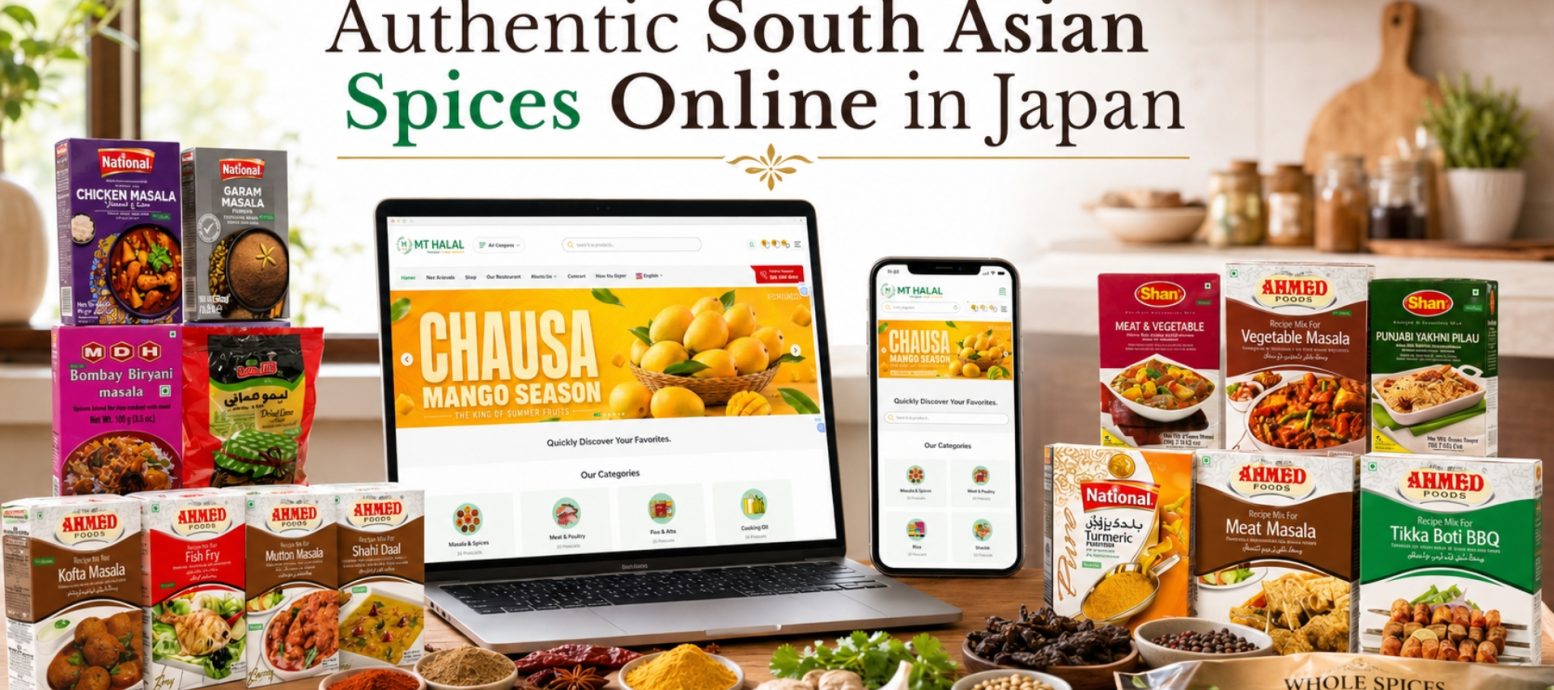
Finding South Asian spices online in Japan can be difficult when you want real home style flavor. You may find basic salt, pepper, and curry powder in a local supermarket, but when it comes to proper masala, whole spices, red chilli powder, cumin, coriander, garam masala, or biryani seasoning, the options can feel limited.
For South Asian families, Muslim residents, students, and food lovers in Japan, spices are not just ingredients. They carry the taste of home. A simple chicken curry, daal, biryani, nihari, karahi, kebab, or pulao depends on the right spice balance.
MT Halal helps customers in Japan shop for authentic South Asian spices, halal groceries, rice, lentils, meat, frozen foods, snacks, and daily essentials from one online place. Instead of searching different stores, you can build your kitchen with familiar ingredients more easily.
Why South Asian Spices Are Hard to Find in Japan
Japan has many clean and well organized supermarkets, but most of them focus on Japanese cooking needs. You can find soy sauce, miso, mirin, dashi, curry roux, and basic seasonings easily. But South Asian cooking needs a wider spice range.
A proper Desi kitchen usually needs whole spices, ground spices, spice blends, recipe mixes, lentils, rice, halal meat, and cooking pastes. These items are not always available in regular stores.
Common Problems Shoppers Face
Many people in Japan face problems such as:
- Limited South Asian spice variety in local supermarkets
- Japanese labels that are hard to understand
- Expensive small spice packs
- Weak flavor in general curry powders
- Difficulty finding trusted Desi brands
- No halal grocery store nearby
- Need to visit multiple shops for one recipe
This is why online spice shopping has become useful for many families and students in Japan.
What Makes South Asian Spices Different?
South Asian spices are known for aroma, warmth, depth, and strong flavor. They are used in layers, not just added at the end.
For example, a good chicken curry may start with cumin seeds in hot oil. Then onions, ginger, garlic, turmeric, red chilli, coriander, and garam masala come together slowly. This creates a richer taste than using one basic curry powder.
Common South Asian Spices Used at Home
A well stocked South Asian kitchen often includes:
- Red chilli powder
- Turmeric powder
- Coriander powder
- Cumin seeds
- Cumin powder
- Garam masala
- Black pepper
- White pepper
- Bay leaves
- Cinnamon
- Cloves
- Cardamom
- Mustard seeds
- Fenugreek seeds
- Curry powder
- Biryani masala
- Meat masala
- Chicken masala
- Chaat masala
With these basics, you can cook many Pakistani, Indian, Bangladeshi, Nepali, Sri Lankan, and Middle Eastern inspired meals at home.
Where to Buy Authentic South Asian Spices Online in Japan
The easiest option is to buy from an online halal grocery store that already understands the needs of Muslim and South Asian customers.
MT Halal is a helpful choice because it offers halal groceries and spice products for people living in Japan. Customers can shop for masala, whole spices, rice, lentils, halal meat, frozen foods, snacks, drinks, and other daily cooking items from one place.
This is important because spices are usually part of a bigger grocery list.
If you are buying biryani masala, you may also need Basmati rice, halal chicken, yogurt, fried onions, green chilli, or cooking oil. If you are making daal, you may need lentils, cumin, red chilli, turmeric, and rice. MT Halal helps bring these items together.
Why MT Halal Is a Good Choice for South Asian Spices
MT Halal is built for halal conscious customers and Muslim families in Japan. The store offers products that support daily cooking, family meals, and familiar home recipes.
For people who miss traditional food, this matters a lot.
A spice is not just a spice when you are living abroad. It helps you cook food that feels familiar, comforting, and connected to your culture.
1. MT Halal Offers Masala and Spice Products
MT Halal includes masala and spice options for South Asian style cooking. This helps customers prepare meals like curry, biryani, karahi, daal, kebabs, pulao, and fried rice at home.
Instead of depending on weak supermarket curry powders, customers can look for more familiar spice products used in South Asian homes.
2. MT Halal Supports Full Meal Shopping
A good meal needs more than one spice. MT Halal also offers groceries such as rice, lentils, meat and poultry, frozen foods, snacks, tea, drinks, and desserts.
This makes shopping easier because you can buy ingredients for a full meal in one order.
3. MT Halal Is Helpful for Muslims in Japan
For Muslim customers, halal status is important. Many shoppers do not only want spices. They also need halal meat, halal chicken, and Muslim friendly grocery items.
MT Halal helps reduce the stress of searching for halal products in regular stores.
4. MT Halal Saves Time
Busy families, students, and working people may not have time to visit different physical stores. Online shopping makes the process easier.
You can check products, add items to the cart, and order from home.
Best South Asian Spices to Keep in Your Kitchen
If you are building a South Asian kitchen in Japan, start with a few essential spices. You do not need everything at once. A simple spice box can help you cook many meals.
Red Chilli Powder
Red chilli powder adds heat and color to curries, daal, rice dishes, marinades, and fried foods. Use it carefully because some brands are stronger than others.
Turmeric Powder
Turmeric gives color and earthy flavor. It is used in curry, daal, rice, meat dishes, and vegetable recipes.
Coriander Powder
Coriander powder adds a warm and balanced taste. It works well in chicken curry, beef curry, vegetable curry, and lentil dishes.
Cumin Seeds
Cumin seeds are perfect for tempering. Add them to hot oil before cooking onions, daal, rice, or vegetables.
Garam Masala
Garam masala is usually added near the end of cooking. It gives warmth and aroma to curry, biryani, kebabs, and meat dishes.
Whole Spices
Whole spices like cinnamon, cardamom, cloves, black pepper, bay leaves, and star anise are useful for biryani, pulao, meat curry, and slow cooked dishes.
What Recipes Can You Cook With South Asian Spices?
Once you have the right spices, cooking at home becomes much easier.
Chicken Curry
Chicken curry needs basic spices like turmeric, red chilli, coriander, cumin, and garam masala. Add halal chicken, onions, tomatoes, ginger, and garlic for a warm family meal.
Biryani
Biryani needs Basmati rice, halal chicken or meat, whole spices, biryani masala, yogurt, onions, and herbs. Good spices make the biggest difference in biryani.
Daal Chawal
Daal is simple, healthy, and budget friendly. Lentils, turmeric, cumin, red chilli, garlic, and rice are enough to make a comforting meal.
Karahi
Karahi is rich, spicy, and full of flavor. It usually needs halal chicken or meat, tomatoes, green chilli, ginger, garlic, black pepper, coriander, and garam masala.
Kebab and Marinades
Spices like cumin, coriander, chilli, garam masala, black pepper, and ginger garlic paste help prepare flavorful kebabs and grilled dishes.
Tips for Buying South Asian Spices Online in Japan
Online spice shopping is easy when you know what to check.
Check the Product Name Carefully
Some spices look similar but taste different. For example, cumin and fennel are not the same. Red chilli powder and paprika are also different in heat and flavor.
Choose the Right Pack Size
If you cook daily, larger packs may be useful. If you cook sometimes, smaller packs are better so the spices stay fresh.
Check Whole vs Powdered Spices
Whole spices usually keep aroma longer. Powdered spices are easier for quick cooking. A good kitchen uses both.
Buy According to Your Recipes
Do not buy random spices without a plan. Think about what you cook most often. If your family eats biryani, curry, and daal often, start with spices for those meals.
Store Spices Properly
Keep spices in airtight containers away from heat, sunlight, and moisture. This helps protect flavor and aroma.
Why Fresh Spices Matter
Old spices lose aroma. They may still add color, but the flavor becomes weak. This is why many home cooks feel their curry does not taste like restaurant food or home country food.
Fresh spices make food taste fuller and more balanced.
When buying online, choose a store that sells products used by real South Asian households. This improves your chance of getting spices that fit your cooking style.
What to Buy Along With Spices
To make shopping easier, add related items to your cart.
You can buy spices with:
- Basmati rice
- Daal and lentils
- Halal chicken
- Halal meat
- Cooking oil
- Frozen paratha or naan
- Pickles and chutneys
- Sauces and pastes
- Tea and snacks
- Ready to eat items
This helps you prepare full meals without missing key ingredients.
Who Should Buy South Asian Spices Online in Japan?
Online spice shopping is useful for many people.
Muslim Families
Families can buy spices with halal meat, rice, lentils, and groceries for weekly cooking.
International Students
Students can cook simple meals like daal, rice, curry, and fried rice without spending too much time searching for ingredients.
Working Professionals
Busy workers can order spices online and prepare quick meals at home after work.
New Residents in Japan
People who recently moved to Japan may not know where to find Desi groceries. Online shopping gives them an easy starting point.
Food Lovers
Anyone who enjoys South Asian food can buy spices online and try authentic recipes at home.
Internal Link Suggestion
[Internal Link Suggestion: Browse Masala & Spices on MT Halal]
FAQs
1. Where can I buy authentic South Asian spices online in Japan?
You can buy authentic South Asian spices online in Japan from halal grocery stores like MT Halal. It offers masala, whole spices, halal groceries, rice, lentils, meat, snacks, and other daily cooking products.
2. What South Asian spices should I keep at home in Japan?
Good basic spices include red chilli powder, turmeric, coriander powder, cumin seeds, garam masala, black pepper, bay leaves, cinnamon, cloves, and cardamom.
3. Can I buy spices with halal meat and rice from MT Halal?
Yes, MT Halal offers spices along with halal meat and poultry, rice, lentils, frozen foods, snacks, tea, drinks, and other grocery items for Muslim customers in Japan.
4. Why does my curry taste different in Japan?
Your curry may taste different if you are using weak curry powder, old spices, or missing key ingredients like cumin, coriander, turmeric, ginger, garlic, and garam masala. Using proper South Asian spices can improve the taste.
Final Thoughts
Buying South Asian spices online in Japan is one of the easiest ways to bring familiar flavor back into your kitchen. Whether you are cooking curry, biryani, daal, karahi, kebabs, or simple rice meals, the right spices make cooking more enjoyable.
MT Halal gives Muslim families, students, and South Asian food lovers in Japan a practical way to shop for spices and halal groceries from one place. With the right masala, rice, lentils, and halal meat, home cooking in Japan can feel much closer to the food you love.