Halal grocery shopping in Japan can become expensive and time consuming if you do not plan ahead. You may visit one store for halal meat, another for Basmati rice, another for spices, and still forget daal, frozen foods, or snacks. For Muslim families, students, and working people, this can quickly become stressful.
Regular supermarkets in Japan are clean and convenient, but halal products are not always clearly available. Meat may not show halal status, labels may be in Japanese, and familiar Muslim household items may be spread across different shops.
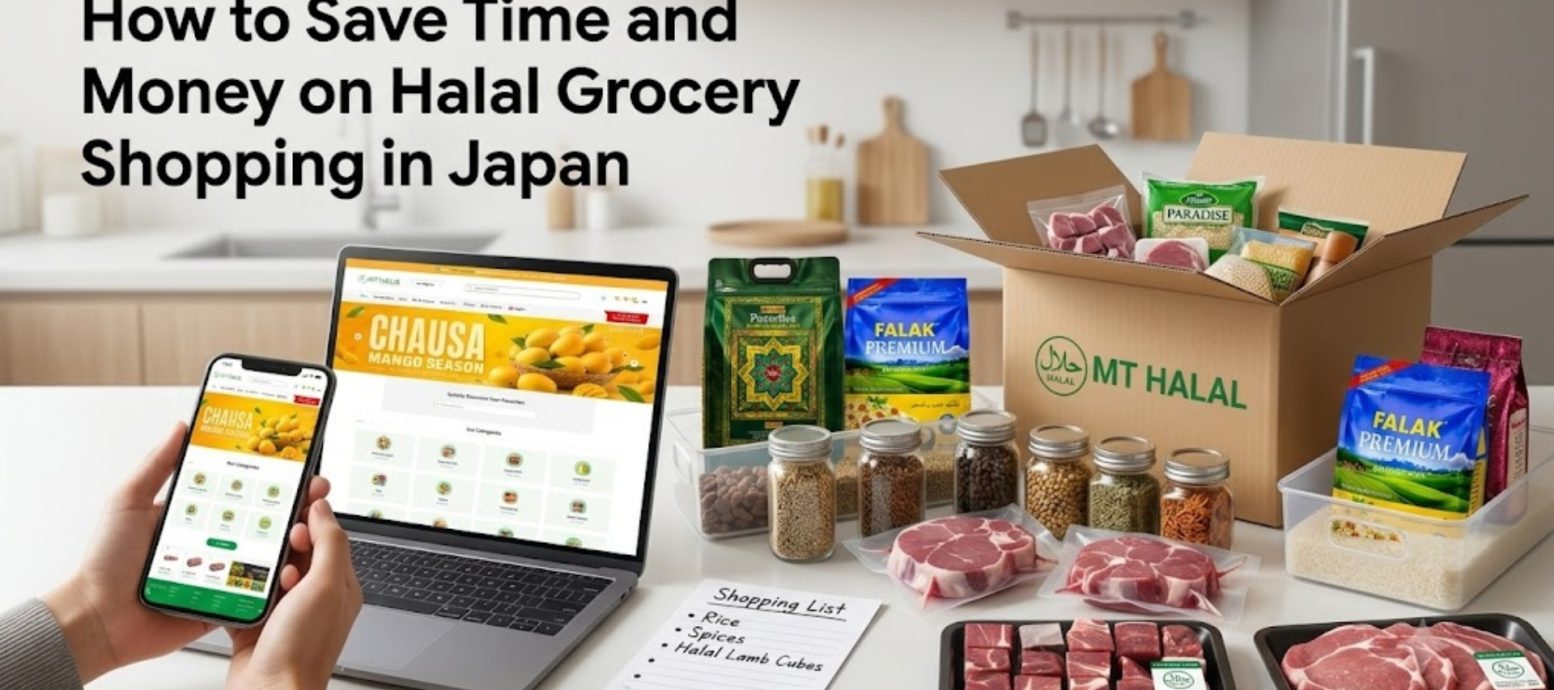
That is why learning how to save time and money on halal groceries in Japan is so important. With smart planning, online ordering, and a reliable halal grocery source like MTHalal, Muslims in Japan can shop more efficiently, reduce waste, and keep their kitchen ready for daily meals.
Why Halal Grocery Shopping Can Cost More Without Planning
Many Muslims in Japan spend more than needed because they shop without a clear list. They may buy random items, forget important ingredients, or make repeated trips to different stores.
Repeated shopping costs time, transport money, delivery fees, and energy.
A simple meal like chicken curry with rice may need halal chicken, rice, onions, tomatoes, spices, oil, and maybe daal or snacks. If these items are not planned together, shopping becomes longer and more expensive.
Common Reasons People Overspend
Muslim shoppers often spend extra because of:
- Last minute grocery shopping
- Buying small packs too often
- Visiting multiple stores
- Forgetting basic ingredients
- Ordering meat without rice or spices
- Buying snacks without a plan
- Not using freezer space properly
- Letting groceries expire
- Paying delivery fees on small orders
A better shopping routine can solve many of these problems.
1. Plan Your Meals Before Shopping
Meal planning is one of the best ways to save both time and money. Before placing an online order, think about what your family will cook for the week.
This helps you buy only what you need.
Simple Weekly Meal Plan
You may plan:
- Monday: chicken curry with rice
- Tuesday: daal chawal
- Wednesday: beef keema with paratha
- Thursday: chicken soup
- Friday: fried rice
- Weekend: biryani or kebabs
Once meals are planned, your grocery list becomes clearer. You know how much meat, rice, daal, spices, and frozen food you need.
2. Make a Clear Grocery List
A clear list helps prevent forgotten items and unnecessary purchases. It also makes online shopping faster.
Divide your list into sections.
Grocery List Sections
Use categories like:
- Halal meat and poultry
- Rice and daal
- Masala and spices
- Frozen foods
- Pantry items
- Snacks and drinks
- Tea and desserts
- Ramadan or Eid items if needed
This makes shopping organized and helps you avoid buying random products.
3. Buy Meat and Groceries Together
One common mistake is buying halal meat from one place and groceries from another. This takes more time and can increase total cost.
MTHalal helps by offering halal meat along with grocery essentials in one online store. Customers can buy chicken, beef, rice, daal, spices, frozen foods, snacks, and drinks together.
Why This Saves Time
Buying together helps you:
- Reduce separate store visits
- Avoid missing ingredients
- Plan full meals
- Use delivery more efficiently
- Keep your kitchen ready
- Save energy during busy weeks
A complete order is often better than several small orders.
4. Use Free Shipping Thresholds Smartly
If a store offers free shipping above a certain amount, plan your order around that threshold when it makes sense. This can help reduce delivery cost.
Do not add unnecessary items just to reach the amount. Instead, add useful staples that your family already uses.
Smart Items to Add
You can add:
- Rice
- Daal
- Cooking oil
- Spices
- Tea
- Frozen foods
- Halal meat
- Snacks for children
- Pantry items
These are items that will be used anyway, so they can help make a larger order more practical.
5. Buy Pantry Staples in Larger Packs
Some items are used again and again. Buying them in larger packs can save time and may be more practical for families.
Good Items for Larger Packs
Families may buy larger packs of:
- Basmati rice
- Daal and lentils
- Cooking oil
- Flour
- Tea
- Common spices
- Frozen foods
- Snacks for children
This reduces the need to reorder the same items every few days.
6. Keep Frozen Halal Meat for Backup
Frozen halal meat can help families save time and avoid last minute shopping. If you keep some chicken, beef, or mutton in the freezer, you can cook without rushing to find halal meat.
Frozen Meat Helps With
- Weekly meal planning
- Busy workdays
- Student meals
- Emergency dinners
- Ramadan preparation
- Reducing outside food orders
Frozen meat is especially helpful for Muslims living far from halal grocery stores.
7. Choose the Right Meat Cut
Choosing the wrong meat cut can waste money. Some cuts are better for curry, while others are better for biryani, kebabs, or soup.
Match Meat to the Recipe
Choose:
- Bone in chicken for curry and biryani
- Boneless chicken for quick meals
- Minced beef for keema and kebabs
- Mutton pieces for pulao and biryani
- Bone in meat for soup and rich curry
When you buy the right cut, cooking becomes easier and food waste is reduced.
8. Cook Once, Use Twice
A smart way to save time is to cook a base meal and use leftovers in another dish.
Simple Examples
You can use:
- Leftover chicken curry with rice the next day
- Cooked chicken in fried rice
- Keema in paratha rolls
- Boiled chicken in soup
- Daal with rice one day and paratha the next
- Biryani leftovers for lunch boxes
This helps reduce waste and saves cooking time.
9. Keep Basic Spices Ready
When spices are missing, families often delay cooking or order food from outside. Keeping basic spices ready can save money.
Basic Spice Box
Keep:
- Red chilli powder
- Turmeric powder
- Coriander powder
- Cumin seeds
- Cumin powder
- Garam masala
- Black pepper
- Biryani masala
- Chicken masala
- Meat masala
With these spices, you can cook many meals without needing special ingredients every time.
10. Use Daal for Budget Friendly Meals
Daal is one of the best budget friendly foods for Muslim households. It is filling, simple, and useful when meat is not planned.
Daal Meal Ideas
You can cook:
- Daal chawal
- Daal with paratha
- Lentil soup
- Daal with fried rice
- Chana curry
- Beans with rice
Keeping daal at home helps you prepare affordable halal meals.
11. Use Frozen Foods for Busy Days
Frozen foods can save time when you are tired or busy. They are useful for families, students, and working people.
Helpful Frozen Items
You may keep:
- Frozen paratha
- Frozen naan
- Frozen snacks
- Frozen vegetables
- Frozen halal meat
- Ready to cook items
These items can help you avoid expensive last minute meals from outside.
12. Avoid Buying Too Many New Items at Once
Trying new products is fine, but buying too many unfamiliar items can waste money if your family does not like them.
Start small.
Try one or two new products at a time. If your family likes them, add them to your regular grocery list.
13. Save a Regular Grocery List
Once you know what your family uses often, save a regular list. This makes future shopping faster and prevents missing important items.
Regular List Example
Your regular list may include:
- Halal chicken
- Halal beef or mutton
- Basmati rice
- Daal
- Red chilli powder
- Turmeric
- Cumin
- Coriander powder
- Frozen paratha
- Tea
- Snacks
- Cooking oil
A saved list helps you reorder quickly.
14. Store Groceries Properly
Good storage prevents waste. If food spoils or loses quality, money is wasted.
Storage Tips
Follow these habits:
- Keep frozen meat in the freezer quickly
- Store rice and daal in dry containers
- Keep spices away from heat and moisture
- Use older items first
- Check expiry dates
- Divide large meat packs into meal sized portions
- Keep snacks sealed after opening
Proper storage helps groceries last longer.
15. Plan Ramadan and Eid Early
Ramadan and Eid can increase grocery needs. If you wait until the last minute, shopping can become stressful and expensive.
Prepare Early For
- Halal chicken
- Halal beef
- Halal mutton or lamb
- Basmati rice
- Daal
- Frozen snacks
- Dates
- Biryani masala
- Whole spices
- Drinks
- Desserts
- Tea
Planning early helps you avoid rushed orders and missing items.
How MTHalal Helps Save Time and Money
MTHalal helps Muslims in Japan by bringing halal groceries into one online shopping platform. Customers can shop for halal meat, chicken, rice, daal, spices, frozen foods, snacks, drinks, tea, desserts, and pantry essentials without visiting many stores.
This saves time because families can order from home. It can also support better planning because customers can buy meal ingredients together.
MTHalal Helps With
- Halal meat shopping
- Rice and daal
- Masala and spices
- Frozen foods
- Snacks and drinks
- Weekly family groceries
- Student meal planning
- Monthly grocery routines
- Ramadan and Eid preparation
For Muslim families, students, and working people, this makes halal grocery shopping more practical.
Simple Money Saving Halal Grocery Routine
Use this simple routine:
- Plan meals for the week
- Check what you already have
- Add halal meat first
- Add rice and daal
- Check spices
- Add frozen foods for busy days
- Add snacks and drinks carefully
- Use free shipping thresholds wisely
- Review the cart before checkout
- Store items properly after delivery
This routine helps reduce waste and repeated shopping.
Who Can Benefit From These Tips?
These tips are useful for many Muslims living in Japan.
Muslim Families
Families can save time by planning weekly meals and buying groceries together.
International Students
Students can save money by cooking rice, daal, chicken, keema, and simple meals at home.
Working Muslims
Busy workers can save time by keeping frozen halal meat and quick meal items ready.
New Residents in Japan
New residents can avoid confusion by starting with a clear halal grocery routine.
Muslims Outside Major Cities
People living far from halal stores can reduce travel by ordering planned groceries online.
Internal Link Suggestion
[Internal Link Suggestion: Browse Halal Meat & Poultry on MT Halal]
FAQs
1. How can I save money on halal groceries in Japan?
You can save money by planning meals, making a clear list, buying staples in larger packs, using frozen halal meat, reducing food waste, and ordering groceries together.
2. How can I save time on halal grocery shopping in Japan?
You can save time by shopping online from a halal grocery store, keeping a regular grocery list, ordering meat with rice and spices, and planning meals before shopping.
3. Is online halal grocery shopping cheaper for families?
Online halal grocery shopping can be more practical for families when they plan orders carefully, reduce extra store trips, use useful bulk items, and avoid repeated small orders.
4. Can MTHalal help with weekly halal grocery planning?
Yes, MTHalal helps customers shop for halal meat, rice, daal, spices, frozen foods, snacks, drinks, and daily essentials from one online store, which supports weekly planning.
Final Thought
Learning how to save time and money on halal groceries in Japan starts with a simple routine. Plan meals, buy useful staples, avoid waste, store groceries properly, and order from a trusted halal grocery source.
MT Halal helps Muslim families, students, and working people shop for halal groceries from one online store. With better planning and smarter ordering, halal cooking in Japan becomes more affordable, organized, and stress free.