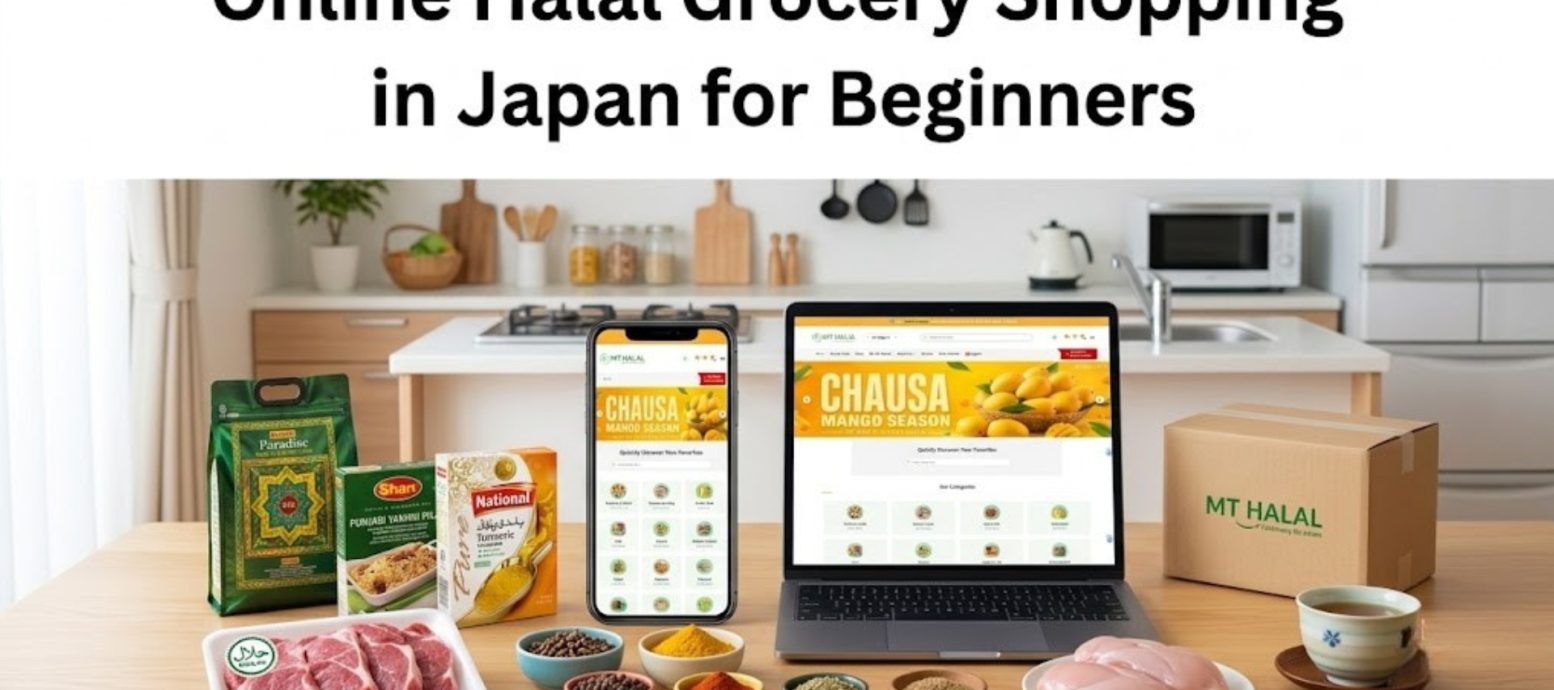
Starting online halal grocery shopping in Japan can feel confusing when you are new to the country. You may want to cook chicken curry, biryani, daal chawal, kebabs, or a simple family dinner, but finding halal ingredients nearby is not always easy.
Regular supermarkets in Japan are clean and organized, but halal products are not always clearly available. Meat may not show halal status, labels may be in Japanese, and familiar Muslim household groceries can be limited.
This is where online halal grocery shopping becomes helpful. MTHalal gives Muslims in Japan a practical way to shop for halal meat, chicken, rice, daal, spices, frozen foods, snacks, drinks, and daily essentials from one online store. For beginners, it makes halal shopping easier, clearer, and less stressful.
Why Online Halal Grocery Shopping Is Helpful in Japan
For Muslims living in Japan, grocery shopping is not only about buying food. It is also about checking halal status, avoiding doubtful ingredients, and finding familiar items for home cooking.
If you are new to Japan, this can take time.
You may not know which supermarket products are safe, where to find halal meat, or how to read Japanese labels. Online halal grocery shopping helps reduce this pressure by giving you access to halal focused products in one place.
Online Halal Grocery Shopping Helps With
- Finding halal meat more easily
- Buying rice, daal, and spices together
- Reducing label confusion
- Saving travel time
- Planning weekly meals
- Preparing Ramadan and Eid groceries
- Supporting students and families
- Helping Muslims outside major cities
For beginners, this makes halal living in Japan feel more manageable.
The Main Challenge for Beginners in Japan
When you first move to Japan, food shopping can feel unfamiliar. You may see many products in supermarkets, but you may not know which ones are halal suitable.
Meat is usually the biggest concern.
Chicken, beef, and other meat products may look fresh, but freshness does not confirm halal status. For Muslims, the source, slaughtering process, handling, packaging, and storage matter.
Common Problems Beginners Face
New Muslim residents often deal with:
- No clear halal label on meat
- Japanese only product descriptions
- Unclear ingredients in snacks and sauces
- Limited halal butcher shops nearby
- Difficulty finding Basmati rice and daal
- Limited spice options
- Confusion about frozen foods
- Stress when planning weekly meals
This is why beginners need a simple shopping system.
Step 1: Choose a Halal Focused Online Store
The first step is choosing a store that focuses on halal food. A general online store may sell many products, but it may not understand halal needs properly.
A halal focused store is different because it serves Muslim customers who care about halal sourcing, ingredients, and food trust.
MTHalal helps beginners by offering halal meat and groceries through one online platform. This gives new shoppers a clear place to start.
Why This Step Matters
Choosing a halal focused store helps reduce:
- Guessing
- Label confusion
- Travel stress
- Missing ingredients
- Doubt about meat
- Time spent checking products
For beginners, this is the easiest way to build confidence.
Step 2: Start With Basic Halal Meat
Halal meat is one of the most important items for Muslim households. If you are new to online shopping, start with basic meat items that you know how to cook.
Useful Meat Items for Beginners
You can begin with:
- Halal chicken
- Halal beef
- Halal mutton
- Minced meat
- Bone in chicken
- Boneless chicken
- Frozen meat for backup meals
These items can help you cook many simple meals at home.
Beginner Friendly Meals
You can prepare:
- Chicken curry
- Chicken biryani
- Beef keema
- Mutton curry
- Fried chicken
- Chicken soup
- Kebabs
- Rice and curry meals
Start with the dishes you already know. This makes shopping and cooking easier.
Step 3: Add Rice and Daal
Rice and daal are basic groceries for many Muslim households. They are easy to cook, budget friendly, and useful for daily meals.
In Japan, local rice is good for Japanese food, but South Asian meals often need Basmati rice or long grain rice.
What Beginners Should Keep
A simple pantry can include:
- Basmati rice
- Daily cooking rice
- Red lentils
- Yellow lentils
- Chana daal
- Chickpeas
- Beans
With rice and daal at home, you can prepare simple meals even when meat is not ready.
Step 4: Build a Small Spice Box
Spices are important for home style cooking. Beginners do not need to buy everything at once. Start with a small spice box and add more items later.
Basic Spices to Start With
You can keep:
- Red chilli powder
- Turmeric powder
- Coriander powder
- Cumin seeds
- Cumin powder
- Garam masala
- Black pepper
- Biryani masala
- Chicken masala
- Meat masala
These spices help with curry, daal, biryani, kebabs, soup, and fried rice.
Step 5: Add Frozen Foods for Busy Days
Frozen foods are very useful for beginners, students, and working people. They help when you are tired, busy, or still learning where to buy halal items.
Helpful Frozen Items
You may keep:
- Frozen paratha
- Frozen naan
- Frozen snacks
- Frozen vegetables
- Frozen halal meat
- Ready to cook items
Frozen foods are not only convenient. They also help you avoid last minute outside food when you do not have time to cook.
Step 6: Add Snacks, Tea, and Drinks
Once your main meal items are ready, add simple household items like snacks, tea, and drinks.
These are useful for family evenings, children, guests, student meals, and Ramadan.
Useful Items to Add
You may buy:
- Tea
- Biscuits
- Namkeen
- Chips
- Dates
- Dry fruits
- Juices
- Soft drinks
- Sweets
- Ready to eat snacks
Always check ingredients when needed, especially with snacks and ready to eat items.
Step 7: Read Product Details Before Ordering
Online shopping is easy, but beginners should not order only by looking at product photos. Always read product details before checkout.
Check These Details
Before ordering, check:
- Product name
- Weight
- Quantity
- Meat type
- Fresh or frozen condition
- Delivery details
- Storage needs
- Price
- Product category
This helps you avoid ordering the wrong item.
Step 8: Plan Delivery and Storage
Delivery planning is important, especially when ordering meat or frozen foods. Try to order when someone can receive the package and store items quickly.
After Delivery
Follow these simple steps:
- Put frozen meat in the freezer quickly
- Keep chilled items in the refrigerator
- Store rice and daal in a dry place
- Keep spices away from heat and moisture
- Separate snacks and pantry items
- Check if anything needs quick use
Good storage helps protect quality and makes your kitchen more organized.
Step 9: Make a Simple Weekly Grocery List
Beginners often forget important items. A weekly list can help you shop better.
Simple Weekly List
Your list may include:
- Halal chicken
- Halal beef or mutton
- Basmati rice
- Daal
- Basic spices
- Cooking oil
- Frozen paratha
- Frozen snacks
- Tea
- Drinks
- Snacks
Once you use the same list a few times, online shopping becomes much faster.
Step 10: Order Before You Run Out
One common mistake is waiting until everything is finished. This creates stress, especially when you need halal meat or specific spices.
Try to order before your kitchen becomes empty.
Keep Backup Items
It is helpful to keep:
- Rice
- Daal
- Basic spices
- Frozen halal meat
- Cooking oil
- Frozen paratha
- Tea
- Snacks
These basics help you prepare meals even on busy days.
Why MTHalal Is Helpful for Beginners
MTHalal is useful for beginners because it brings many halal groceries into one online store. New shoppers can find halal meat, chicken, rice, daal, spices, frozen foods, snacks, drinks, tea, desserts, and pantry essentials without visiting many shops.
This is helpful for people who are still learning where to buy halal products in Japan.
MTHalal Helps Beginners With
- Halal meat shopping
- Rice and daal
- Masala and spices
- Frozen foods
- Snacks and drinks
- Weekly meal planning
- Ramadan and Eid preparation
- Online grocery ordering
For beginners, this makes halal shopping less confusing.
Beginner Shopping Example With MTHalal
If you are placing your first online halal grocery order, keep it simple.
First Order Example
You can add:
- Halal chicken
- Basmati rice
- Red lentils
- Biryani masala
- Red chilli powder
- Turmeric
- Cooking oil
- Frozen paratha
- Tea
- Snacks
With these items, you can prepare chicken curry, daal chawal, biryani, paratha meals, and quick snacks.
Online Halal Shopping for Students
Students in Japan often have limited space, limited budget, and limited time. Online halal shopping can help them cook affordable meals at home.
Student Friendly Items
Students can keep:
- Rice
- Daal
- Halal chicken
- Minced meat
- Basic spices
- Frozen paratha
- Frozen snacks
- Tea
- Ready to eat items
These items help students cook simple meals without searching many stores.
Online Halal Shopping for Families
Families need more planning because they cook for more people. Parents may need groceries for daily dinners, children’s lunch boxes, weekends, guests, Ramadan, and Eid.
Family Friendly Items
Families can keep:
- Halal chicken
- Halal beef or mutton
- Basmati rice
- Daal
- Spices
- Frozen foods
- Snacks for children
- Tea and drinks
- Cooking oil
- Pantry essentials
Online shopping helps families organize these items better.
Online Halal Shopping for New Residents
If you recently moved to Japan, start small. Do not try to buy everything at once. Build your halal kitchen step by step.
Start With These Basics
Begin with:
- Halal meat
- Rice
- Daal
- Spices
- Cooking oil
- Frozen food
- Snacks
- Tea
Once you understand your routine, you can add more items.
Ramadan and Eid Shopping for Beginners
Ramadan and Eid need more grocery planning. If you are new to Japan, prepare early so you do not feel stressed at the last minute.
Ramadan and Eid Essentials
You may need:
- Halal chicken
- Halal beef
- Halal mutton or lamb
- Basmati rice
- Daal
- Dates
- Frozen snacks
- Biryani masala
- Whole spices
- Drinks
- Desserts
- Tea
MTHalal helps customers prepare by offering halal groceries online.
Simple Beginner Checklist Before Checkout
Before placing your order, check:
- Did I add halal meat?
- Do I have enough rice?
- Did I add daal or lentils?
- Are my spices complete?
- Do I need cooking oil?
- Did I add frozen foods?
- Do I need snacks or drinks?
- Is delivery available for my area?
- Do I have freezer space?
- Did I review product quantity and weight?
This simple checklist can prevent common mistakes.
Common Beginner Mistakes to Avoid
Beginners often make small mistakes when shopping online.
Avoid These Mistakes
- Buying meat without checking halal status
- Ordering rice but forgetting daal
- Buying spices without knowing recipe needs
- Forgetting freezer space
- Not checking product weight
- Waiting until all groceries are finished
- Not planning delivery timing
- Buying too many unfamiliar items at once
Start simple, then build your routine.
Internal Link Suggestion
[Internal Link Suggestion: Browse Halal Meat & Poultry on MT Halal]
FAQs
1. What is the easiest way to start online halal grocery shopping in Japan?
The easiest way is to choose a trusted halal grocery store, start with basic items like halal meat, rice, daal, spices, frozen foods, and snacks, then build your shopping routine slowly.
2. Can beginners buy halal meat online in Japan?
Yes, beginners can buy halal meat online in Japan from halal grocery stores like MTHalal. They should check product details, meat type, weight, and storage needs before ordering.
3. What should I order in my first halal grocery order?
A simple first order can include halal chicken, Basmati rice, daal, basic spices, cooking oil, frozen paratha, tea, and snacks.
4. Is online halal grocery shopping useful for new Muslims or new residents in Japan?
Yes, online halal grocery shopping is useful for new Muslims and new residents because it reduces label confusion, saves travel time, and helps build a halal kitchen step by step.
Final Thought
Starting online halal grocery shopping in Japan does not have to be difficult. The best approach is to begin with simple essentials, choose a trusted halal store, check product details, and build your grocery routine slowly.
MT Halal helps beginners shop for halal meat, rice, daal, spices, frozen foods, snacks, drinks, and daily essentials from one online store. With a clear list and a simple plan, halal cooking in Japan becomes easier, calmer, and more comfortable.