

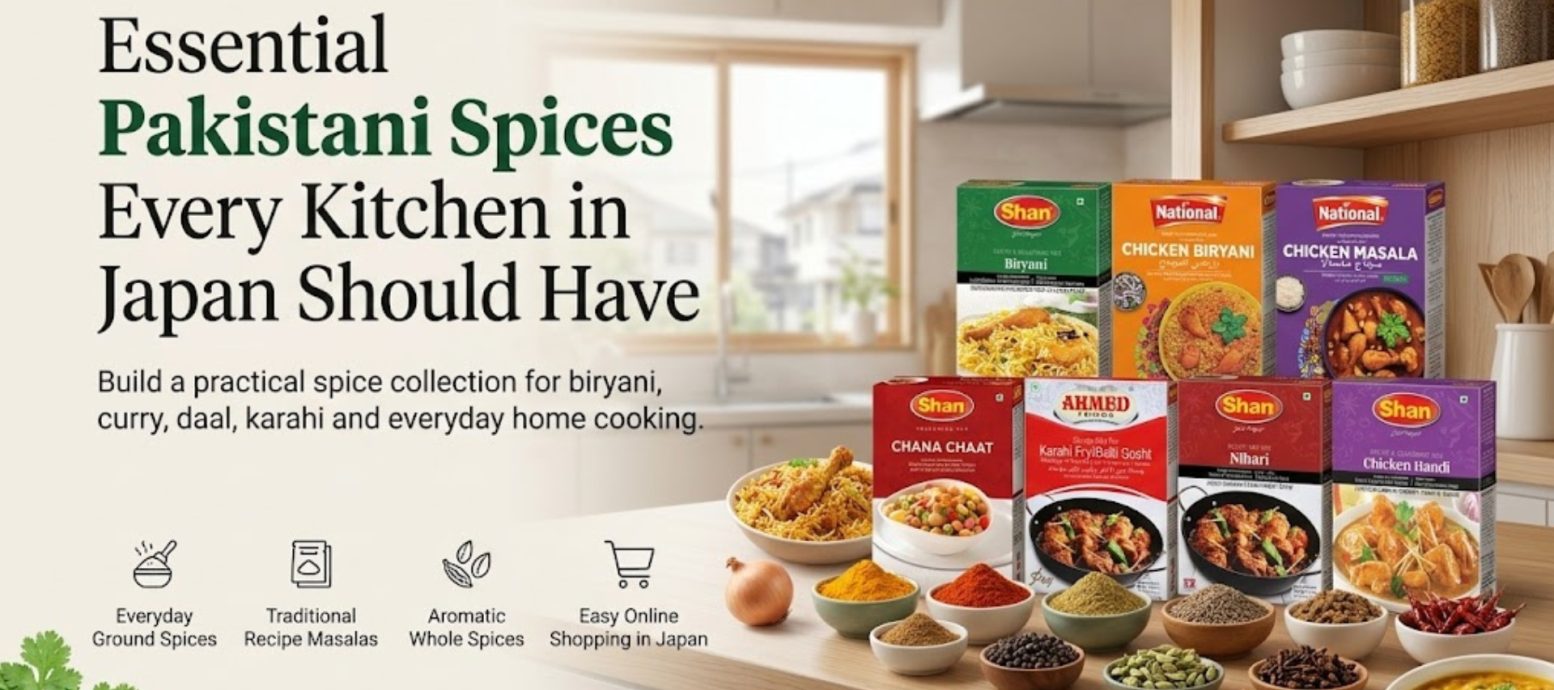
Building a Pakistani kitchen in Japan can feel difficult when the spices needed for familiar meals are not available in the nearest supermarket. You may find salt, black pepper, Japanese curry products, and a few general seasonings, but preparing proper daal, biryani, karahi, kebabs, pulao, or chicken curry requires a wider and more specific spice collection.
For Pakistani families, students, and working people living in Japan, spices do more than add heat. They create the aroma, warmth, color, and depth that make home cooked food feel comforting and familiar.
Keeping the right essential Pakistani spices in Japan makes everyday cooking faster and more reliable. MTHalal helps customers browse Pakistani spice products, whole spices, recipe masalas, rice, daal, halal meat, frozen foods, and pantry essentials through one online grocery platform.
Why Pakistani Spices Matter in Daily Cooking
Pakistani cooking usually builds flavor in stages. Whole spices may be added to hot oil first. Ground spices are then cooked with onions, tomatoes, ginger, and garlic. Garam masala or fresh herbs may be added near the end.
This layered method gives Pakistani food its rich aroma and balanced flavor.
A single general curry powder cannot always replace the individual spices used in home recipes.
Pakistani Spices Help Prepare
A practical spice collection can support:
- Chicken curry
- Beef curry
- Mutton curry
- Daal
- Biryani
- Pulao
- Karahi
- Nihari
- Haleem
- Kebabs
- Chana
- Vegetable dishes
- Chaat
- Grilled chicken
A small but carefully chosen spice box can support most everyday meals.
1. Red Chilli Powder
Red chilli powder, often called laal mirch, is one of the most important spices in a Pakistani kitchen. It adds heat, color, and depth to curry, daal, rice dishes, marinades, and snacks.
Different chilli powders can have different heat levels.
Common Uses
Red chilli powder is used in:
- Chicken curry
- Beef or mutton curry
- Karahi
- Daal
- Biryani
- Kebabs
- Chana
- Marinades
- Fried snacks
- Chutneys
Buying Tip
Do not assume every red powder has the same strength. Some products are made mainly for heat, while others provide more color.
Begin with a small amount and adjust during cooking.
2. Turmeric Powder
Turmeric, or haldi, gives Pakistani food its familiar golden color and mild earthy taste.
It is used in everyday cooking and is usually added in small quantities.
Common Uses
Turmeric works well in:
- Daal
- Chicken curry
- Vegetable dishes
- Beef curry
- Mutton curry
- Rice
- Chickpea curry
- Marinades
- Soups
Cooking Tip
Too much turmeric can make a dish bitter. A small amount is usually enough for color and flavor.
Keep the packet sealed because turmeric can absorb moisture and lose quality.
3. Coriander Powder
Coriander powder, or dhania powder, gives curries a warm, mild, and balanced flavor.
It is one of the main base spices in Pakistani cooking and works well with chilli, turmeric, and cumin.
Common Uses
Use coriander powder in:
- Chicken curry
- Karahi
- Beef curry
- Mutton curry
- Daal
- Chana
- Vegetable curry
- Kebabs
- Marinades
Why It Is Essential
Coriander powder helps soften the sharpness of chilli and adds body to the masala. It is one of the best spices for creating a balanced curry base.
4. Cumin Seeds
Cumin seeds, or zeera, are widely used for tempering and rice dishes.
When added to hot oil, they release a warm aroma that forms the base of many Pakistani meals.
Common Uses
Cumin seeds are useful for:
- Daal tempering
- Pulao
- Jeera rice
- Vegetable dishes
- Chana
- Raita
- Kebabs
- Curry
- Pickles
Cooking Tip
Add cumin seeds to hot oil and allow them to release their aroma before adding onions or other ingredients. Avoid burning them, as burnt cumin can taste bitter.
5. Cumin Powder
Ground cumin is useful when you want cumin flavor without whole seeds.
It blends easily into curry, kebabs, chaat, raita, and marinades.
Common Uses
Use cumin powder in:
- Chicken curry
- Kebab mixtures
- Chaat
- Raita
- Marinades
- Daal
- Chana
- Grilled chicken
- Rice dishes
Many Pakistani kitchens keep both cumin seeds and cumin powder because they serve different purposes.
6. Garam Masala
Garam masala is a warm spice blend usually added near the end of cooking. It brings aroma and depth without needing a large quantity.
The blend may contain cinnamon, cardamom, cloves, black pepper, cumin, and other spices.
Common Uses
Garam masala is added to:
- Chicken curry
- Beef curry
- Mutton curry
- Daal
- Biryani
- Pulao
- Chana
- Kebabs
- Karahi
Cooking Tip
Add garam masala near the end of cooking so its aroma remains noticeable. Cooking it for too long may reduce its fragrance.
7. Black Pepper
Black pepper, or kali mirch, adds sharpness and warmth without the same heat as red chilli powder.
Both whole peppercorns and ground black pepper are useful.
Common Uses
Black pepper works in:
- Soup
- Pulao
- Grilled chicken
- Kebabs
- Marinades
- Fried rice
- White karahi
- Eggs
- Raita
- Tea blends
Whole black pepper is useful for pulao and slow cooking, while ground pepper is better for quick seasoning.
8. Whole Cardamom
Cardamom, or elaichi, is an important aromatic spice in Pakistani cooking.
Green cardamom is often used in tea, desserts, rice dishes, and curries. Black cardamom has a stronger smoky flavor and is more common in meat dishes and pulao.
Green Cardamom Uses
Green cardamom works in:
- Chai
- Kheer
- Zarda
- Biryani
- Pulao
- Desserts
- Garam masala
Black Cardamom Uses
Black cardamom is useful for:
- Beef pulao
- Mutton pulao
- Nihari
- Meat curry
- Slow cooked dishes
- Yakhni
Keep cardamom in an airtight container so it retains its fragrance.
9. Cloves
Cloves, or laung, have a strong aroma and should be used carefully.
Only a few cloves are usually needed in a recipe.
Common Uses
Cloves are useful for:
- Biryani
- Pulao
- Garam masala
- Chai
- Meat curry
- Yakhni
- Nihari
- Desserts
Cloves are often added to hot oil with cardamom, cinnamon, and cumin at the beginning of rice or meat dishes.
10. Cinnamon
Cinnamon, or dalchini, gives a warm and slightly sweet aroma to rice, meat dishes, and tea.
Whole cinnamon sticks are more common in Pakistani savory cooking than ground cinnamon.
Common Uses
Cinnamon works in:
- Biryani
- Pulao
- Yakhni
- Meat curry
- Nihari
- Chai
- Desserts
- Garam masala
Use a small piece because cinnamon can become overpowering.
11. Bay Leaves
Bay leaves, or tez patta, are commonly added to pulao, biryani, and slow cooked curries.
They provide a mild background aroma rather than strong heat.
Common Uses
Bay leaves can be added to:
- Chicken pulao
- Beef pulao
- Biryani
- Yakhni
- Meat curry
- Daal
- Rice dishes
Remove the leaf before serving.
12. Mustard Seeds
Mustard seeds, or rai, are useful in pickles, vegetable dishes, daal, and certain regional recipes.
They release a nutty aroma when heated in oil.
Common Uses
Mustard seeds work in:
- Daal tempering
- Pickles
- Vegetable dishes
- Chutneys
- Potato dishes
- Regional curries
They are not used in every Pakistani recipe, but they are useful for households that regularly cook daal, vegetables, and pickles.
13. Fenugreek Seeds and Dried Fenugreek Leaves
Fenugreek seeds, or methi dana, have a strong and slightly bitter flavor. Dried fenugreek leaves, or kasuri methi, give a different aroma and are often added near the end of cooking.
Fenugreek Seed Uses
Use methi dana in:
- Pickles
- Vegetable dishes
- Daal
- Regional curries
- Spice mixes
Dried Fenugreek Leaf Uses
Kasuri methi works well in:
- Chicken curry
- Butter style chicken
- Keema
- Daal
- Vegetable curry
- Marinades
Use both carefully because their flavor can become strong.
14. Fennel Seeds
Fennel seeds, or saunf, have a mild sweet aroma. They are used in some meat dishes, tea blends, pickles, and digestive mixes.
Common Uses
Fennel seeds can be used in:
- Kashmiri style dishes
- Meat curry
- Tea
- Pickles
- Garam masala
- Digestive mixes
- Some biryani recipes
They are not needed in every meal, but they are helpful for specific recipes.
15. Carom Seeds
Carom seeds, or ajwain, have a strong and slightly bitter taste. They are usually used in small amounts.
Common Uses
Ajwain works in:
- Pakora batter
- Paratha
- Samosa pastry
- Fried snacks
- Daal
- Certain bread recipes
Ajwain is especially helpful for Pakistani snack and bread preparation.
16. Chaat Masala
Chaat masala is a tangy spice blend used for snacks, fruit, salads, and street food style dishes.
It may contain salt, dried mango powder, cumin, black salt, chilli, and other spices.
Common Uses
Use chaat masala on:
- Fruit chaat
- Chana chaat
- Dahi bhalla
- Pakora
- Fries
- Salads
- Boiled eggs
- Grilled chicken
- Raita
Because it already contains salt, taste the food before adding extra salt.
17. Biryani Masala
Biryani masala is one of the most useful recipe blends for Pakistani families living abroad.
It combines several spices needed for biryani and can reduce preparation time.
Biryani Masala Helps With
It can support:
- Chicken biryani
- Beef biryani
- Mutton biryani
- Fish biryani
- Vegetable biryani
Buying Tip
Different brands and varieties may have different salt and chilli levels. Choose the blend intended for the meat you plan to use and read the instructions before cooking.
18. Chicken Masala
Chicken masala is a ready blend designed for chicken curry or related dishes.
It is helpful for students, beginners, and busy families who do not want to measure every individual spice.
Common Uses
Chicken masala can be used for:
- Chicken curry
- Chicken karahi
- Grilled chicken
- Chicken gravy
- Chicken marinades
You can still add fresh onion, tomato, ginger, garlic, and herbs to improve the final flavor.
19. Meat Masala
Meat masala is usually developed for beef or mutton dishes. It often contains warming spices that work well with longer cooking times.
Common Uses
Use it for:
- Beef curry
- Mutton curry
- Keema
- Stew
- Slow cooked meat
- Karahi
- Gravy dishes
Check whether the blend already includes salt before adding more.
20. Kebab Masala
Kebab masala helps prepare seekh kebab, shami kebab, chapli kebab, and other grilled or fried meat recipes.
Kebab Masala Works With
It can be used for:
- Beef mince
- Chicken mince
- Mutton mince
- Lentil and meat mixtures
- Grilled kebabs
- Pan fried kebabs
Ready kebab masala can save time, but fresh herbs, onion, ginger, and garlic still improve the result.
Which Spices Should a Beginner Buy First?
A beginner does not need every spice on the first shopping trip.
Start with the spices that support the most recipes.
Basic Starter Collection
Begin with:
- Red chilli powder
- Turmeric
- Coriander powder
- Cumin seeds
- Cumin powder
- Garam masala
- Black pepper
- Cardamom
- Cloves
- Cinnamon
- Bay leaves
- Biryani masala
- Chicken masala
This collection is enough for curry, daal, biryani, pulao, grilled chicken, and several vegetable dishes.
Pakistani Spice List for Students
Students often have limited money, storage, and cooking time. A small collection is more practical.
Student Spice Box
Keep:
- Salt
- Red chilli powder
- Turmeric
- Coriander powder
- Cumin
- Garam masala
- Black pepper
- Chicken masala
- Biryani masala
These spices can support chicken curry, daal, fried rice, biryani, and simple marinades.
Pakistani Spice List for Families
Families usually cook more often and may need a wider collection.
Family Spice Box
A family may keep:
- All basic ground spices
- Cumin seeds
- Cardamom
- Cloves
- Cinnamon
- Bay leaves
- Black peppercorns
- Chaat masala
- Biryani masala
- Chicken masala
- Meat masala
- Kebab masala
- Ajwain
- Kasuri methi
- Mustard seeds
Buy according to the dishes the household actually prepares.
Whole Spices or Powdered Spices?
Pakistani kitchens benefit from keeping both.
Whole Spices Are Useful For
Use whole spices in:
- Biryani
- Pulao
- Yakhni
- Slow curries
- Tea
- Tempering
They usually keep their aroma longer when stored correctly.
Powdered Spices Are Useful For
Use powdered spices in:
- Daily curry
- Daal
- Marinades
- Kebabs
- Vegetable dishes
- Quick cooking
Powdered spices are easier to measure and mix.
Individual Spices or Ready Masala Mixes?
Both options have value.
Individual Spices Give You
They provide:
- Greater control
- Adjustable chilli levels
- Flexible flavor
- Use across many recipes
- Traditional cooking freedom
Ready Masala Mixes Give You
They provide:
- Faster preparation
- Simple instructions
- Balanced seasoning
- Consistent results
- Fewer spices to measure
A practical kitchen can use individual spices for daily cooking and recipe mixes for special or time consuming dishes.
How to Buy Pakistani Spices in Japan
Pakistani spices may be available through:
- South Asian grocery stores
- Halal grocery stores
- International supermarkets
- Asian food stores
- Online halal grocery platforms
- Local Muslim community recommendations
Online shopping is especially useful for customers living outside major cities.
What to Check Before Buying
Before adding a spice to the cart, check:
- Product name
- Brand
- Weight
- Whole or ground form
- Country of origin where shown
- Ingredients
- Salt content in blends
- Chilli level
- Manufacturing or expiry information
- Pack condition
- Storage advice
- Current availability
For recipe blends, make sure the product matches the dish you plan to cook.
Choosing the Right Pack Size
The largest pack is not always the best value.
Choose Smaller Packs If
Small packs are practical when:
- You live alone
- You cook occasionally
- You are trying a new spice
- Cupboard space is limited
- The spice is used in small amounts
Choose Larger Packs If
Larger packs may suit you when:
- You cook daily
- The household is large
- The spice is used regularly
- You have airtight storage containers
- You can finish it before aroma fades
Buy according to real usage.
How to Store Pakistani Spices
Spices need protection from heat, air, sunlight, and moisture.
Storage Tips
Keep spices:
- In airtight containers
- In a cool cupboard
- Away from the stove
- Away from direct sunlight
- Away from steam
- Away from wet spoons
- Clearly labelled
- Separate from strong moisture sources
Good storage helps preserve aroma and color.
How to Organize a Pakistani Spice Box
Organize spices by use.
Daily Ground Spices
Keep together:
- Red chilli
- Turmeric
- Coriander
- Cumin powder
- Garam masala
- Black pepper
Whole Spices
Keep together:
- Cumin seeds
- Cardamom
- Cloves
- Cinnamon
- Bay leaves
- Peppercorns
Recipe Mixes
Keep together:
- Biryani masala
- Chicken masala
- Meat masala
- Kebab masala
- Chaat masala
This arrangement makes cooking faster.
Avoid Buying Duplicate Spices
Before ordering, check your cupboard.
Many spice packets look similar, and households sometimes buy the same item twice while another important spice is missing.
Simple Stock Check
Before shopping:
- Check open containers
- Review expiry dates
- Write down low stock
- Remove empty packets
- Avoid duplicates
- Buy only what is needed
This saves money and storage space.
Pakistani Spices for Ramadan and Eid
Ramadan and Eid often require extra cooking.
Check These Spices Early
Review your supply of:
- Biryani masala
- Chaat masala
- Kebab masala
- Red chilli powder
- Turmeric
- Coriander powder
- Cumin
- Garam masala
- Cardamom
- Cloves
- Cinnamon
- Black pepper
Ordering early helps avoid missing ingredients during busy days.
What to Buy With Pakistani Spices
Spices are most useful when the other meal ingredients are ready.
Build a Complete Order
Add:
- Halal chicken
- Beef or mutton
- Basmati rice
- Daal
- Chickpeas
- Flour
- Cooking oil
- Frozen paratha
- Pickles
- Chutneys
- Ginger garlic paste
- Tea
- Snacks
This helps prepare full Pakistani meals without another shopping trip.
How MTHalal Helps Build a Pakistani Spice Collection
MTHalal offers a Masala & Spices range that includes individual spices, whole spices, and recipe blends. Its current listings include Pakistani-origin products and familiar brands such as Shan and Ahmed, subject to stock.
Customers can also browse halal meat, rice, daal, cooking oil, flour, sauces, pickles, frozen foods, and other pantry items.
MTHalal Supports Pakistani Cooking With
- Red chilli powder
- Turmeric
- Coriander powder
- Cumin products
- Garam masala
- Whole spices
- Biryani masala
- Kebab masala
- Recipe spice mixes
- Related grocery categories
- Online ordering
- Delivery across Japan
Current pack sizes, brands, prices, and availability should be checked on the live product pages.
Essential Pakistani Spice Checklist
Use this list before shopping:
Everyday Ground Spices
- Red chilli powder
- Turmeric
- Coriander powder
- Cumin powder
- Garam masala
- Black pepper
Whole Spices
- Cumin seeds
- Green cardamom
- Black cardamom
- Cloves
- Cinnamon
- Bay leaves
- Black peppercorns
Helpful Extra Spices
- Mustard seeds
- Fenugreek seeds
- Kasuri methi
- Fennel seeds
- Ajwain
Recipe Mixes
- Biryani masala
- Chicken masala
- Meat masala
- Kebab masala
- Chaat masala
This collection supports most Pakistani family meals.
Internal Link Suggestion
[Internal Link Suggestion: Browse Masala & Spices on MTHalal]
FAQs
1. What are the most essential Pakistani spices?
The most essential spices include red chilli powder, turmeric, coriander powder, cumin, garam masala, black pepper, cardamom, cloves, cinnamon, and bay leaves.
2. Which Pakistani spices should a beginner buy first?
A beginner should start with red chilli, turmeric, coriander, cumin, garam masala, black pepper, cardamom, cloves, cinnamon, biryani masala, and chicken masala.
3. Where can I buy Pakistani spices in Japan?
Pakistani spices are available through South Asian grocery stores, halal food shops, international supermarkets, and online platforms such as MTHalal.
4. Are recipe masala packets useful?
Yes. Recipe mixes are useful for biryani, curry, kebabs, and other dishes, especially for beginners and busy households. Always check ingredients, salt, and chilli level.
5. How should Pakistani spices be stored?
Store spices in airtight containers in a cool, dry cupboard away from sunlight, heat, steam, and moisture.
Final Thought
Keeping the right essential Pakistani spices in Japan makes it much easier to prepare familiar meals such as curry, daal, biryani, pulao, karahi, chana, and kebabs. A good spice collection should include basic ground spices, aromatic whole spices, and a few useful recipe blends.
MT Halal helps Pakistani families, students, and food lovers browse individual spices, whole masalas, recipe mixes, halal meat, rice, dal, and other grocery essentials through one online platform. With careful buying and proper storage, a small spice box can bring the familiar taste and aroma of Pakistani home cooking into any kitchen in Japan.
