

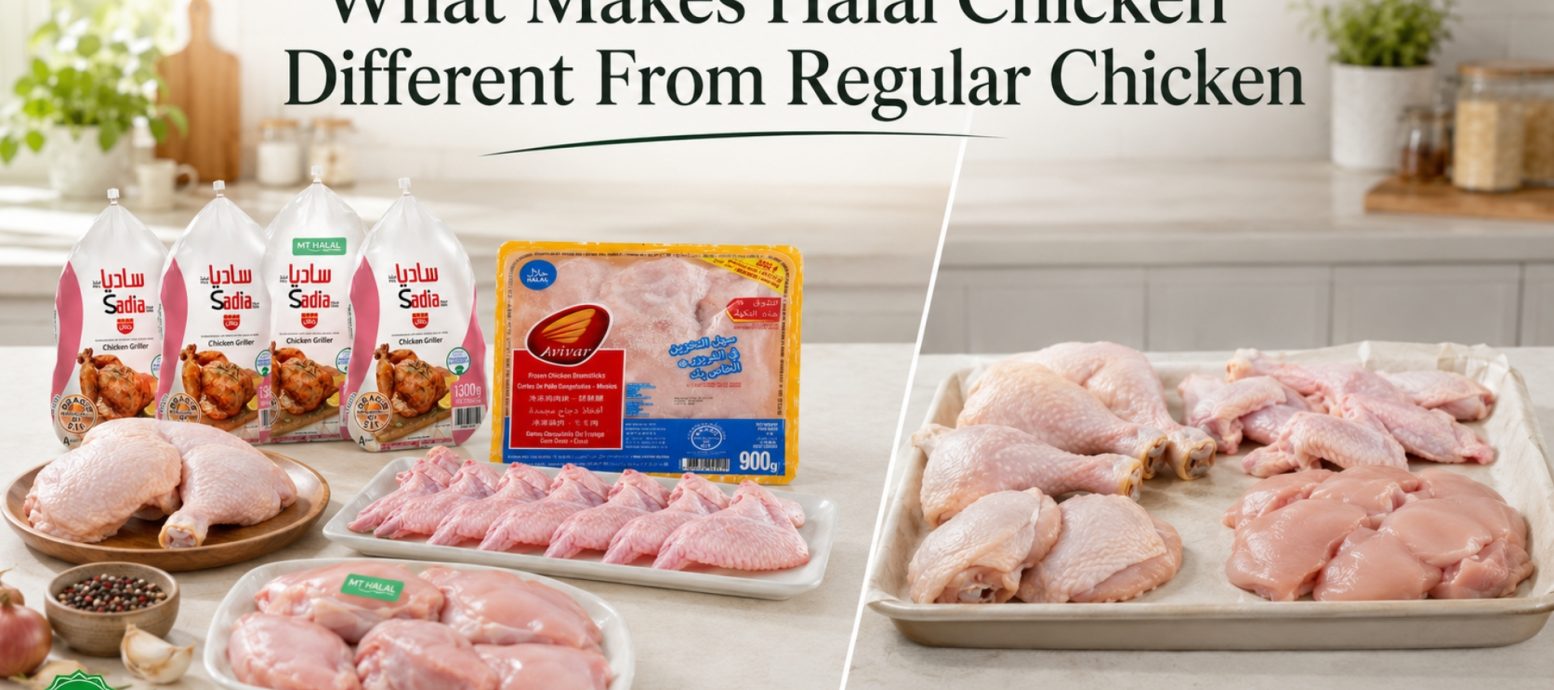
Many Muslims living in Japan face the same question when shopping for chicken: what makes halal chicken different from regular chicken? The chicken in a regular supermarket may look fresh, clean, and well packed, but that does not automatically make it halal.
For Muslim families, chicken is used in daily meals, children’s lunch boxes, soups, curries, biryani, grilled dishes, Ramadan recipes, and Eid meals. Because chicken is such a common food, halal trust becomes very important.
The difference between halal chicken and regular chicken is not only about appearance. It is about the source, slaughtering method, handling process, packaging, storage, and confidence that the product is suitable for Muslim consumption. MTHalal helps Muslims in Japan shop for halal chicken, meat, rice, daal, spices, frozen foods, snacks, drinks, and daily groceries from one online halal grocery platform.
Why This Question Matters for Muslims in Japan
Japan has clean and organized supermarkets, but halal chicken is not always clearly available. Regular chicken may be easy to find, but Muslim shoppers still need to know whether it was prepared according to halal requirements.
This creates confusion, especially for new residents, students, and families living outside major cities.
A product may look fresh and safe, but freshness alone does not confirm halal status. For Muslims, the process behind the chicken matters.
Common Problems Muslim Shoppers Face
Muslims in Japan often deal with:
- No clear halal label on regular chicken
- Japanese only product descriptions
- Unclear slaughtering information
- Limited halal butcher shops nearby
- Confusion between fresh and halal
- Worry about handling and storage
- Difficulty finding trusted halal chicken
- Stress when cooking for children or guests
This is why understanding the difference matters.
What Is Halal Chicken?
Halal chicken means chicken that is permissible for Muslims to eat according to Islamic dietary requirements. For meat and poultry, halal is not only about the animal itself. It is also about how the chicken was slaughtered, handled, packed, stored, and sold.
A halal chicken product should come from a halal source and be handled in a way that protects its halal status.
Halal Chicken Usually Involves
Halal chicken may involve:
- A permissible animal
- Islamic slaughtering requirements
- Proper handling after slaughter
- Avoiding contamination with non halal items
- Clear halal status
- Trusted supplier information
- Suitable storage and packaging
For Muslim families, these points give more confidence before cooking and eating.
What Is Regular Chicken?
Regular chicken usually means chicken sold for the general market without a specific halal claim. It may be fresh, clean, and good quality, but it may not confirm Islamic slaughtering or halal handling.
This does not mean regular chicken is always poor quality. It simply means that Muslim customers cannot assume it is halal unless the halal status is clearly verified.
Regular Chicken May Not Confirm
Regular chicken may not clearly explain:
- Slaughtering method
- Halal certification
- Handling process
- Storage separation
- Supplier halal status
- Whether it touched non halal items
- Whether it is suitable for Muslim consumption
For Muslims, this uncertainty is the main issue.
Main Difference: Halal Status Comes From the Process
The biggest difference between halal chicken and regular chicken is the process.
Halal chicken is connected to Islamic food requirements. Regular chicken may only be connected to general food quality standards.
A product can be fresh but still not halal.
Simple Explanation
Halal chicken means the chicken has been prepared and handled according to halal requirements.
Regular chicken means the chicken may be fresh and safe for the general market, but its halal process is not confirmed.
For Muslim families, this difference affects daily cooking and religious peace of mind.
Difference 1: Slaughtering Method
The slaughtering method is one of the most important differences. For chicken to be halal, the slaughtering process must follow Islamic requirements.
Regular chicken may be slaughtered according to general industry methods, but these methods may not meet halal requirements.
Why It Matters
For Muslim customers, the slaughtering method matters because halal meat is not only about the final product. It is about how the animal was processed from the beginning.
If the slaughtering information is not clear, Muslim shoppers may avoid the product.
Difference 2: Source and Supplier Trust
Halal chicken should come from a trusted halal source. The supplier should understand halal requirements and maintain proper handling.
Regular chicken may come from any general poultry supplier. It may be high quality, but the source may not be halal verified.
What to Check
When buying chicken, check:
- Is the store halal focused?
- Is the chicken clearly listed as halal?
- Is it in a halal meat or poultry category?
- Is the product information clear?
- Is the seller trusted by Muslim customers?
A trusted source helps reduce doubt.
Difference 3: Handling and Storage
Halal chicken should be handled in a way that protects its halal status. This means avoiding contact with non halal products and keeping the process clean and suitable.
Regular chicken may be handled according to general food safety standards, but it may not be separated according to halal concerns.
Why Handling Matters
Handling matters because halal status can be affected after slaughter if the product is mixed or contaminated with non halal items.
Muslim families need confidence that the chicken has been treated carefully from source to delivery.
Difference 4: Packaging and Labeling
Halal chicken should be clearly labeled or sold through a halal focused store. The customer should not have to guess.
Regular chicken packaging may show weight, price, origin, and freshness details, but it may not mention halal status.
Good Product Information Should Include
Helpful product information may include:
- Product name
- Meat type
- Weight
- Fresh or frozen condition
- Halal category
- Storage instructions
- Seller information
- Delivery details
Clear information helps Muslim shoppers make better decisions.
Difference 5: Peace of Mind for Muslim Families
For Muslim families, halal chicken gives peace of mind. Parents can cook for children, guests, and family meals with more confidence.
Regular chicken may create doubt if the halal status is unclear.
Why Peace of Mind Matters
Halal confidence helps families:
- Cook daily meals calmly
- Prepare children’s lunch boxes
- Serve guests without worry
- Plan Ramadan meals
- Prepare Eid dishes
- Keep halal habits consistent
Food becomes easier when trust is clear.
Why Regular Supermarket Chicken Can Be Confusing
Regular supermarket chicken in Japan may look fresh and high quality, but the halal status is usually not the main focus. The packaging may not explain whether Islamic slaughtering or halal handling was followed.
For Muslims, this makes regular chicken difficult to use confidently.
What Muslims Should Remember
Do not rely only on:
- Fresh appearance
- Clean packaging
- Low price
- Popular store name
- General food quality
- Product photo
Instead, check halal status clearly before buying.
Why Halal Chicken Is Important for Daily Cooking
Chicken is one of the easiest meats for Muslim households. It cooks faster than beef or mutton and works well in many recipes.
Halal Chicken Can Be Used For
Families can cook:
- Chicken curry
- Chicken biryani
- Chicken pulao
- Fried chicken
- Grilled chicken
- Chicken soup
- Chicken fried rice
- Chicken kebabs
- Chicken paratha rolls
- Lunch box meals
Because chicken is used so often, choosing halal chicken matters for everyday life.
Why MTHalal Helps Muslims Buy Halal Chicken in Japan
MTHalal helps Muslims and halal conscious customers in Japan shop for halal chicken and groceries through one online platform. This is helpful because many Muslims do not live near halal butcher shops or Muslim grocery stores.
Customers can shop for halal chicken along with rice, daal, spices, frozen foods, snacks, drinks, and pantry essentials.
This makes weekly grocery planning easier.
MTHalal Helps With
- Halal chicken shopping
- Halal meat and poultry access
- Rice and daal
- Masala and spices
- Frozen foods
- Snacks and drinks
- Weekly meal planning
- Ramadan and Eid preparation
For Muslims in Japan, this reduces the need to search different stores.
How to Choose Halal Chicken Online
When buying halal chicken online, take a few minutes to check the product carefully.
Step 1: Choose a Halal Focused Store
Start with a store that focuses on halal food. This reduces guesswork.
Step 2: Check the Meat Category
Look for the meat and poultry category instead of random food listings.
Step 3: Read Product Details
Check the product name, weight, cut, fresh or frozen condition, and delivery information.
Step 4: Choose the Right Cut
Use bone in chicken for curry and biryani, boneless chicken for quick meals, and wings or legs for frying or grilling.
Step 5: Plan Storage
Make sure you have refrigerator or freezer space before ordering.
Fresh Halal Chicken vs Frozen Halal Chicken
Both fresh and frozen halal chicken can be useful. The right choice depends on your routine.
Choose Fresh or Chilled Halal Chicken If
- You plan to cook soon
- You want same day meals
- You have fridge space
- You are preparing a special meal
Choose Frozen Halal Chicken If
- You plan weekly meals
- You want backup meat
- You live far from halal stores
- You have freezer space
- You want less frequent shopping
For many Muslim families in Japan, keeping some frozen halal chicken at home can make daily cooking easier.
What to Buy With Halal Chicken
Chicken is usually part of a full meal. To save time, buy related groceries together.
Add These Items
You can add:
- Basmati rice
- Daal and lentils
- Biryani masala
- Chicken masala
- Red chilli powder
- Turmeric
- Cumin
- Coriander powder
- Cooking oil
- Frozen paratha or naan
- Pickles and chutneys
- Tea and snacks
- Drinks and desserts
This helps you cook complete meals without another shopping trip.
Common Mistakes to Avoid
When buying chicken in Japan, avoid these mistakes:
- Assuming fresh chicken is halal
- Buying regular chicken without checking
- Looking only at the product photo
- Ignoring the meat category
- Forgetting to check product weight
- Buying the wrong cut
- Not planning storage
- Waiting until all chicken is finished
- Forgetting rice and spices
Avoiding these mistakes helps you shop with more confidence.
Simple Checklist: Halal Chicken vs Regular Chicken
Use this simple checklist before buying.
Halal Chicken Should Give You Clarity About
- Halal status
- Meat source
- Suitable handling
- Product category
- Seller trust
- Packaging
- Storage
- Delivery
Regular Chicken May Only Show
- Price
- Weight
- Origin
- Freshness
- General product information
For Muslim customers, halal clarity is the key difference.
Who Needs to Understand This Difference?
This difference is important for many Muslims living in Japan.
Muslim Families
Families need trusted halal chicken for daily meals, children’s food, and special occasions.
International Students
Students need simple halal cooking options without guessing at supermarkets.
Working Muslims
Busy workers need easy access to halal chicken for quick meals after work.
New Residents
New residents may not know which stores to trust. Understanding the difference helps them shop better.
Muslims Outside Major Cities
People living far from halal shops can benefit from online halal grocery stores.
Internal Link Suggestion
[Internal Link Suggestion: Browse Halal Meat & Poultry on MT Halal]
FAQs
1. What makes halal chicken different from regular chicken?
Halal chicken is different because it is prepared and handled according to halal requirements. Regular chicken may be fresh and good quality, but its halal slaughtering and handling process may not be confirmed.
2. Is regular supermarket chicken in Japan halal?
Regular supermarket chicken in Japan is usually not guaranteed halal unless it clearly shows halal certification or verified halal sourcing. Freshness and clean packaging do not confirm halal status.
3. Why is halal chicken important for Muslim families?
Halal chicken is important because it helps Muslim families cook daily meals, children’s food, Ramadan meals, Eid dishes, and guest meals with more religious confidence.
4. Where can I buy halal chicken online in Japan?
You can buy halal chicken online from halal grocery stores like MTHalal, where customers can shop for halal meat, rice, spices, frozen foods, snacks, and daily grocery items.
Final Thought
Understanding halal chicken vs regular chicken helps Muslim families make better food choices in Japan. Freshness and clean packaging are important, but they do not replace halal trust.
Halal chicken is different because the source, slaughtering, handling, packaging, and storage all matter. MTHalal helps Muslims in Japan access halal chicken and grocery essentials from one online platform, making daily cooking easier, clearer, and more comfortable.
