Beef Mince vs Cubed Beef: Which Works Better for Pakistani Home Cooking?
A good Pakistani beef dish starts with choosing the right type of meat. Beef qeema can turn into a flavorful weeknight meal, while beef cubes are often preferred for hearty curries, aloo gosht, and slow-cooked dishes.
Both can be delicious, but they behave differently in the pan.
If you’re shopping for halal meat in Japan, understanding the difference between beef mince and cubed beef can help you choose the right product for your recipe, cooking schedule, and preferred texture.
In this guide, we’ll compare how each type cooks, which Pakistani dishes suit it best, and what to check before buying halal beef for your kitchen.
Beef Mince vs Cubed Beef: What’s the Main Difference?
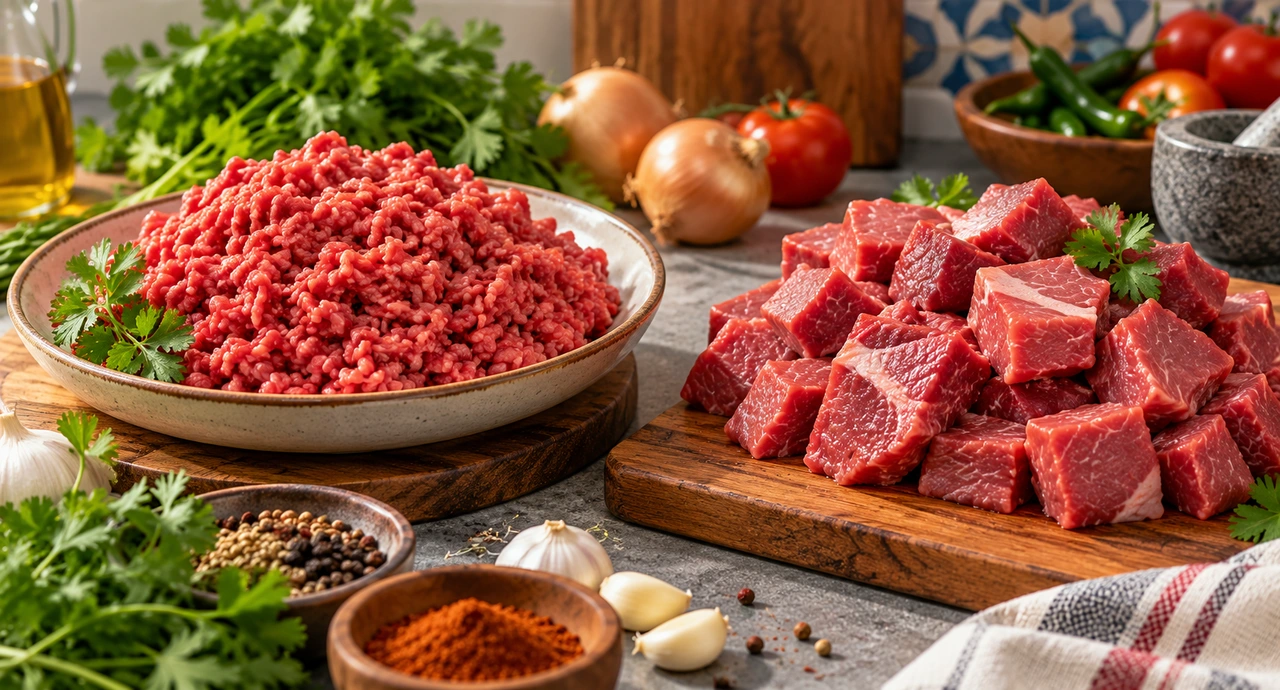
Beef mince, also known as ground beef or qeema, is beef that has been finely chopped or passed through a meat grinder. It cooks as small particles rather than individual chunks.
Cubed beef consists of larger pieces cut from a beef joint. The meat retains its shape during cooking, although it becomes softer as it cooks.
This difference changes the final texture, cooking method, and dishes each type works best in.
| Feature | Beef Mince (Qeema) | Cubed Beef |
|---|---|---|
| Shape | Finely ground pieces | Individual meat chunks |
| Texture | Crumbly or finely textured | Distinct pieces with a bite |
| Common Pakistani dishes | Qeema matar, aloo qeema, kebabs | Beef curry, aloo gosht, bhuna gosht |
| Preparation | Usually ready for seasoning and cooking | May need trimming or cutting |
| Cooking approach | Often cooks relatively quickly | Depends on cut, cube size, and tenderness |
| Best for | Dishes needing an even meat mixture | Dishes featuring noticeable meat pieces |
Neither option is better for every recipe. The right choice depends on the result you want.
1. What Is Beef Mince (Qeema)?
Beef mince is made by grinding boneless beef into small pieces.
The grinding process creates a texture that works well with onions, tomatoes, green chilies, ginger, garlic, and ground spices.
Because the meat is divided into small particles, it mixes evenly with the masala and usually cooks faster than large chunks from a tougher cut.
However, cooking time also depends on the fat content, pan size, recipe, and whether you’re making a dry or saucy dish.
Why Qeema Works Well for Pakistani Cooking
Beef qeema is especially useful when you want meat distributed throughout the dish rather than served as large pieces.
For example, in qeema matar, the minced meat cooks with peas and masala to create a mixture that can be eaten with roti, paratha, or rice.
It also works well as a filling for stuffed parathas and other savory preparations.
Popular Pakistani Dishes Made with Beef Mince
Qeema Matar
Beef mince cooked with peas, tomatoes, onions, and spices. It’s a familiar home-style dish that pairs well with chapati or rice.
Aloo Qeema
A combination of minced beef and potatoes in a spiced masala. The potatoes absorb flavor as the dish cooks.
Seekh Kebabs
Seasoned minced beef shaped around skewers or formed into kebabs. The mixture and fat content matter for texture and binding.
Qeema Paratha
A savory flatbread filled with seasoned mince. The filling should be properly cooked and have excess moisture reduced before assembling.
Qeema with Rice
A simple meal using beef mince, everyday spices, and cooked rice.
If these dishes are common in your household, keeping an appropriate pack of beef mince available can make meal preparation easier.
2. What Is Cubed Beef?
Cubed beef is beef cut into medium or small chunks.
Unlike mince, the individual pieces remain visible in the finished dish. This makes cubed beef suitable for curries and other recipes where the meat itself is a major part of the meal.
Different beef cuts have different amounts of connective tissue, fat, and tenderness.
A naturally tender cut may cook relatively quickly, while tougher cuts often need longer, gentle simmering to become tender.
Cubed beef isn’t one single cut of meat. Ask which boneless beef cut is being supplied if the product listing doesn’t specify it.
Popular Pakistani Dishes Made with Cubed Beef
Beef Curry
Cubed beef cooked in an onion-and-tomato masala with spices. The pieces remain distinct and are served with roti or rice.
Aloo Gosht
Beef chunks cooked with potatoes in a curry. The dish benefits from meat that becomes tender while keeping some structure.
Bhuna Gosht
Beef cooked with aromatics and spices until the masala reduces and coats the meat.
Beef Stew
Chunks of beef simmered with liquid, aromatics, and other ingredients until tender.
Beef Pulao
Depending on the recipe, beef pieces may be cooked with spices to produce a flavorful broth before combining with rice.
For dishes where you want substantial pieces of meat, cubed beef is generally the more suitable choice.
3. Which Is Better for Pakistani Curry?
This depends on the type of curry you want.
If you’re preparing a classic beef curry with visible, tender pieces of meat, cubed beef is the natural choice.
If you want a finely textured masala dish that spreads easily across roti or mixes into rice, beef mince may be more suitable.
Choose Beef Mince When You Want:
- A finer, more evenly distributed meat texture
- A qeema-style curry
- A filling for paratha or kebabs
- Smaller meat pieces throughout the masala
- A dish that generally requires less time than a slow-simmered beef curry
Choose Cubed Beef When You Want:
- Tender but distinct beef pieces
- A traditional gosht-style curry
- Meat that holds its shape in the sauce
- A dish suited to slow simmering or pressure cooking
- A substantial meat texture in each serving
A useful rule is to choose the cut based on how you want the meat to appear and feel in the finished dish.
4. How Does Cooking Time Differ?
Cooking time is one of the most practical differences between beef mince and cubed beef.
Since mince consists of small pieces, it generally cooks through faster than larger chunks of beef.
Cubed beef takes more planning because its tenderness depends on the cut and cooking method.
Cooking Beef Mince
For a basic qeema dish:
- Heat oil in a pan and cook chopped onions.
- Add ginger-garlic paste and selected spices.
- Add beef mince and break up any large clumps.
- Cook while stirring until the meat is no longer raw.
- Add tomatoes or other ingredients according to the recipe.
- Continue cooking until the masala reaches your preferred consistency and the meat is thoroughly cooked.
If you’re using peas or potatoes, allow enough time for those ingredients to cook as well.
Cooking Cubed Beef
For a beef curry:
- Prepare onions, ginger, garlic, tomatoes, and spices.
- Brown or sauté the beef according to your recipe.
- Combine with the prepared masala.
- Add enough liquid for the cooking method.
- Simmer gently, or use a pressure cooker where appropriate.
- Continue until the beef is tender and thoroughly cooked.
- Reduce the sauce if a thicker curry is desired.
Cooking time can vary significantly depending on the source cut, cube size, and appliance.
Large cubes from a connective-tissue-rich cut generally need more time than finely minced beef.
A Note on Food Safety
For ground beef, use a food thermometer to reach at least 71°C (160°F).
For intact beef cuts, the standard minimum is 63°C (145°F) with a three-minute rest. However, tougher cubed beef used for traditional curries usually needs additional cooking for tenderness.
When preparing meat, keep raw products separate from ready-to-eat foods and follow the package’s storage instructions.
5. Which Type Works Best for Specific Pakistani Recipes?
Here’s a practical selection guide.
| Dish | Recommended beef type | Reason |
|---|---|---|
| Qeema Matar | Beef mince | Evenly combines with peas and masala |
| Aloo Qeema | Beef mince | Creates a classic minced-meat texture |
| Seekh Kebabs | Beef mince | Can be mixed and shaped |
| Qeema Paratha | Beef mince | Works as a compact filling |
| Beef Curry | Cubed beef | Maintains distinct meat portions |
| Aloo Gosht | Cubed beef | Suitable for meat-and-potato curry |
| Bhuna Gosht | Cubed beef | Pieces become coated with reduced masala |
| Beef Stew | Cubed beef | Suitable for moist, longer cooking |
| Beef Pulao | Cubed beef | Can be used in a meat-based broth |
You can modify these dishes according to your preferences. For example, minced beef can be cooked with potatoes, but the result will be different from aloo gosht made with chunks.
6. Beef Mince or Cubes: Which Has the Better Texture?
Texture is a major reason to choose one type over the other.
Beef Mince Texture
Beef mince creates small, separate pieces of meat throughout the finished dish.
Its texture depends on the grind size, fat content, and cooking technique.
A fine grind works well for kebabs and certain fillings, while a coarser grind provides a more noticeable bite in cooked qeema.
If you prefer a softer mixture that’s easy to combine with rice or scoop up with roti, mince is a useful choice.
Cubed Beef Texture
Cubed beef provides a firmer, more substantial bite.
A properly cooked cube from a tougher cut can become fork-tender after slow cooking, while an undercooked one may remain chewy.
Not every boneless beef product is equally suitable for slow cooking. The source cut and its connective tissue make a difference.
Choose cubed beef when distinct, tender pieces are central to the dish.
7. What About Fat Content?
Fat content affects flavor, moisture, and the finished texture.
Beef mince may be sold with different levels of fat, although the exact percentage is not always specified in online grocery listings.
Leaner mince can produce a less fatty finished dish but may become dry in certain preparations.
Mince containing more fat can provide moisture and flavor, especially in kebabs.
Cubed beef also varies in fat content depending on the cut.
Before buying, check whether the seller provides information about:
- The source cut
- Approximate fat content
- Grind size, for mince
- Whether the product is boneless
- Net package weight
If these details matter to your recipe and are not listed, ask the seller before placing an order.
8. Which Beef Option Should You Buy for Your Household?
Think about what you regularly cook rather than buying based on the product name alone.
For a Student or One-Person Household
Beef mince may be practical if you often prepare quick qeema dishes, rice bowls, or simple fillings.
A smaller pack can also help avoid having to portion a large quantity immediately.
For Couples
Either option can work.
Mince is suitable for a quick qeema dinner, while cubed beef is useful if you enjoy making curry that can be served across more than one meal.
For Families
You may prefer to keep both types when freezer space and your household’s cooking habits allow.
For example, mince can be reserved for kebabs and qeema matar, while boneless beef chunks can be used for weekend curries.
The goal is to match the amount you purchase with the meals you actually intend to prepare.
9. How to Compare Value When Buying Beef
A lower price per kilogram doesn’t automatically mean a product is the best choice for your recipe.
When comparing beef mince and boneless beef, consider:
Weight: Compare packs using the same weight unit.
Recipe suitability: Buying mince for qeema may save you from grinding beef yourself.
Preparation work: Boneless beef may need cutting, trimming, or longer cooking.
Fat content: The usable cooked yield can vary because fat and moisture are lost during cooking.
Household needs: An appropriately sized pack may be more practical than a larger pack you cannot store or use.
Current prices: Check actual product listings rather than assuming mince or cubed beef is always cheaper.
For a fair comparison, calculate the cost of the quantity your recipe requires.
10. Buying Halal Beef Mince and Boneless Beef in Japan
When shopping for halal meat in Japan, specialist grocery stores can help customers find products intended for halal cooking.
MT Halal Mart lists several beef products in its grocery catalog, including:
- Beef Mince (Qeema) 1kg
- Beef Mince (Qeema) 500g
- Ground Beef 250g
- Beef Boneless 1kg
Product stock, pricing, and packaging may change.
For cubed beef recipes, check whether the boneless beef product is already diced or whether you’ll need to cut it into cubes at home.
Browse the MT Halal Meat & Poultry collection to compare current listings.
MT Halal Mart offers online grocery ordering with delivery across Japan and operates a physical grocery store in Yotsukaido, Chiba.
What to Check Before Ordering
Review these details before purchasing:
- Product name and beef type
- Minced or boneless cut description
- Pack weight
- Current availability
- Storage and preparation instructions
- Halal product information
- Delivery conditions for refrigerated or frozen meat
If the product description doesn’t explain the source cut or preparation, contact the store for clarification.
11. Can You Make Beef Mince from Boneless Beef?
Yes. Suitable boneless beef can be minced using an appropriate meat grinder or food processor.
However, the equipment and meat preparation affect the final texture.
For a consistent result, remove unsuitable tough membranes, cut the beef into manageable pieces, and follow the equipment’s instructions.
Keep the meat chilled during preparation and clean all equipment thoroughly afterward.
If you make qeema frequently, buying ready-minced beef may be simpler.
If you prefer both curry cubes and mince, purchasing boneless beef and preparing the portions yourself offers flexibility, provided you have suitable equipment.
Frequently Asked Questions
Is beef mince the same as qeema?
Yes. In Pakistani cooking, qeema commonly refers to minced or ground meat. Beef qeema is made using minced beef.
Can I use beef mince instead of cubed beef in curry?
Yes, but the texture will change. The dish will resemble a qeema-style curry rather than a traditional beef curry containing individual chunks.
Which beef is best for qeema matar?
Beef mince is the standard choice because it mixes evenly with peas, tomatoes, onions, and spices.
Which is better for aloo gosht?
Cubed beef is generally more suitable for traditional aloo gosht because the dish features distinct meat pieces cooked with potatoes.
Is beef mince faster to cook than cubed beef?
Generally, yes. Minced beef is made of much smaller pieces, while cubed beef may require longer cooking to become tender. The actual time depends on the recipe, cut, and equipment.
Can boneless beef be used for both cubes and mince?
Yes. Boneless beef can be cut into cubes or ground into mince. The suitability of the original cut and its fat content should be considered for the intended dish.
Where can I buy halal beef in Japan?
MT Halal Mart offers halal beef products through its online grocery store, with delivery across Japan, as well as its physical store in Yotsukaido, Chiba. Check current listings for available mince and boneless beef options.
Final Thoughts: Choose the Beef That Suits Your Dish
Beef mince and cubed beef both have a place in Pakistani home cooking.
Choose beef mince when you’re making qeema matar, aloo qeema, seekh kebabs, or a savory filling.
Choose cubed beef when you’re preparing beef curry, aloo gosht, bhuna gosht, or another dish where tender chunks are the main feature.
The best option depends on the recipe, texture, preparation time, and quantity you need.
For Pakistani home cooking in Japan, browse available beef products through the MT Halal Meat & Poultry collection and select the option that matches your next meal.