Halal Grocery Shopping Checklist for New Residents in Japan
Moving to Japan brings plenty of new experiences, from setting up your accommodation to exploring a different food culture. But if you follow a halal diet, one of your first practical questions may be: Where can I buy halal groceries in Japan?
Finding familiar ingredients can feel confusing when you’re unfamiliar with Japanese supermarkets, product labels, and local shopping options. Fortunately, a little preparation can make your first grocery shopping experience much easier.
Whether you’re an international student, a working professional, or moving with your family, this checklist will help you identify the essentials, understand what to check before buying food, and prepare your kitchen for everyday cooking.
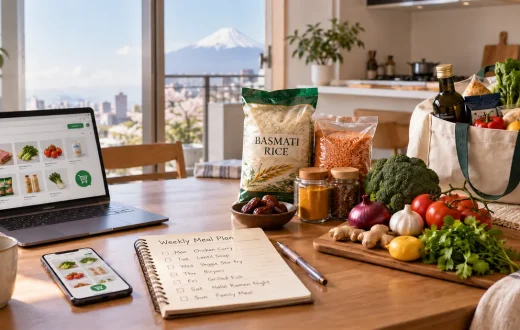
Your First Halal Grocery Checklist in Japan
When settling into a new home, focus on groceries that will help you prepare simple meals during your first few days.
You don’t need to buy everything immediately. Start with basic ingredients, essential cooking supplies, and products you already know how to prepare.
Here’s a practical starting checklist:
| Grocery category | What to look for | Why you may need it |
|---|---|---|
| Halal Meat | Chicken, beef, mutton or lamb | Main ingredients for home-cooked meals |
| Rice | Basmati rice or preferred rice variety | Easy everyday meals |
| Lentils & Pulses | Daal, chickpeas, beans | Simple pantry-based cooking |
| Flour & Atta | Chapati atta or suitable flour | Roti and other homemade breads |
| Masala & Spices | Turmeric, cumin, coriander, chili powder | Familiar flavors |
| Cooking Oil | Preferred cooking oil | Everyday food preparation |
| Frozen Foods | Frozen naan, paratha or other suitable items | Convenient meal options |
| Snacks & Drinks | Biscuits, tea, juices and packaged snacks | Quick refreshments |
| Cooking Essentials | Basic utensils, containers and cookware | Setting up a functional kitchen |
Use this checklist as a starting point, then adjust it according to your budget, dietary requirements, kitchen facilities, and cooking preferences.
1. Find Reliable Places to Buy Halal Food
One of the first things to do after moving to Japan is identify where you can buy the foods you regularly eat.
Different stores may offer different product ranges, so understanding your local options is helpful.
Check Nearby Grocery Options
Start by exploring the supermarkets and food shops in your area.
General supermarkets can be useful for vegetables, fruits, plain rice, eggs, and other basic ingredients. However, products containing meat, processed ingredients, seasonings, or additives may require additional checking.
Do not assume that a product is halal simply because it appears vegetarian or contains no visible meat.
Identify a Halal Grocery Store
A dedicated halal grocery store can be useful when looking for halal meat, traditional spices, Pakistani and Indian grocery products, and familiar pantry staples.
MT Halal Mart offers online halal grocery shopping across Japan and operates a physical grocery store in Yotsukaido, Chiba.
New residents can browse the MT Halal online shop to explore available products or visit the physical store if convenient.
2. Understand Japanese Food Labels Before Buying
Reading packaging is an important skill when shopping for halal food in Japan.
Even if you recognize a product by its appearance, the ingredients may differ from similar products sold in your home country.
Japanese Label Terms Worth Recognizing
| Japanese term | English meaning | What to check |
|---|---|---|
| 原材料名 | Ingredients | Review the full ingredient list |
| 豚肉 | Pork | Avoid if following halal dietary restrictions |
| 豚脂 | Pork fat | Check for non-halal animal fat |
| ゼラチン | Gelatin | Verify the source |
| アルコール | Alcohol | Review ingredient context |
| みりん | Mirin | Check for alcohol-containing seasoning |
| 乳化剤 | Emulsifier | Check the source if relevant |
| 賞味期限 | Best-before date | Review product quality date |
| 消費期限 | Use-by date | Follow the safety date |
These translations are intended as a practical introduction, not a complete halal certification guide.
Some ingredients require additional information about their source, manufacturing process, or certification status.
Practical Tips for New Residents
- Look for credible halal certification information where relevant.
- Read the complete ingredient list.
- Check the product’s manufacturer and available specifications.
- Use a translation tool to help understand unfamiliar Japanese text.
- Contact the manufacturer or seller when important ingredient information is unclear.
- Do not treat the absence of a halal logo as automatic proof that a product is non-halal.
These habits can help you make more informed purchasing decisions as you become familiar with Japanese grocery products.
3. Start with Simple Pantry Essentials
During your first week in Japan, you may not have a fully equipped kitchen.
Choosing a few versatile ingredients makes it easier to prepare meals without purchasing too many different products.
Rice and Lentils
Rice and lentils are useful pantry staples for many Pakistani and Indian dishes.
A simple meal of rice and daal requires relatively few ingredients and can be prepared with basic cooking equipment.
If you prefer long-grain rice, explore the available rice varieties at MT Halal Mart.
Flour and Atta
If you regularly eat roti or chapati, add atta to your initial grocery list.
Before buying a large bag, consider whether you have the cookware, storage space, and time needed to prepare homemade bread.
Essential Spices
Instead of buying every spice blend immediately, begin with a few ingredients you use frequently.
Depending on your cooking preferences, these might include turmeric, cumin, coriander powder, chili powder, and garam masala.
Browse the Masala & Spices category for available seasonings and cooking ingredients.
4. Choose Halal Meat According to Your Kitchen Setup
Halal meat may be one of the most important items on your shopping list, but it’s worth checking your kitchen facilities before purchasing.
If you’re living in a small apartment, student accommodation, or temporary residence, refrigerator and freezer capacity may be limited.
Before buying meat, consider:
- Whether you have a working refrigerator or freezer
- How much storage space is available
- Which meat cuts you know how to prepare
- Whether you have suitable cooking utensils
- How quickly you will use the product
- Whether you can transport or receive it under suitable conditions
For example, boneless chicken may be convenient for certain quick meals, while bone-in cuts may suit traditional curries.
Explore available products through the Meat & Poultry category.
Always follow the storage and cooking instructions provided with the product.
5. Check Your Kitchen Before Buying Cooking Supplies
Many new residents focus on buying groceries but forget to check whether their kitchen is ready for cooking.
Before filling your shopping basket, inspect the appliances and utensils available in your accommodation.
Basic Kitchen Setup Checklist
- Rice cooker or suitable cooking pot
- Frying pan
- Cooking spoon or spatula
- Kitchen knife and chopping board
- Food storage containers
- Plates, bowls, and cutlery
- Refrigerator and freezer access
- Dishwashing supplies
Some apartments include certain kitchen appliances, while others may not.
If your accommodation has an induction cooktop, check that any new cookware is compatible.
Start with the items you will actually use rather than buying a complete kitchen collection immediately.
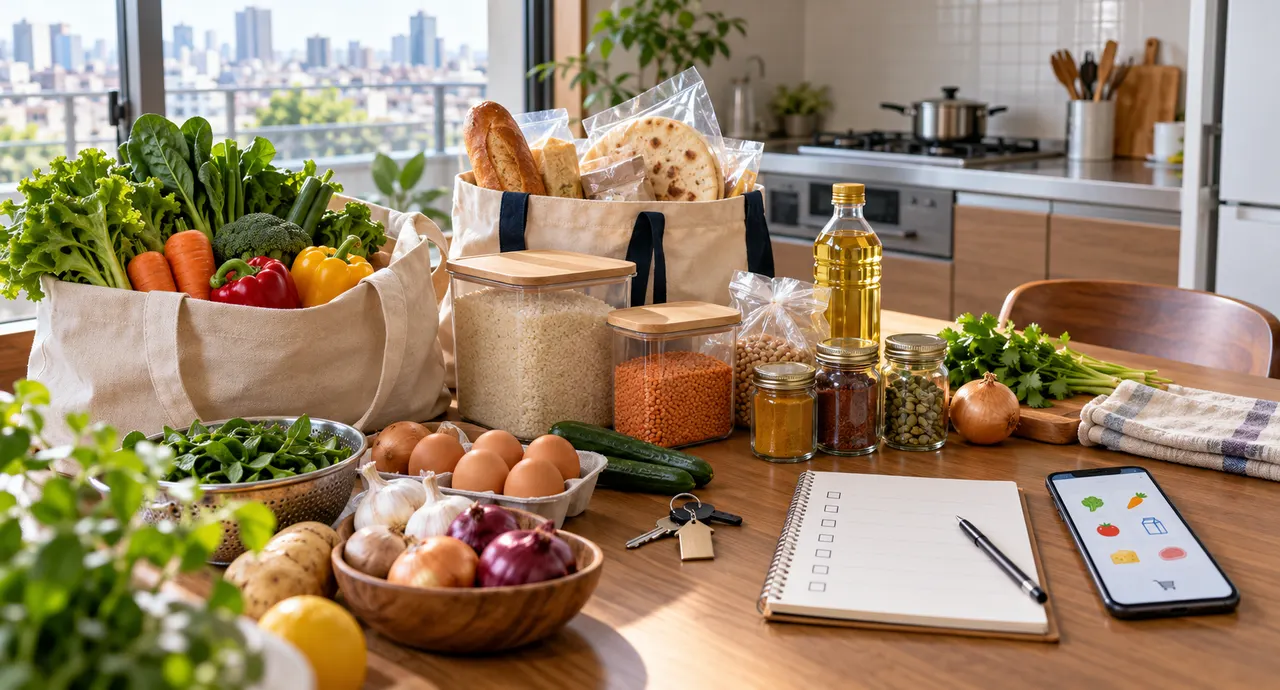
6. Prepare a First-Week Grocery Basket
Your first grocery order should help you prepare a few familiar, manageable meals.
Here is an example of a simple starter basket.
| Product | Suggested starting quantity |
|---|---|
| Rice | One small or medium pack |
| Lentils | 1–2 varieties |
| Atta | One suitable pack |
| Halal chicken | Quantity suitable for planned meals |
| Cooking oil | One bottle |
| Basic spices | 4–5 frequently used types |
| Frozen bread | One pack, if needed |
| Tea or preferred drink | One pack |
| Snacks | A small selection |
These quantities are illustrative rather than fixed recommendations. Adjust them to your household size, appetite, budget, and storage capacity.
For example, a student cooking for one person may need significantly less than a family preparing daily meals.
The purpose of this starter basket is to make your first grocery purchase manageable.
7. Understand Online Grocery Ordering in Japan
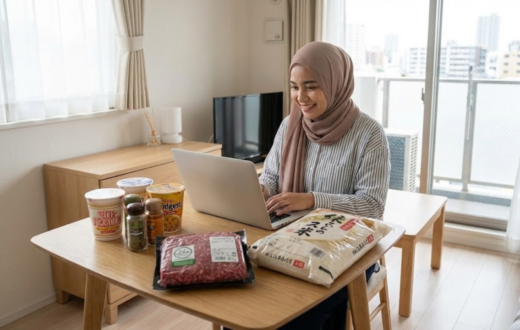
If you have recently moved to Japan, online ordering may be useful while you are still learning your surroundings.
MT Halal Mart offers grocery home delivery across Japan, allowing customers to browse available products without travelling to the physical store.
Before Placing Your First Order
Make sure you have:
- Your correct Japanese delivery address
- The building or apartment number, where applicable
- The correct postal code
- A working contact number
- Access to the selected payment method
- A suitable way to receive and store your groceries
Japanese addresses may include prefecture, city, district, building, and room information. Entering accurate delivery details can help prevent delivery problems.
For website-specific instructions, follow MT Halal’s How to Order guide.
Check Shipping Charges Before Checkout
MT Halal Mart advertises free shipping on eligible orders over ¥10,500.
Shipping arrangements may vary by destination, parcel weight, and product requirements. Review the latest shipping fees and delivery information before placing your order.
If you’re ordering frozen or chilled groceries, read the relevant delivery and storage instructions carefully.
8. Visit MT Halal Mart’s Physical Store in Chiba
For new residents living in Chiba or nearby areas, shopping in person may be a convenient option.
MT Halal Mart’s physical grocery store is located at:
1803-1 Monoi, Yotsukaido City, Chiba 284-0012, Japan
Visiting the store allows customers to explore available groceries, inspect packaging, and look for familiar Pakistani and Indian food products.
Before travelling, confirm the current opening hours and availability of any specific items you need.
If you’re still unfamiliar with the area, plan your route using a map or navigation application.
9. Avoid These First-Time Grocery Shopping Mistakes
Moving to a new country is expensive enough without unnecessary grocery purchases.
These common mistakes are worth avoiding.
Buying Large Quantities Too Soon
A large rice bag or several frozen meat packs may appear convenient, but they may not suit your current kitchen or storage facilities.
Start with manageable quantities.
Assuming Familiar Packaging Means Familiar Ingredients
A product may look similar to something sold in Pakistan, India, or another country, but its formulation may differ.
Always check the actual label.
Forgetting Storage Requirements
Some products require refrigeration, freezing, or storage in a cool, dry place.
Check these requirements before purchasing.
Ordering Before Confirming Your Delivery Address
If you’ve recently moved into an apartment, double-check your address, room number, postal code, and contact information.
Buying Ingredients Without a Meal Plan
For your first few days, prioritize ingredients for meals you already know how to prepare.
You can explore additional products once your kitchen and daily routine are established.
Your First Halal Grocery Shopping Checklist: Final Review
Before making your first grocery purchase in Japan, review this simple checklist:
- Find a suitable halal grocery shopping option
- Check ingredient labels and certification information where relevant
- Buy basic rice, flour, lentils, and spices
- Choose halal meat according to your cooking facilities
- Confirm your kitchen has essential utensils
- Prepare a manageable first-week grocery list
- Check product storage requirements
- Confirm your Japanese delivery address
- Review shipping fees before ordering
- Keep important store contact details accessible
You don’t need a perfectly stocked kitchen on your first day. A few reliable ingredients and a little preparation can help you settle into everyday cooking.
Frequently Asked Questions
Where can new residents buy halal groceries in Japan?
New residents can look for dedicated halal grocery stores, check suitable products at general supermarkets, and explore online shopping options. MT Halal Mart offers halal groceries online across Japan and operates a physical store in Chiba.
What halal groceries should I buy first after moving to Japan?
Start with familiar staples such as rice, lentils, flour, cooking oil, basic spices, and suitable halal protein options. Choose quantities based on your immediate meals and available storage.
Can I buy Pakistani and Indian groceries in Japan?
Yes. Specialist grocery stores such as MT Halal Mart offer Pakistani and Indian food products, including rice, spices, lentils, snacks, and other cooking essentials, subject to availability.
How can I check whether Japanese packaged food is halal?
Review ingredient lists, check relevant certification details, and verify unclear ingredients with the manufacturer or seller. Translation tools can help you read Japanese packaging, but they do not independently verify halal status.
Does MT Halal Mart offer home delivery in Japan?
Yes. MT Halal Mart offers online grocery shopping with home delivery across Japan. Check the website for current availability, shipping charges, and delivery conditions.
Start Your Halal Grocery Shopping Journey in Japan
Your first grocery shopping experience in Japan doesn’t need to be complicated.
Begin with a few essential ingredients, learn how to read unfamiliar labels, understand your kitchen’s storage limits, and identify a reliable place to purchase halal food.
As you settle into your new home, you can gradually explore more ingredients and cooking options.
MT Halal Mart offers Pakistani and Indian halal groceries through its online store and physical grocery shop in Yotsukaido, Chiba.
Browse the MT Halal Mart Shop to explore available groceries for your new kitchen.