Choosing between lamb and mutton can make a noticeable difference to the flavor, tenderness and cooking time of a meal. Although the names are sometimes used interchangeably, they traditionally refer to meat from sheep of different ages. This influences how the meat tastes and which cooking methods work well.
Understanding lamb vs mutton is especially useful for people in Japan preparing Pakistani, Indian, Middle Eastern and other traditional dishes. A cut suitable for quick grilling may behave differently from one intended for slow-cooked curry.
This guide explains the differences in taste, texture, preparation and recipe suitability. It also highlights an important labeling distinction that Muslim shoppers should understand when purchasing lamb or mutton through halal grocery stores.
What Is the Difference Between Lamb and Mutton?
The primary difference between lamb and mutton is the age of the sheep.
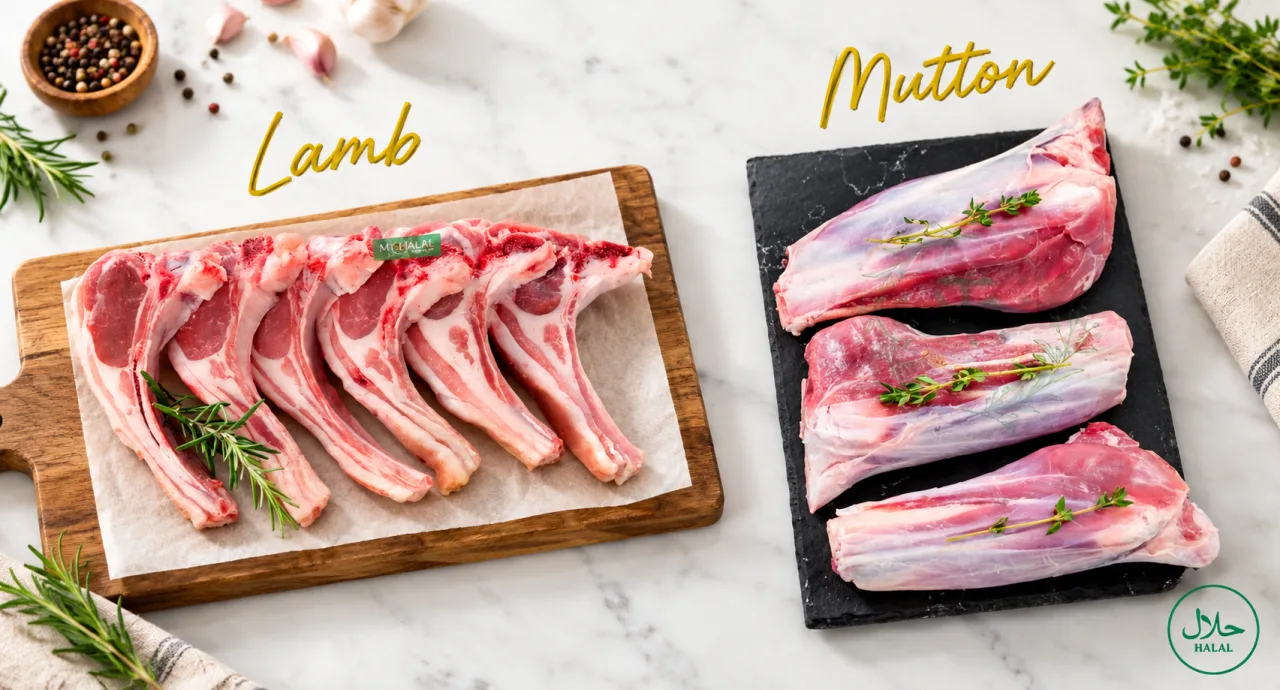
Lamb generally refers to meat from a young sheep, commonly under one year old. It usually has a milder flavor and finer, more tender muscle texture.
Mutton, in standard English meat terminology, refers to meat from an older sheep. Its flavor is typically stronger, and its firmer texture often benefits from longer cooking.
However, the word mutton has a different meaning in some South Asian food markets, where it commonly refers to goat meat. This is important when buying meat for Pakistani or Indian cooking.
Lamb vs Mutton: Quick Comparison
| Feature | Lamb | Mutton |
|---|---|---|
| Animal age | Younger sheep | Older sheep in standard English usage |
| Flavor | Generally mild and delicate | Stronger and more pronounced |
| Texture | Usually finer and more tender | Often firmer and denser |
| Cooking approach | Grilling, roasting, braising | Slow cooking, stewing, braising |
| Common dishes | Lamb chops, kebabs, roast lamb | Mutton curry, stew, pulao |
| Preparation consideration | Avoid unnecessarily prolonged high heat | Allow sufficient time for tougher cuts to soften |
These are general characteristics rather than guarantees. The particular cut, animal diet, meat quality and cooking technique can influence the final result.
1. Taste Differences: Mild Lamb vs Richer Mutton
Flavor is one of the most noticeable differences between the two meats.
What Does Lamb Taste Like?
Lamb usually has a relatively mild, savory flavor with subtle earthy notes.
Because the animal is younger, its flavor is generally less pronounced than that of mature sheep meat.
This makes lamb suitable for recipes where the natural meat flavor should remain noticeable without becoming too dominant.
For example, lamb chops can be prepared with garlic, black pepper, cumin or herbs while retaining their characteristic taste.
What Does Mutton Taste Like?
Mutton from mature sheep usually has a deeper, more distinctive flavor.
It may have stronger earthy or gamey characteristics, depending on the animal’s age, diet and fat composition.
This pronounced flavor works well in dishes containing onions, ginger, garlic, tomatoes and warming spices.
Slow-cooked mutton dishes can develop rich cooking liquids, especially when the selected cut contains connective tissue that softens during cooking.
Which Tastes Better?
Neither is universally better.
People who prefer a mild meat flavor may enjoy lamb, while those who appreciate deeper flavors may prefer mutton.
Personal preference matters more than choosing one meat as objectively superior.
2. Texture Differences: Why Lamb Is Usually More Tender
Texture influences how meat responds to heat.
Lamb generally has finer muscle fibers and less mature connective tissue than older sheep meat. As a result, many lamb cuts are naturally tender.
Mutton from an older sheep often has more developed connective tissue and firmer muscles.
However, tenderness also depends on the cut itself.
A lamb shoulder can require longer cooking than a tender mutton cut, so age alone should not determine the cooking method.
How Cooking Changes Meat Texture
During slow, moist cooking, collagen in connective tissue gradually transforms into gelatin. This can help tougher meat become easier to chew.
For cuts containing substantial connective tissue, gentle simmering or braising is often more effective than brief cooking over high heat.
Tender cuts, meanwhile, can become dry when exposed to unnecessary prolonged cooking.
The practical lesson is to consider both the animal’s age and the meat’s anatomical cut.
3. Lamb vs Mutton: Which Cooking Methods Work Best?
Choosing a suitable cooking method helps preserve flavor and achieve the desired texture.
Grilling and Pan-Searing
Tender lamb cuts, including chops and suitable loin portions, can work well for grilling or pan-searing.
These methods develop a browned exterior while allowing the cook to control the meat’s internal temperature.
Mutton can also be grilled, but tougher cuts may need marinating, tenderizing or preliminary slow cooking.
Slow Cooking and Braising
Slow cooking is particularly useful for firmer cuts.
Meat is cooked gently with sufficient moisture over an extended period, allowing connective tissues to soften.
Both lamb and mutton can be braised, although tougher mature-meat cuts may need longer to reach the desired tenderness.
Pressure Cooking
A pressure cooker can be useful when preparing curries or stews from suitable cuts.
Pressure cooking can shorten the time needed for connective tissue to soften, but there is no single cooking time that works for every cut.
Always consider piece size, meat condition and the pressure cooker’s instructions.
4. Which Meat Should You Choose for Popular South Asian Dishes?
Lamb and mutton can both be used in traditional home cooking, but their characteristics may suit different preparations.
| Dish | Suitable Choice | Reason |
|---|---|---|
| Karahi | Lamb or suitable mutton cuts | Depends on preferred flavor and cooking time |
| Biryani | Lamb or mutton pieces | Both can complement rice and aromatic spices |
| Pulao | Mutton or lamb with suitable connective tissue | Gentle cooking can develop a flavorful stock |
| Grilled chops | Tender lamb chops | Suitable for controlled, relatively quick cooking |
| Slow-cooked stew | Firmer mutton cuts | Longer moist cooking helps soften the meat |
| Kebabs | Suitable minced lamb or mutton | Fat content and grinding influence texture |
These suggestions are flexible rather than strict rules.
Lamb for Karahi
Lamb can be convenient for a karahi when a relatively tender cut is selected.
Its milder taste works with tomatoes, ginger, garlic, green chilies and spices.
Cooking time depends on the size and type of the pieces.
Mutton for Pulao
Mutton is often chosen for traditional pulao because its more pronounced flavor can contribute to the stock.
When the meat is cooked gently with whole spices, the resulting liquid can become an important part of the finished rice dish.
However, if a recipe uses goat meat under the name mutton, its cooking behavior may differ from mature sheep mutton.
Lamb Chops for Grilling
Lamb chops are suitable for grilling when prepared and cooked correctly.
They can be seasoned simply with salt, pepper, garlic and suitable herbs or spices.
The thickness and type of chop should guide cooking rather than relying on a fixed number of minutes.
5. Does Mutton Always Mean Sheep Meat?
Not necessarily.
This is an important distinction for shoppers buying halal meat in Japan.
In standard English butchery terminology, mutton is meat from an older sheep.
However, in Pakistan, India and some other South Asian food contexts, mutton frequently means goat meat.
A Pakistani recipe requesting mutton may therefore be referring to goat rather than mature sheep.
Why This Matters When Shopping
Goat meat and mature sheep meat have different flavor and fat characteristics.
Goat is often relatively lean, while mature sheep meat may have a different distribution of fat and a stronger sheep-like flavor.
When purchasing packaged meat, check the actual animal species rather than relying solely on the product name.
MT Halal Mart provides separate Lamb Products and Mutton Products collections.
Customers should review product descriptions and clarify the animal source if a label is ambiguous.
This is especially useful when following recipes from different countries.
6. How to Choose Lamb or Mutton When Shopping in Japan
Before purchasing meat, consider the intended meal and the preparation method.
Check the Animal Source
Determine whether the product contains lamb, mature sheep meat or goat meat.
This helps avoid confusion caused by regional naming conventions.
Consider the Recipe
Choose tender cuts for methods such as grilling and suitable firmer cuts for slow cooking.
Examine the Product Information
Check packaging condition, storage requirements, cut description and weight.
For halal meat, verify that the relevant slaughter and sourcing requirements are met.
Compare Current Product Options
MT Halal Mart lists several lamb and mutton products within its Meat & Poultry Collection.
Examples listed on the website include Lamb Chops, Lamb Leg Karahi Cut and Mutton Mix Cut.
Check the individual product listings for current prices and availability, as these can change.
The exact choice should depend on the recipe rather than assuming every product labeled lamb or mutton serves the same purpose.
7. Cooking Tips for Better Flavor and Tenderness
Small preparation decisions can improve the final dish.
Cut meat into consistent pieces. Similar-sized pieces cook more evenly.
Avoid excessive high heat for tougher cuts. Gentle cooking with moisture is often more suitable.
Use seasoning according to the recipe. Ginger, garlic, cumin and coriander can complement both meats without hiding their natural flavor.
Allow sufficient cooking time. Tougher cuts need enough time to soften, while tender cuts should not be cooked longer than necessary.
Check the internal temperature. For food safety, USDA guidance recommends cooking intact lamb and goat steaks, chops and roasts to at least 63°C, followed by a three-minute rest. Ground meat should reach 71°C.
Safe cooking temperatures must not be replaced by visual judgments about color or tenderness.
For seasoning options, explore MT Halal Mart’s Masala & Spices Collection.
8. Quick Pre-Purchase Checklist
Before choosing lamb or mutton for home cooking, check the following:
- Is the meat from sheep or goat?
- Does the product description clearly identify the cut?
- Will the recipe use grilling, roasting or slow cooking?
- Do you prefer a mild or pronounced meat flavor?
- Is the pack size appropriate for your household?
- Are the halal information and storage instructions clear?
These questions help identify a practical option without assuming that one type of meat is suitable for every recipe.
Frequently Asked Questions
1. What is the main difference between lamb and mutton?
Lamb generally comes from a younger sheep, while mutton traditionally comes from an older sheep. Lamb is usually milder and more tender, whereas mutton tends to have a stronger flavor and firmer texture.
2. Is lamb more tender than mutton?
Generally, yes. Lamb usually has finer muscle texture because it comes from a younger animal. However, tenderness also depends on the cut, handling and cooking method.
3. Which is better for curry: lamb or mutton?
Both can work well. Lamb may be suitable when a milder flavor is preferred, while mutton can provide a richer taste in longer-cooked curries.
4. Does mutton take longer to cook than lamb?
Mature sheep mutton often requires longer cooking because its connective tissue can be firmer. Actual cooking time depends on the cut, piece size and preparation method.
5. Is mutton the same as goat meat?
Not always. In standard English terminology, mutton refers to mature sheep meat. In South Asian cooking, the same word frequently refers to goat meat. Always check the animal source.
6. Can lamb replace mutton in biryani or pulao?
Yes, lamb can be used in many recipes calling for mutton. However, its milder flavor and often more tender texture may require adjustments to cooking time.
7. Where can I buy lamb and mutton in Japan?
Specialist halal retailers, including MT Halal Mart, list lamb and mutton products for shoppers in Japan. Check the actual species, cut, halal details and current availability before ordering.
Conclusion
Understanding lamb vs mutton helps home cooks select meat based on flavor, tenderness and cooking requirements rather than choosing only by name.
Lamb generally offers a milder flavor and tender texture, while mature sheep mutton provides a more pronounced taste and often benefits from slow cooking.
For Muslim shoppers in Japan, it is also important to understand that the term mutton may refer to goat meat in South Asian grocery contexts.
Explore MT Halal Mart’s Meat & Poultry Collection to compare available meat products and check current prices before placing an order.
Editorial Verification: Recheck product species, halal sourcing information, cut descriptions, current stock, packaging details and official URLs before publishing. Cooking guidance should be adapted to the actual meat type and cut. The distinction between sheep mutton and goat meat should remain clearly explained to avoid misleading shoppers.