Bone-In vs Boneless Mutton: Choosing the Right Option for Different Dishes
A good mutton dish depends on more than the spices you use. The cut of meat can change the texture of the curry, the richness of the cooking liquid, and how easily the finished dish can be served.
For Pakistani home cooking, bone-in mutton is often chosen for traditional curries, yakhni and pulao, while boneless mutton offers convenience for dishes where neatly cut, easy-to-eat pieces are preferred.
But which one should you buy?
If you’re looking for halal meat in Japan, understanding bone-in vs boneless mutton can help you choose the right product for your next meal without guessing.
This guide compares their cooking characteristics, explains which cuts suit different Pakistani dishes, and highlights the details worth checking before ordering.
Bone-In vs Boneless Mutton: What’s the Difference?
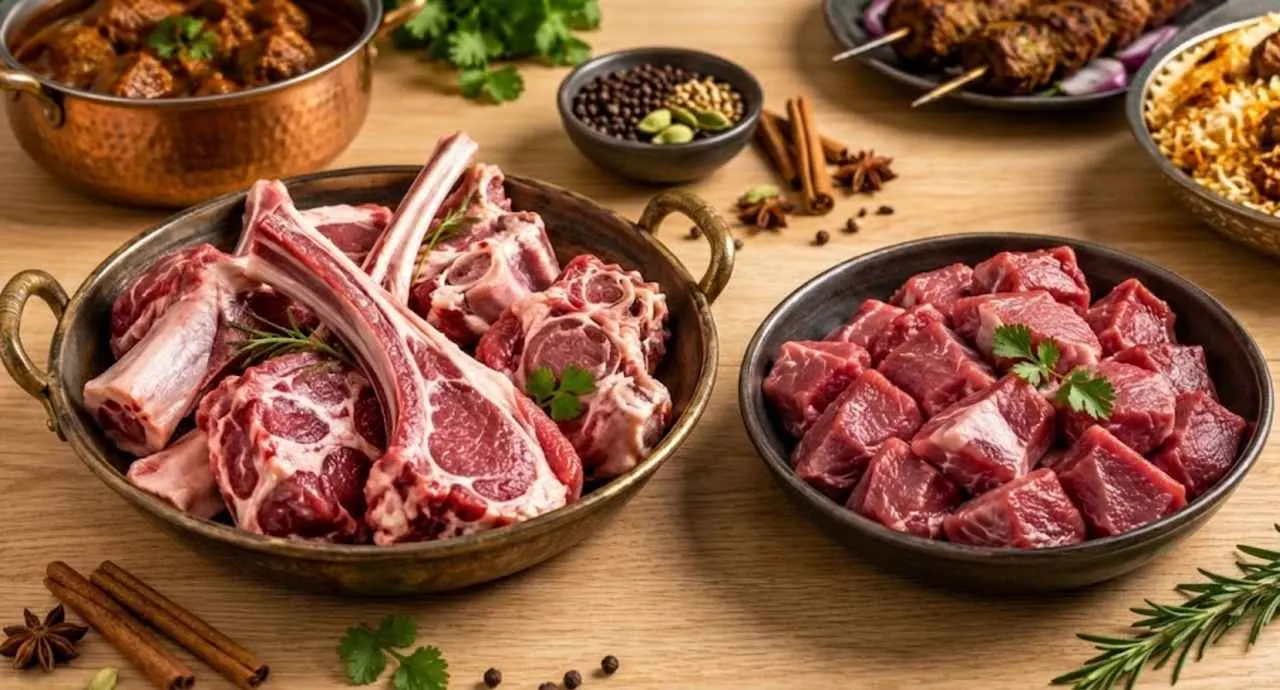
Bone-in mutton contains meat attached to bones, as found in mixed cuts, chops, ribs and shank portions.
Boneless mutton has the bones removed and may be sold as whole pieces, cubes or diced meat.
Both can be used in traditional Pakistani cooking, but they produce different eating experiences.
| Feature | Bone-In Mutton | Boneless Mutton |
|---|---|---|
| Main characteristic | Meat attached to bones | Meat without bones |
| Edible meat per kilogram | Lower because bone weight is included | Generally higher |
| Cooking liquid | Bones and connective tissues can contribute body and flavor | Flavor develops mainly from the meat, fat and other ingredients |
| Preparation | May require more care when serving | Convenient to cut and portion |
| Common dishes | Aloo gosht, yakhni, pulao, traditional curry | Boneless karahi, kebab preparations, wraps, diced meat dishes |
| Eating experience | Meat must be separated from bones | Easier to eat without handling bones |
Neither option is automatically superior. Your recipe should guide your choice.
1. Bone-In Mutton: A Traditional Choice for Curry and Yakhni
Bone-in mutton is popular in many Pakistani dishes because the bones, meat, fat and connective tissues contribute to the overall cooking experience.
When bone-in pieces simmer in water or a spiced sauce, compounds from the meat and connective tissue can give the liquid more body.
This is useful in recipes where the cooking liquid becomes part of the final dish.
Where Bone-In Mutton Works Best
Consider bone-in mutton for:
- Traditional mutton curry or salan
- Aloo gosht
- Mutton yakhni
- Yakhni pulao
- Bone-in karahi
- Certain slow-cooked preparations
Bone-In Mutton for Aloo Gosht
Aloo gosht combines meat, potatoes and a seasoned curry base.
Bone-in pieces work well because the meat can simmer while the potatoes and masala absorb flavor.
Choose pieces of manageable size so the dish is easy to serve.
If the pieces include a high proportion of bone, you may need a larger total purchase weight to provide sufficient meat for everyone.
Bone-In Mutton for Yakhni Pulao
Yakhni pulao depends on a flavorful broth.
Bone-in shank, mixed cuts or other suitable portions can be used to prepare the yakhni with onions and whole spices.
After the meat is cooked, the strained broth becomes part of the rice preparation.
Boneless meat can also produce a good broth, but bone-in cuts are often preferred when the cooking liquid is especially important.
What to Consider Before Buying
Not all bone-in packs contain the same balance of meat and bone.
A mixed cut pack may include several portions of the animal, while chops or shanks have more specific characteristics.
Before purchasing, check whether the product is described as:
- Mixed cut
- Karahi cut
- Chops
- Shank slices
- Leg pieces
These names provide clues about the likely shape and intended use, but the exact bone-to-meat ratio should be confirmed with the seller when necessary.
2. Boneless Mutton: Convenient for Neat Portions and Easy Serving
Boneless mutton is helpful when you want pieces that are easier to handle, portion and eat.
Without bones, the meat can be diced into consistent sizes or sliced for a specific recipe.
This is useful for households preparing individual portions, lunchboxes or dishes where diners prefer meat without bones.
Where Boneless Mutton Works Best
Boneless pieces can suit:
- Boneless mutton karahi
- Diced mutton curry
- Spiced mutton stir-fries
- Boneless bhuna gosht
- Certain kebab or skewer preparations
- Lunchbox meals with rice or roti
The source cut still matters. Boneless leg, shoulder or other portions may have different textures and cooking requirements.
Boneless Mutton for Karahi
A boneless mutton karahi usually features pieces cooked with tomatoes, ginger, garlic, chilies and spices.
With boneless meat, the finished dish is straightforward to serve, and every piece is edible meat.
However, removing the bones does not guarantee a short cooking time. Mutton may still need sufficient simmering to become tender.
Boneless Mutton for Family Meals
Boneless mutton can be convenient when serving children or anyone who prefers not to separate meat from bones.
It also makes portioning simpler because the purchased weight is not significantly reduced by bones, although trimming and cooking losses still occur.
That does not mean boneless meat is always the better purchase. Bone-in options may be preferable for recipes where the stock or traditional serving style matters.
3. Which Mutton Cut Is Best for Pakistani Dishes?
Different Pakistani dishes benefit from different cuts.
Here’s a practical guide.
| Pakistani dish | Suggested mutton cut | Reason |
|---|---|---|
| Aloo Gosht | Bone-in mixed pieces | Works well in a simmered curry |
| Mutton Yakhni | Bone-in shank or mixed cuts | Suitable for preparing broth |
| Mutton Pulao | Bone-in pieces | Useful for yakhni-based rice dishes |
| Mutton Biryani | Bone-in or boneless | Both can work depending on serving preference |
| Mutton Karahi | Bone-in karahi cut or boneless diced meat | Choose traditional bone-in or convenient boneless portions |
| Bhuna Gosht | Boneless cubes or suitable bone-in pieces | Both can be cooked in a reduced masala |
| Mutton Stew | Bone-in shank or suitable boneless stewing cut | Works with longer, gentle cooking |
| Skewered Mutton | Suitable boneless pieces | Easier to thread onto skewers |
These are recommendations, not strict cooking rules.
For example, you can make an excellent boneless mutton curry or use bone-in meat for karahi. The cooking method and preferred eating experience are just as important as the dish name.
4. Does Bone-In Mutton Have More Flavor?
Bone-in cuts can produce a richer cooking liquid, particularly during longer cooking when connective tissues soften and contribute gelatin.
However, it is too simplistic to say that bone-in mutton always tastes better.
Flavor depends on several factors:
- The cut of meat
- Fat content
- Cooking duration
- Browning and preparation
- Spices and aromatics
- Amount of cooking liquid
- Final sauce reduction
A boneless mutton curry prepared with a well-developed masala can be deeply flavorful.
The difference is often most noticeable in dishes where meat broth is central, such as yakhni or pulao.
Bone-In for Broth, Boneless for Convenience
A useful way to decide is to ask:
Is the cooking liquid an important feature of this recipe?
If yes, bone-in cuts may be a good choice.
Is easy serving and portioning more important?
If yes, boneless cuts may be more practical.
Neither approach is a universal rule, but it provides a useful starting point.
5. Does Bone-In or Boneless Mutton Cook Faster?
Cooking time depends more on the specific cut, size, connective tissue and cooking method than on bones alone.
For example, small boneless cubes from a suitable cut may cook faster than large shank portions.
But boneless meat taken from a tougher part of the animal may still need a long cooking period.
Factors That Affect Cooking Time
Cut and connective tissue: Working muscles generally require more time to become tender.
Piece size: Smaller pieces often cook more quickly than large pieces from the same cut.
Cooking method: Pressure cooking can shorten the time needed for a tender result compared with gentle stovetop simmering.
Desired texture: A curry with fork-tender meat may need longer cooking than a preparation intended to retain a firmer bite.
Starting condition: Frozen meat should be thawed safely according to appropriate food-handling guidance before cooking methods that call for thawed meat.
Instead of relying on a single time estimate, follow the recipe, check that the meat has cooked safely, and continue cooking until it reaches the intended tenderness.
How to Avoid Tough Mutton
For curry-style dishes:
- Choose a cut appropriate for simmering.
- Cut the pieces into reasonably consistent sizes.
- Develop the masala according to your recipe.
- Add the necessary liquid and cook at a controlled temperature.
- Check tenderness periodically.
- Reduce the sauce only after the meat is sufficiently tender.
Avoid assuming that turning the heat very high will make a tough cut tender more quickly.
6. Bone Weight vs Edible Meat: Which Offers Better Value?
When comparing bone-in and boneless mutton, the price per kilogram only tells part of the story.
A 1kg pack of bone-in mutton includes bone weight.
A 1kg pack of boneless mutton contains more edible meat before cooking, although it can still include fat and connective tissue.
Example: Comparing the Real Cost
Suppose two hypothetical products are priced as follows:
| Detail | Bone-In Mutton | Boneless Mutton |
|---|---|---|
| Pack weight | 1kg | 1kg |
| Example price | ¥1,600 | ¥2,300 |
| Assumed usable meat before cooking | 700g | 950g |
| Approximate price per kg of usable meat | ¥2,286 | ¥2,421 |
These numbers are illustrative only, not MT Halal product prices or verified yields. Actual bone and trimming percentages vary by cut.
This example shows why a lower package price does not always mean a much lower cost per kilogram of meat.
However, bones also have culinary value when you use them for broth.
A Better Way to Compare
Ask yourself:
- Does the recipe benefit from bones?
- How many people will eat the dish?
- How much edible meat do I need?
- Will the bones be used for stock?
- Is convenience worth paying more for?
- What are the current listed prices?
This provides a more meaningful comparison than choosing solely by pack price.
7. How Much Mutton Should You Buy?
Your ideal purchase quantity depends on serving size, whether the meat is the main ingredient, and how much bone is included.
For an everyday curry served with rice or roti, the following are useful starting estimates.
| People | Boneless raw mutton | Bone-in raw mutton |
|---|---|---|
| 2 | 300–400g | 450–600g |
| 4 | 600–800g | 900g–1.2kg |
| 6 | 900g–1.2kg | 1.35–1.8kg |
These are planning estimates, not fixed nutrition recommendations.
Bone-in quantities assume a moderate amount of bone. Chops, shanks and mixed packs can have very different yields.
If the meal includes several other dishes, you may need less. If the meat is the main course, you may need more.
8. What Does “Mutton” Mean When Shopping in Japan?
This is an important detail for Pakistani and South Asian home cooks.
In everyday South Asian food language, mutton is often used to describe goat meat, while internationally the term can refer specifically to meat from mature sheep.
MT Halal’s online catalog includes separate product labels such as Mutton, Lamb, Goat Meat and Khasi.
Because these terms may refer to different animals or product types, don’t assume they’re interchangeable.
If the distinction matters for your recipe, check the product description or ask the seller whether you’re purchasing goat, sheep or lamb.
What to Check on a Mutton Product Listing
Look for:
- Animal type, where specified
- Bone-in or boneless description
- Specific cut or mixed-cut information
- Pack weight
- Halal information
- Chilled or frozen condition
- Country of origin, if provided
- Current stock status
These details can help prevent confusion when ordering meat online.
9. Buying Bone-In and Boneless Mutton from MT Halal Mart
MT Halal Mart offers halal meat and grocery products through its online store with home delivery across Japan, alongside its physical store in Yotsukaido, Chiba.
Its catalog has featured mutton products such as:
- Mutton Mix Cut 1kg
- Mutton Karahi Cut 2kg
- Mutton Chops 1kg
- Mutton Shank Slices 1kg
- Mutton Leg Boneless Diced 1kg
For a traditional curry or yakhni, a suitable bone-in mixed cut may be useful.
For a boneless karahi or a dish requiring diced meat, Mutton Leg Boneless Diced is a more directly relevant product type.
Availability changes, so check the live listing before deciding what to cook.
Explore the MT Halal Meat & Poultry collection to review current options.
Check the Cut Before Ordering
Some product names describe a general preparation style rather than every detail of the meat.
For example, the words karahi cut do not automatically tell you the exact bone-to-meat ratio.
If you need strictly boneless meat, choose a product clearly described as boneless or confirm the details with the store.
For additional guidance on selecting a reliable halal meat source, read Reliable Source of Halal Meat in Japan.
10. Simple Food Safety Tips for Mutton
Handle raw mutton carefully regardless of the cut.
- Keep raw meat separate from ready-to-eat food.
- Refrigerate or freeze meat promptly according to its packaging instructions.
- Use clean cutting boards, utensils and preparation surfaces.
- Thaw frozen meat safely in the refrigerator or by another approved method.
- Cook thoroughly, checking doneness with a food thermometer.
For intact goat, lamb or mutton cuts, a commonly recommended minimum internal temperature is 63°C (145°F), followed by a three-minute rest. Ground meat has different requirements.
Traditional slow-cooked curries generally require additional cooking beyond this minimum to become tender.
Frequently Asked Questions
Is bone-in or boneless mutton better for curry?
Both can work well. Bone-in mutton is commonly used in traditional curries and can add body to the cooking liquid. Boneless mutton is convenient when you want easy-to-eat pieces.
Which mutton cut is best for biryani?
Bone-in mixed pieces are a traditional option, while boneless mutton is useful if you prefer serving biryani without bones. Choose a cut that becomes tender during the meat preparation stage.
Can I use boneless mutton for yakhni pulao?
Yes, but bone-in pieces are often preferred for making a broth with more body. Boneless mutton can still produce a flavorful result when cooked with the appropriate spices and aromatics.
Is boneless mutton always more expensive?
Not always. Prices depend on the source cut, supplier, pack size and current market conditions. Compare current prices and account for the difference in edible meat yield.
Does bone-in mutton take longer to cook?
Not necessarily. Cooking time depends on the particular cut, piece size and cooking method. A tough boneless cut may need longer cooking than smaller bone-in pieces from another cut.
Is mutton the same as lamb or goat meat?
Not exactly. Internationally, mutton generally refers to mature sheep, while South Asian usage often uses the term for goat meat. Check the specific product description to confirm the animal type.
Where can I buy halal mutton in Japan?
MT Halal Mart offers mutton and other halal meat products through its online grocery store and physical shop in Yotsukaido, Chiba. Check the current online catalog for available cuts.
Final Thoughts: Match the Mutton Cut to the Dish
The best choice between bone-in and boneless mutton depends on what you’re cooking.
Choose bone-in mutton when preparing broth-based meals, traditional aloo gosht, yakhni or curries where the bones contribute to the cooking liquid.
Choose boneless mutton when you want easy serving, consistent diced portions or a dish without bones.
Before buying, compare the cut, animal type, edible meat yield and cooking method—not just the price per kilogram.
Whether you’re planning a family mutton curry or a convenient boneless karahi, the right cut makes preparation easier and helps you achieve the texture you want.
Browse the MT Halal Meat & Poultry collection to explore available halal mutton options in Japan.