Halal Chicken Cuts Explained: Whole Chicken, Boneless and Bone-In
Choosing the right chicken cut can make a noticeable difference to how a meal tastes, cooks, and fits into your daily routine. Whether you’re preparing Pakistani chicken karahi, a comforting curry, homemade kebabs, or a simple grilled dinner, whole chicken, boneless chicken, and bone-in pieces each have their own advantages.
For people shopping for halal chicken in Japan, understanding these differences can help make grocery decisions easier.
Some recipes benefit from the richer cooking liquid produced by bone-in chicken, while others are easier to prepare with boneless pieces. A whole chicken offers flexibility if you’re comfortable cutting and preparing it yourself.
This guide explains the main types of chicken cuts, how they differ, and which options work well for everyday home cooking.
What Is the Difference Between Whole, Boneless and Bone-In Chicken?
The main difference is how the chicken is prepared before it reaches your kitchen.
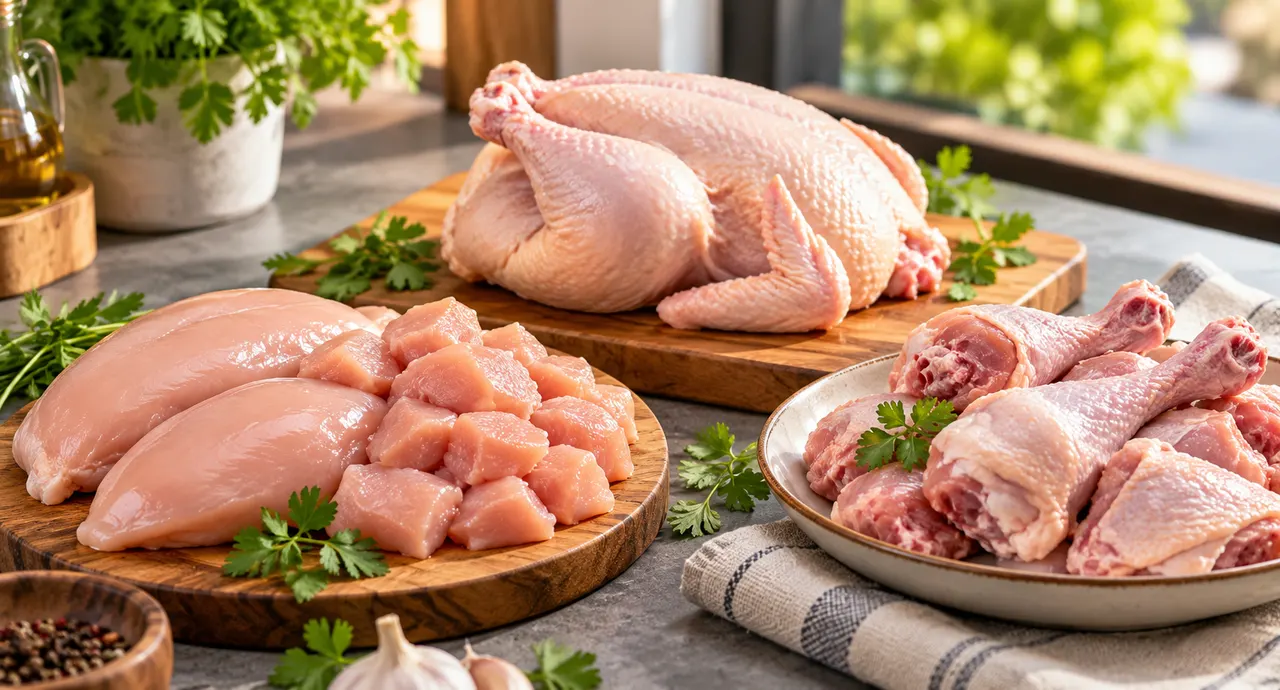
Whole chicken contains the main body of the bird, generally with its bones intact. Boneless chicken has had the bones removed and is commonly sold as breast or leg/thigh meat. Bone-in chicken refers to individual pieces or portions that still contain bones, such as drumsticks, thighs, wings, or curry-cut pieces.
Here’s a quick comparison:
| Chicken cut | Main characteristic | Common cooking uses |
|---|---|---|
| Whole Chicken | Complete bird with bones | Roasting, grilling, portioning for several dishes |
| Boneless Breast | Lean, boneless white meat | Grilling, sandwiches, stir-fries |
| Boneless Leg/Thigh | Darker meat with more fat | Karahi, kebabs, curries |
| Bone-In Drumsticks | Leg portion with bone | Baking, grilling, curries |
| Bone-In Thighs | Dark meat with bone | Slow-simmered curries, braising |
| Mixed Bone-In Pieces | Combination of bone-in portions | Chicken curry, pulao, biryani |
The best option depends on your recipe, cooking method, preferred texture, and preparation time.
1. Whole Chicken: A Flexible Option for Home Cooking
Whole chicken is useful when you want more freedom over how the meat is prepared.
Instead of purchasing separate cuts, you can divide one chicken into portions according to the meals you plan to cook.
For example, you might use the breast for a grilled dish, the legs for a curry, and the remaining bones for a homemade stock.
What Can You Cook with Whole Chicken?
A whole chicken can be used for:
- Oven-roasted chicken
- Grilled or spiced whole chicken
- Homemade chicken curry
- Chicken pulao
- Chicken stock or soup
- Multiple meals using different portions
This flexibility can be useful for families who prepare several different chicken dishes throughout the week.
Whole Chicken for Pakistani Cooking
In Pakistani households, whole chicken is sometimes cut into smaller portions for karahi, curry, and biryani.
For curry-style dishes, smaller pieces provide more surfaces for the spices and sauce to coat.
For roasting, keeping the chicken whole allows it to cook as a single dish, although the cooking time is generally longer than for small boneless pieces.
What to Consider Before Buying
Whole chicken may require additional preparation, especially if you intend to divide it yourself.
Check whether you have:
- A suitable cutting board
- A sharp knife or appropriate kitchen shears
- Enough refrigerator or freezer space
- Time to prepare the chicken
- A recipe that suits the product size
Also check the package weight. A whole chicken’s listed weight includes bones and other non-meat components, so the edible meat yield is lower than the total package weight.
MT Halal Mart lists different whole chicken products in its Chicken category, including products sold in varying package sizes.
2. Boneless Chicken: Convenient for Everyday Meals
Boneless chicken is an option when you want meat that’s easier to cut into strips, cubes, or smaller portions.
It generally requires less preparation than breaking down a whole chicken.
However, boneless chicken is not all the same. Breast and leg/thigh meat behave differently during cooking.
Boneless Chicken Breast
Chicken breast is relatively lean and has a mild flavor.
It works well in dishes where you want even slices or bite-sized pieces.
Common uses include:
- Grilled chicken
- Chicken sandwiches
- Stir-fried chicken
- Chicken salad
- Chicken wraps
- Lightly spiced chicken dishes
Because breast meat is lean, overcooking can make it dry. Use an appropriate cooking method and check the internal temperature rather than relying only on appearance.
Boneless Chicken Leg or Thigh
Boneless leg or thigh meat contains more fat than breast meat and generally stays tender during moist cooking.
It works well for:
- Chicken karahi
- Boneless chicken curry
- Tikka-style preparations
- Chicken kebabs
- Pan-cooked spiced chicken
- Rice bowls
If you enjoy darker, juicier meat, boneless leg or thigh may be a better match than breast.
MT Halal Mart has listings such as Chicken Leg Boneless 2kg and Chicken Breast Boneless 2kg. Check the current product details and availability before ordering.
Is Boneless Chicken Always Better?
Not necessarily.
Boneless pieces can be easier to handle, but they are not automatically better for flavor, cost, or every recipe.
For example, boneless breast can work well for a quick stir-fry, while bone-in thighs may be preferable for a longer-simmered curry.
The right choice depends on what you intend to cook.
3. Bone-In Chicken: A Popular Choice for Curries and Traditional Dishes
Bone-in chicken includes pieces such as drumsticks, thighs, wings, and mixed curry cuts.
These portions contain both meat and bone, although the exact amount of meat varies depending on the cut.
During simmering, bone-in pieces can contribute flavor and body to cooking liquid, particularly when the dish cooks long enough for the ingredients to combine.
Why Use Bone-In Chicken for Curry?
Many Pakistani and Indian chicken curries are prepared using bone-in pieces.
The meat cooks in a sauce made with onions, tomatoes, spices, and other ingredients.
Bone-in pieces are suitable for these dishes because they can be simmered while the sauce develops.
Common uses include:
- Pakistani chicken curry
- Chicken salan
- Chicken biryani
- Chicken yakhni
- Chicken pulao
- Braised chicken dishes
Drumsticks vs Thighs
Although both are leg portions, they offer different eating experiences.
Drumsticks have a recognizable shape and can be convenient for grilling, baking, and serving individual portions.
Thighs contain darker meat and generally have a richer texture than breast meat. They work well in braised dishes and curries.
Choose according to your recipe and whether you prefer meat that is easier to serve in individual pieces.
What About Chicken Wings?
Wings contain smaller amounts of meat relative to their bones and skin.
They are commonly used for grilled, baked, or seasoned wing dishes.
If you are planning a large curry for several people, mixed chicken cuts or thighs may provide a more practical balance of meat and bone.
For individual snacks or starters, wings can be a suitable option.
4. Which Chicken Cut Should You Choose for Different Pakistani Dishes?
Pakistani home cooking uses different chicken cuts depending on the dish and personal preferences.
The following guide can help you match the cut to your cooking plans.
| Pakistani dish | Suitable cut | Why it works |
|---|---|---|
| Chicken Karahi | Bone-in pieces or boneless thigh | Suitable for cooking in a spiced tomato-based sauce |
| Chicken Biryani | Bone-in mixed pieces | Flavorful portions for layered rice dishes |
| Chicken Pulao | Bone-in chicken | Useful for stock-based rice cooking |
| Chicken Tikka | Boneless thigh or suitable bone-in cuts | Works well with marinades and grilling |
| Chicken Curry | Thighs, drumsticks or curry-cut chicken | Suitable for simmering in sauce |
| Chicken Kebabs | Boneless or minced chicken | Easy to shape or portion |
| Chicken Soup | Bone-in pieces or whole chicken portions | Useful for preparing flavorful broth |
These are cooking suggestions, not strict rules.
For example, boneless chicken can also be used in biryani, while some home cooks prefer boneless karahi for easier serving.
The best choice is the one that matches your preferred recipe and eating experience.
5. How to Compare Chicken Cuts Before Buying
When selecting halal chicken, the product name alone may not provide every detail you need.
Check the cut, weight, packaging, and intended cooking use.
Consider the Edible Meat Yield
A 1kg pack of boneless chicken and a 1kg pack of bone-in chicken do not provide the same amount of edible meat.
Boneless packs generally contain more usable meat per kilogram because the bones have already been removed.
Bone-in cuts, however, may be appropriate for recipes where the bones contribute to the cooking process.
A whole chicken also includes multiple portions, which can be useful when you want different cuts from one purchase.
Check the Cost in Context
When comparing products, consider both price per kilogram and the type of meat you receive.
A lower-priced bone-in pack is not automatically the more economical choice if your recipe requires only boneless meat.
Similarly, choosing boneless pieces may reduce preparation time but can cost more per kilogram.
Compare actual listed prices and package weights before deciding.
Think About Preparation Time
Different cuts may affect how much preparation is required.
| Cut | Preparation consideration |
|---|---|
| Whole chicken | May need cutting or portioning |
| Boneless breast | Easy to slice or cube |
| Boneless thigh | May require trimming |
| Drumsticks | Usually ready for seasoning and cooking |
| Mixed bone-in pieces | Suitable for many curry-style preparations |
Cooking time depends on piece size, starting temperature, and cooking method—not simply whether a cut contains bones.
6. How to Choose Chicken for Different Household Needs
A household’s cooking routine can help determine which chicken products are most practical.
For Students and Individuals
Boneless chicken can be useful for small, quick meals such as wraps, rice bowls, or stir-fries.
Smaller portions may be easier to manage when kitchen facilities and freezer space are limited.
For Families
Whole chicken or mixed bone-in pieces may work well for family-style meals such as curry, biryani, and pulao.
Families that prepare several chicken dishes may also find it useful to purchase different cuts for different recipes.
For Weekend Cooking
If you enjoy preparing traditional meals on weekends, whole chicken or bone-in portions may suit dishes that require more preparation or longer cooking.
For quick weekday dinners, pre-cut boneless chicken may be more convenient.
7. How to Check Chicken Products When Shopping Online in Japan
When buying halal chicken in Japan, review the product listing carefully before adding it to your basket.
Look for:
- Exact product name
- Type of chicken cut
- Package weight
- Bone-in or boneless description
- Available halal information
- Storage condition
- Current stock availability
- Applicable delivery information
If a product description is unclear, contact the seller before ordering.
MT Halal Mart offers Pakistani and Indian halal grocery products through its online store, with home delivery across Japan. Customers can also visit its physical grocery store in Yotsukaido, Chiba.
Browse the Chicken category to explore available chicken products.
Halal Information Matters
The cut of chicken and its halal status are separate considerations.
A boneless product is not automatically halal, and a whole chicken is not automatically halal simply because of its appearance.
Check relevant certification or supplier information where needed, particularly if you have specific halal requirements.
8. Basic Food Safety When Preparing Chicken
Whichever cut you choose, safe handling is important.
Keep raw chicken separate from ready-to-eat foods, use clean utensils and cutting boards, and follow the storage instructions on the package.
Do not wash raw chicken under running water, as splashing can spread bacteria onto surrounding surfaces.
Cook chicken thoroughly to a safe internal temperature of 74°C (165°F), measured with a food thermometer in the thickest edible portion without touching bone.
For detailed storage guidance, read MT Halal’s existing article, Storing Fresh Halal Chicken Safely After Delivery.
Frequently Asked Questions
Is boneless chicken better than bone-in chicken for curry?
Both work well. Boneless thigh meat is convenient for serving, while bone-in pieces can contribute flavor to the cooking liquid during simmering. Choose according to your preferred texture and recipe.
Which chicken cut is best for biryani?
Bone-in mixed chicken pieces are commonly used for traditional chicken biryani, although boneless chicken can also work. The best choice depends on your recipe and serving preferences.
Is chicken breast the same as boneless chicken?
Not exactly. Chicken breast can be sold boneless, but boneless chicken can also come from thigh or leg portions. These cuts differ in texture and fat content.
Can I use a whole chicken for several meals?
Yes. A whole chicken can be portioned into different cuts for separate dishes. The number of meals depends on the bird’s size and serving quantities.
Where can I buy halal chicken in Japan?
MT Halal Mart offers halal chicken products through its online grocery store and physical retail location in Yotsukaido, Chiba. Product types and availability can be checked through the website.
Final Thoughts: Choose Chicken According to Your Recipe
Understanding the differences between whole, boneless, and bone-in chicken helps you choose the right product for your cooking needs.
Whole chicken offers flexibility, boneless cuts are convenient for many everyday meals, and bone-in pieces are useful for traditional curries, biryani, and slow-simmered dishes.
Rather than choosing one type for every meal, consider the recipe, texture, preparation requirements, and amount of edible meat you need.
For halal chicken in Japan, explore the MT Halal Chicken collection or visit the physical MT Halal Mart store in Chiba to review available grocery options.