Chicken Karahi Recipe at Home in Japan: Ingredients and Cooking Steps
Craving Pakistani chicken karahi while living in Japan? You don’t need a restaurant kitchen or a long list of ingredients to make a flavorful version at home.
Chicken karahi is a Pakistani dish made by cooking chicken with tomatoes, ginger, garlic, green chilies, and spices until the sauce becomes thick and rich. Unlike a curry with plenty of gravy, karahi usually has a concentrated tomato-based masala that coats the chicken.
The good news is that you can make chicken karahi using a normal frying pan or deep skillet. Most ingredients are easy to prepare, even in a small Japanese apartment.
If you need to buy halal chicken online in Japan, MT Halal Mart offers chicken cuts along with South Asian spices and pantry ingredients.
In this guide, you’ll learn how to make chicken karahi step by step, which ingredients to use, and how to get the right flavor and texture.
Chicken Karahi Recipe at a Glance
<escape>| Recipe Detail | Information |
|—|—|
| Cuisine | Pakistani |
| Preparation time | 15 minutes |
| Estimated cooking time | 30–40 minutes |
| Total estimated time | 45–55 minutes |
| Servings | 3–4 |
| Main ingredient | 750g halal chicken |
| Difficulty | Easy to moderate |
| Cooking method | Stovetop |
| Best served with | Naan, roti, or rice |</escape>
Cooking time depends on chicken cut, piece size, stove heat, and pan type. Most importantly, chicken must reach a safe internal temperature of 74°C (165°F).
Ingredients for Homemade Chicken Karahi
This recipe uses common ingredients found in Pakistani home cooking.
Main Ingredients
| Ingredient | Quantity |
|---|---|
| Halal chicken, bone-in or boneless | 750g |
| Fresh tomatoes | 4 medium (about 450–500g) |
| Cooking oil | 3 tablespoons |
| Ginger-garlic paste | 1½ tablespoons |
| Green chilies | 2–3, adjusted to taste |
| Red chili powder | ½–1 teaspoon |
| Ground coriander | 1½ teaspoons |
| Ground cumin | 1 teaspoon |
| Turmeric | ¼ teaspoon |
| Salt | About ¾ teaspoon, then adjust |
| Garam masala | ½ teaspoon |
| Fresh ginger, cut into thin strips | 1 tablespoon |
| Fresh coriander | A small handful |
| Water | Only if needed |
Optional Ingredients
You can also add:
- A small pinch of crushed black pepper
- A few drops of lemon juice
- A little extra fresh ginger for garnish
- 1 tablespoon of yogurt for a slightly different home-style variation
However, yogurt isn’t necessary for this tomato-based version.
Cooking tip: Don’t add too much water. The goal is a thick masala that coats the chicken rather than a thin curry.
Which Chicken Cut Is Best for Karahi?
Both bone-in and boneless chicken work well.
However, they produce slightly different results.
| Chicken cut | Best quality | Cooking consideration |
|---|---|---|
| Bone-in chicken pieces | Rich flavor and traditional texture | May take longer to cook |
| Boneless chicken thigh | Juicy and easy to eat | Good for quicker cooking |
| Boneless chicken breast | Lean and convenient | Can become dry if overcooked |
| Mixed chicken pieces | Combination of textures | Different pieces may cook unevenly |
Bone-In Chicken
Bone-in pieces are a popular choice for traditional chicken karahi. They work well when you have time to let the chicken cook with the tomato masala.
Boneless Chicken
Boneless thigh is convenient for a quick family dinner. Meanwhile, chicken breast also works if you keep a close eye on the cooking time.
For halal chicken options, browse the MT Halal Chicken Category.
How to Make Chicken Karahi Step by Step
Follow these steps for a thick, flavorful Pakistani-style chicken karahi.
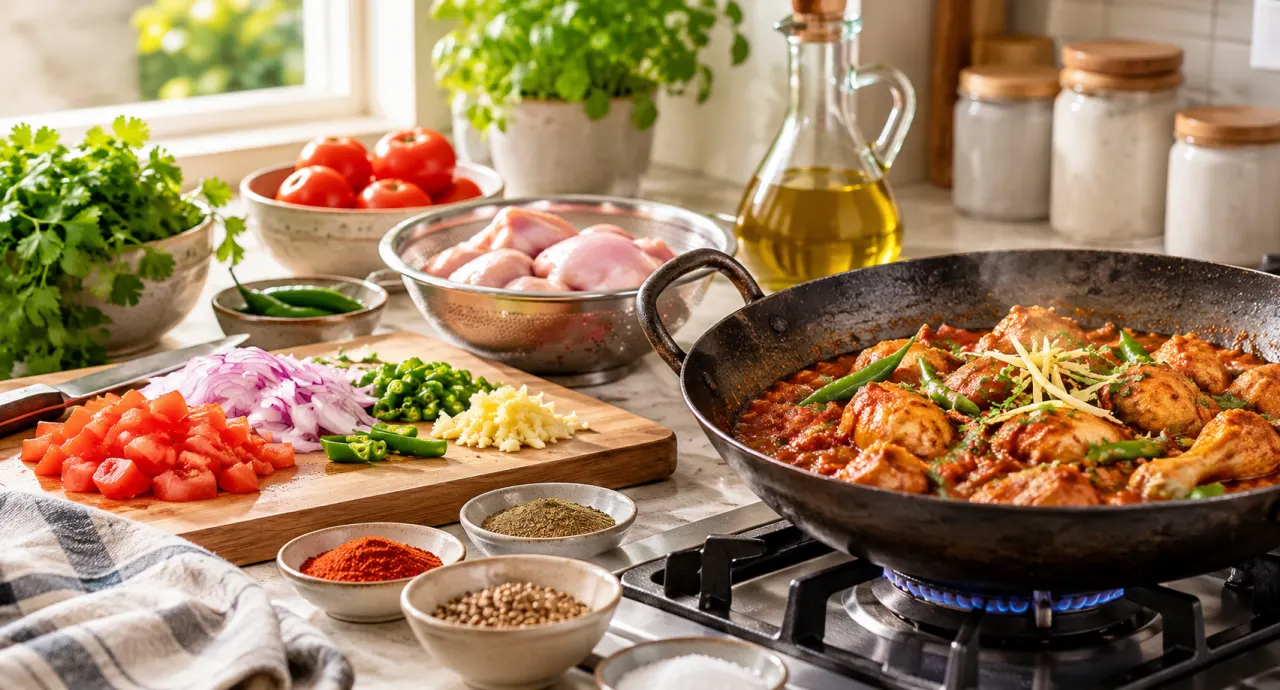
Step 1: Prepare the Ingredients
Start by washing your hands and cleaning the work area.
Cut the tomatoes into small pieces. Next, slice the green chilies and prepare the ginger-garlic paste.
If you’re using large chicken pieces, divide them into suitable portions when necessary.
Do not wash raw chicken. Washing can spread bacteria through water splashes. Instead, handle it carefully, then clean utensils and surfaces that touch the raw meat.
Keep the chicken separate from vegetables and other ready-to-eat ingredients.
Step 2: Heat the Oil
Place a karahi, deep frying pan, or heavy-bottomed skillet over medium heat.
Add three tablespoons of cooking oil.
Once the oil is warm, add the ginger-garlic paste.
Stir for approximately 30–60 seconds, just until fragrant. Avoid browning or burning the garlic.
Step 3: Add the Chicken
Carefully place the chicken pieces in the pan.
Stir to coat them with the oil and ginger-garlic mixture.
Cook over medium to medium-high heat for approximately 5–7 minutes, turning occasionally.
The outside of the chicken should begin changing color.
At this stage, it is not yet fully cooked.
Step 4: Add the Tomatoes
Now add the chopped tomatoes.
Stir well so the tomatoes mix with the chicken and cooking juices.
Cover the pan loosely and cook over medium heat for approximately 8–12 minutes.
During this time, the tomatoes should soften and release moisture.
Check occasionally to prevent sticking.
Why use fresh tomatoes? They create the base of the karahi masala and help the spices combine with the chicken.
Step 5: Add the Ground Spices
Once the tomatoes begin breaking down, add:
- Red chili powder
- Ground coriander
- Ground cumin
- Turmeric
- Salt
Mix everything thoroughly.
If the masala starts sticking before the chicken is cooked, add a tablespoon or two of water.
However, avoid pouring in a full cup unless the recipe genuinely needs it.
Step 6: Cook Until the Masala Thickens
Continue cooking over medium heat, stirring regularly.
As moisture evaporates, the tomatoes should form a thick sauce around the chicken.
This stage commonly takes another 8–12 minutes. However, the exact time depends on your pan, heat setting, and chicken cut.
The mixture should look glossy and rich, with the masala clinging to the chicken.
Step 7: Check the Chicken Is Fully Cooked
Before finishing, check the thickest part of the largest chicken piece with a food thermometer.
The internal temperature should reach at least 74°C (165°F).
For bone-in pieces, position the thermometer away from the bone.
Do not rely only on the outside color to determine whether chicken is safe to eat.
If necessary, continue cooking over moderate heat until the chicken reaches the required temperature.
Step 8: Add Green Chilies and Garam Masala
Once the chicken is cooked and the sauce has thickened, add the sliced green chilies and garam masala.
Stir gently.
Cook for another 1–2 minutes to combine the flavors.
If you prefer a mild karahi, use fewer chilies.
Step 9: Garnish and Serve
Turn off the heat.
Sprinkle fresh ginger strips and chopped coriander over the karahi.
You can also add a little lemon juice if you enjoy a brighter finish.
Serve hot with naan, roti, or rice.
Your homemade chicken karahi is ready.
How to Make Chicken Karahi Without a Traditional Karahi Pan
A traditional karahi has sloped sides that make stirring and reducing the sauce convenient.
However, a special pan isn’t essential.
Use a Deep Frying Pan
A deep frying pan works well for a small household.
Choose one with enough room to turn the chicken without overcrowding.
Use a Heavy-Bottomed Skillet
A heavy pan distributes heat more evenly. Therefore, it can help prevent the tomato masala from burning.
Use an Induction-Compatible Pan
Many Japanese kitchens have induction cooktops.
If you’re using induction, make sure the pan is compatible. Start at a moderate setting because some cooktops heat cookware quickly.
For example, instead of using maximum heat throughout, reduce the setting once the tomatoes begin to soften.
The important part is controlling moisture and avoiding burned spices.
Can You Make Pakistani Chicken Karahi in Japan with Local Ingredients?
Yes. The recipe uses ingredients that are commonly available in Japan, alongside several familiar South Asian spices.
However, you should check product labels and availability.
Ingredients You Can Look for in Japanese Supermarkets
| Ingredient | Japanese name |
|---|---|
| Tomato | トマト |
| Ginger | しょうが |
| Garlic | にんにく |
| Green chili | 青唐辛子 |
| Coriander leaves | パクチー |
| Chicken | 鶏肉 |
| Cooking oil | 食用油 |
Green chilies and fresh coriander may not be available in every supermarket or season.
Therefore, planning ahead can make cooking easier.
What If You Can’t Find Green Chilies?
You can reduce or omit fresh green chilies.
Instead, adjust the red chili powder to your preferred heat level.
Keep in mind that dried chili powder provides a different aroma from fresh chilies.
What If You Can’t Find Fresh Coriander?
Fresh coriander is mainly used as a garnish in this version.
You can skip it if necessary.
However, don’t replace it with a large amount of ground coriander. The two ingredients serve different purposes.
Can You Use Japanese Curry Roux?
Japanese curry roux isn’t a suitable direct replacement for Pakistani chicken karahi spices.
It often contains flour, fats, seasonings, and other ingredients that create a different texture and taste.
For a more familiar karahi flavor, use tomatoes, ginger, garlic, and individual South Asian spices.
You can explore available seasonings in the MT Halal Masala & Spices Category.
How to Make Chicken Karahi Taste More Authentic
Small cooking choices can make a big difference.
Let the Tomatoes Reduce Properly
Don’t rush the tomato-cooking stage.
If the sauce contains too much water, the karahi may taste like a thin curry.
Instead, allow the tomatoes to soften and cook down into a thick masala.
Use Fresh Ginger for Garnish
Fresh ginger adds a distinctive finishing aroma.
Add thin strips near the end rather than cooking all of them for a long time.
Control the Heat
Very high heat can burn the garlic and spices before the chicken finishes cooking.
Use moderate heat and stir more frequently as the sauce becomes thick.
Avoid Too Many Extra Spices
You don’t need biryani masala, curry roux, or several strong seasoning mixes in a basic chicken karahi.
A focused combination of tomatoes, ginger, garlic, cumin, coriander, and chili is enough for this recipe.
Common Chicken Karahi Mistakes and How to Fix Them
| Problem | Possible cause | Solution |
|---|---|---|
| Karahi is too watery | Too much added water or insufficient reduction | Simmer uncovered until the sauce thickens |
| Chicken becomes dry | Overcooking, especially boneless breast | Use suitable cuts and check temperature |
| Masala tastes bitter | Burned garlic or spices | Start with moderate heat |
| Tomato flavor is too sharp | Tomatoes haven’t cooked down enough | Allow more time for reduction |
| Karahi is too spicy | Too much chili powder | Start with less chili and adjust |
| Masala sticks to the pan | Heat is too high or pan is dry | Lower heat and add a little water if needed |
| Chicken is unevenly cooked | Pieces differ greatly in size | Use similar-sized pieces and check each as needed |
What If Your Karahi Is Too Watery?
Remove the lid and allow the sauce to simmer gently.
Stir frequently as it reduces.
However, don’t continue cooking so long that the chicken becomes dry.
For the next attempt, add less water from the beginning.
What If Your Karahi Is Too Spicy?
You may be able to soften the heat by serving it with plain yogurt or a mild side dish.
Avoid adding excessive water because that can weaken the tomato masala.
Next time, use less chili powder and fewer green chilies.
Chicken Karahi vs Regular Chicken Curry
Chicken karahi and chicken curry share several ingredients. However, their usual cooking styles differ.
| Feature | Chicken Karahi | Regular Chicken Curry |
|---|---|---|
| Main sauce | Thick tomato-based masala | Can be thinner or gravy-based |
| Main flavor | Tomato, ginger, garlic, chili | Varies widely by recipe |
| Onion | Often omitted in traditional-style versions | Commonly included |
| Water | Usually limited | May contain more liquid |
| Texture | Masala coats the chicken | Chicken may sit in gravy |
| Serving | Commonly naan or roti | Roti, naan, or rice |
There are many regional and family variations, so these are general differences rather than strict rules.
What to Serve with Chicken Karahi
Chicken karahi pairs well with several familiar Pakistani side dishes.
Naan or Roti
Warm naan is a popular choice because it works well with thick tomato masala.
Roti is another good option for everyday meals.
Basmati Rice
Plain basmati rice provides a simple alternative to bread.
For rice options, browse the MT Halal Rice Category.
Fresh Salad
A simple combination of cucumber, onion, and tomato adds freshness.
You can also serve lemon wedges and yogurt on the side.
How to Store Leftover Chicken Karahi Safely
If you have leftovers, store them promptly.
Refrigeration
Divide large quantities into shallow containers so the food cools quickly.
Refrigerate within two hours of cooking, or within one hour in very hot conditions.
Keep the refrigerator at 4°C or colder.
Properly refrigerated cooked chicken dishes are generally best used within 3–4 days.
Freezing
You can freeze cooled chicken karahi in suitable food-safe containers.
For best quality, use frozen leftovers within a few months. Follow safe freezing and thawing practices.
Reheating
Reheat leftover chicken karahi thoroughly to 74°C (165°F).
If frozen, thaw safely in the refrigerator or use another recognized safe method.
Avoid leaving cooked chicken at room temperature for extended periods.
Where to Buy Halal Chicken for Karahi in Japan
Finding suitable chicken is an important part of preparing Pakistani meals while living in Japan.
MT Halal Mart offers halal grocery shopping online with delivery across Japan. It also operates a physical store in Yotsukaido, Chiba.
Its chicken category lists several different products, including whole chicken, chicken legs, and boneless cuts. Availability and prices can change.
If you want to buy halal chicken online, begin by reviewing the available cuts and choosing one that suits your recipe.
Explore the MT Halal Chicken Category.
What to Check Before Ordering
Review these details:
- Chicken cut and weight
- Bone-in or boneless option
- Frozen or chilled condition
- Package size
- Storage instructions
- Halal information
- Current availability
- Delivery conditions
If you’re new to sourcing meat in Japan, read Getting Halal Chicken and Beef in Japan Through MT Halal for additional shopping guidance.
You can also add suitable spices and other ingredients to your grocery basket through the MT Halal Shop.
Frequently Asked Questions
How long does chicken karahi take to cook?
A 750g chicken karahi typically takes around 30–40 minutes of cooking, depending on the cut and stove. Preparation takes approximately 15 minutes. Always confirm that chicken reaches 74°C internally.
Can I make chicken karahi with boneless chicken?
Yes. Boneless chicken thigh works particularly well. Chicken breast can also be used, although it may dry out if cooked too long.
Does traditional chicken karahi need onions?
Many traditional-style Pakistani karahi recipes rely mainly on tomatoes rather than onions. However, home-style variations sometimes include them.
Can I make chicken karahi without yogurt?
Yes. This recipe uses tomatoes as the main sauce base, so yogurt is optional.
Can I use canned tomatoes?
Yes. Plain canned tomatoes can work if fresh tomatoes aren’t available. Choose a product without unexpected added seasonings and adjust the cooking time as needed.
Why is my chicken karahi watery?
The tomatoes may not have reduced enough, or you may have added too much water. Simmer uncovered over moderate heat until the sauce thickens.
Can I use frozen halal chicken?
Yes, provided it is handled and thawed safely according to the product instructions. Make sure it cooks thoroughly to the required internal temperature.
What can I serve with chicken karahi?
Naan, roti, basmati rice, fresh salad, and plain yogurt are common choices.
Where can I buy halal chicken online in Japan?
MT Halal Mart offers chicken and other grocery ingredients through its online store serving Japan. You can check its chicken category for currently listed cuts, quantities, and delivery details.
Final Thoughts: Enjoy Homemade Chicken Karahi in Japan
Making Pakistani chicken karahi at home is easier when you understand the basic cooking process.
Start with suitable halal chicken, fresh tomatoes, ginger, garlic, and a few familiar spices. Then allow the masala to thicken gradually without adding unnecessary water.
The key is to cook the chicken thoroughly while keeping the tomato sauce rich and flavorful.
Whether you use a traditional karahi pan or an ordinary deep frying pan, this recipe can help you enjoy a familiar Pakistani dinner in your Japanese home kitchen.
Ready to prepare your next meal? Browse the MT Halal Chicken Category for halal chicken cuts and related grocery ingredients.