Pressure Cooker vs Stovetop: How to Cook Daal in a Japanese Home Kitchen
A warm bowl of daal with rice or roti is one of the simplest meals to prepare in a Pakistani home kitchen. But when you’re living in Japan, your kitchen equipment may be different from what you’re used to.
Some households have an electric pressure cooker, while others rely on a small gas burner, an induction cooktop, or a regular saucepan.
So, is it better to cook daal in a pressure cooker or on the stovetop?
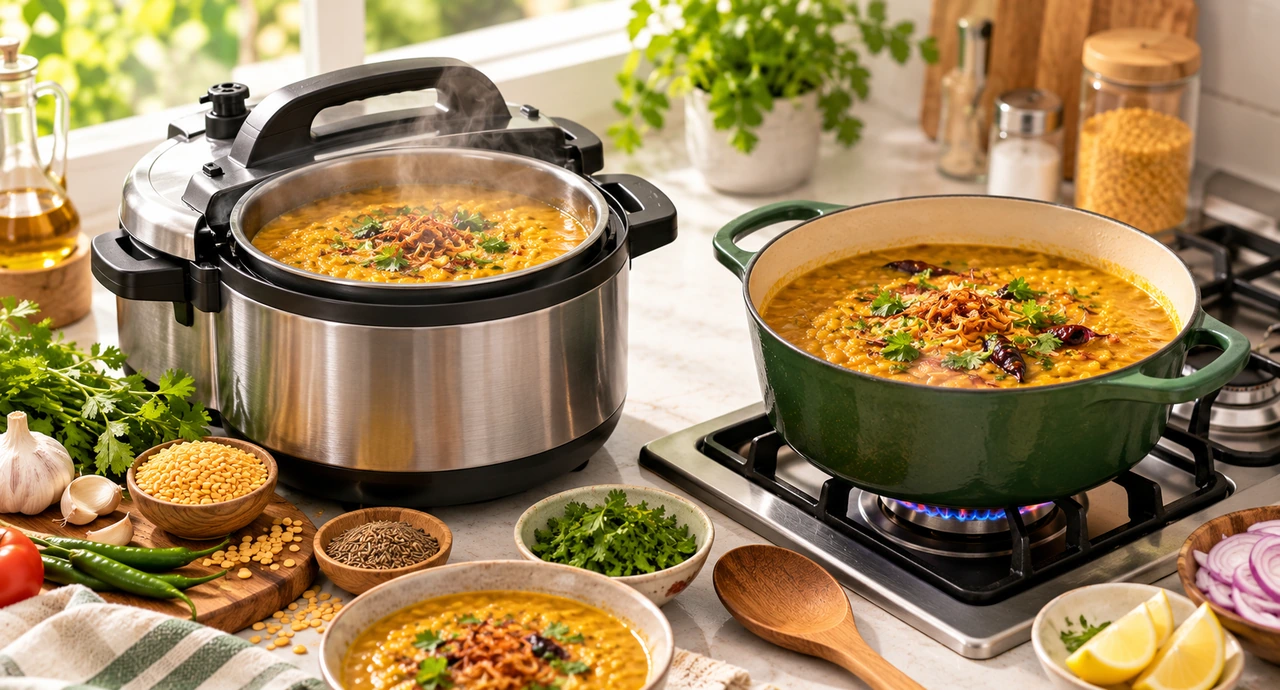
A pressure cooker is usually more convenient for firmer lentils and larger batches, while stovetop cooking offers greater control over texture and consistency. Both methods can produce flavorful Pakistani-style daal when you adjust the water, cooking time, and heat to the lentil variety.
This guide compares the two methods, explains how to prepare common types of daal, and helps you choose a practical approach for your Japanese home kitchen.
Pressure Cooker vs Stovetop Daal: What’s the Difference?
The main difference is how each method uses heat and pressure to soften lentils.
A stovetop saucepan cooks daal in simmering water at normal atmospheric pressure. You can check the texture, stir, and add liquid while cooking.
A pressure cooker seals the cooking chamber and uses elevated pressure to cook at a higher temperature. This can reduce cooking time, particularly for firmer or larger pulses.
| Feature | Pressure Cooker | Stovetop |
|---|---|---|
| Cooking method | Sealed, pressurized cooking | Open or partially covered simmering |
| Best advantage | Faster for many firm pulses | Easy texture adjustments |
| Water adjustment | Before cooking, or after pressure release | During cooking |
| Checking doneness | Requires pressure release before opening | Can be checked periodically |
| Kitchen attention | Less active monitoring with automatic models | Requires occasional checking |
| Suitable for | Firmer lentils, larger batches | Delicate split lentils, small batches |
| Main limitation | Easy to overcook delicate lentils | Some varieties need longer simmering |
Neither method is universally better. Your preferred daal consistency and the appliance you own are more important.
1. Choose the Right Type of Daal Before Cooking
Different lentils absorb water and soften at different rates.
In Pakistani cooking, masoor, moong, mash, and toor daal are common options.
Masoor Daal
Split red masoor daal generally cooks relatively quickly and can develop a soft, creamy texture without pressure cooking.
It is useful for everyday meals when you want a smooth daal that can be served with basmati rice.
Moong Daal
Split yellow moong daal is another convenient option for a relatively quick meal.
It can be cooked until soft while retaining some texture, or simmered longer for a creamier consistency.
Whole green moong beans require more time than split yellow moong.
Toor Daal
Toor daal, also known as split pigeon peas, generally requires longer cooking than split red masoor.
A pressure cooker can be useful when you want to prepare toor daal without a lengthy stovetop simmer.
Mash Daal
Mash daal, made from urad, is available in split and whole forms.
Split mash and whole urad behave differently. Whole urad usually needs substantially more cooking time and may benefit from soaking.
For available varieties, explore the MT Halal Daal Category.
2. How Long Does Daal Take to Cook?
Cooking time depends on whether the lentils are split or whole, their age, whether they have been soaked, and the appliance used.
These are approximate starting ranges, not guaranteed timings.
| Lentil type | Stovetop simmering | Electric pressure cooking at high pressure |
|---|---|---|
| Split red masoor | 15–25 minutes | 3–6 minutes |
| Split yellow moong | 15–25 minutes | 3–6 minutes |
| Toor daal | 30–50 minutes | 8–15 minutes |
| Split mash (urad) | 25–45 minutes | 8–15 minutes |
| Whole green moong | 40–60 minutes or longer | 12–20 minutes |
Pressure-cooker times refer to the period after the appliance reaches cooking pressure, excluding preheating and pressure release.
Actual times vary, and some appliances require a minimum cooking duration or different settings. Always prioritize the manufacturer’s guidance.
Whole beans such as kidney beans are not interchangeable with split daal and need their own safe cooking procedures.
3. How to Cook Daal on the Stovetop
Stovetop cooking is a practical choice when you have a normal saucepan and want to control the thickness of your daal.
Here is a simple method for split yellow moong or split red masoor.
Ingredients
- 1 cup dry split masoor or split moong daal
- Approximately 3 cups water to start
- ¼ teaspoon turmeric, or to taste
- Salt to taste
- Optional ginger, garlic, or chopped tomato
- Additional water as needed
For tadka (tempering):
- 1–2 tablespoons cooking oil or ghee
- ½ teaspoon cumin seeds
- 1–2 garlic cloves, sliced
- Optional dried red chili
These ingredients make approximately 2–4 servings, depending on how the daal is served.
Step 1: Rinse the Daal
Place the dry lentils in a bowl and check for any debris or small stones.
Rinse them several times with clean water and drain.
Step 2: Add Water and Seasonings
Put the lentils in a saucepan with approximately three cups of water.
Add turmeric and any preferred aromatics.
The amount of water can be adjusted depending on whether you prefer thick or runny daal.
Step 3: Bring to a Boil
Heat until the water starts boiling.
Reduce the heat to a gentle simmer.
If foam appears on the surface, lower the heat to prevent overflowing.
Step 4: Simmer Until Tender
Cook until the lentils soften to your preferred consistency, usually around 15–25 minutes for these split varieties.
Stir occasionally and add small quantities of hot water if the mixture becomes too thick before the lentils are cooked.
Step 5: Prepare the Tadka
Heat oil or ghee in a small pan.
Add cumin seeds and sliced garlic. Cook until fragrant, taking care not to burn the garlic.
Add optional dried chili if desired.
Pour the prepared tadka carefully over the cooked daal.
Step 6: Adjust and Serve
Taste the daal and adjust salt and consistency.
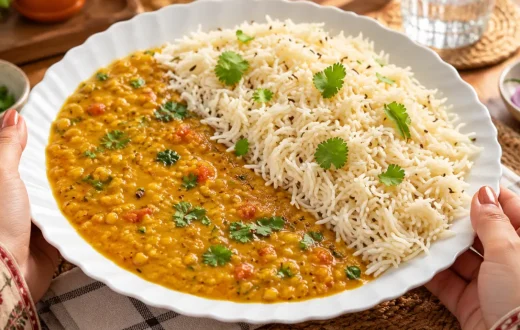
Serve with basmati rice, chapati, or roti.
The key advantage of this method is that you can check the texture throughout cooking.
4. How to Cook Daal in an Electric Pressure Cooker
An electric pressure cooker can simplify meal preparation, especially when your household cooks daal regularly.
This example uses split yellow moong or split red masoor.
Ingredients
- 1 cup rinsed split daal
- Approximately 2½–3 cups water
- Turmeric and salt to taste
- Optional ginger, garlic, and other aromatics
Water quantities differ across pressure-cooker models, so confirm your appliance’s minimum liquid requirement and recommended recipe.
Step 1: Rinse and Drain
Check the lentils for debris, rinse them, and drain.
Step 2: Add Ingredients
Place the daal, water, and seasonings in the pressure-cooker pot.
Do not exceed the manufacturer’s maximum fill limit for foods that expand or foam, including pulses and lentils.
Step 3: Select the Cooking Program
For split masoor or moong, a starting point in some electric multicookers is approximately 3–6 minutes at high pressure.
This is not a universal setting. Some models and recipes use different times or pressure levels.
Step 4: Let Pressure Release Safely
Follow the manufacturer’s instructions for pressure release.
Foamy or starchy foods can sometimes release hot liquid through the vent. Natural pressure release is often preferable unless your appliance instructions explicitly recommend another method for that recipe.
Never force the lid open.
Step 5: Check the Texture
After pressure has fully released, open the cooker according to the manual.
Stir the daal. If it is too thick, add a little hot water.
If the lentils are still too firm, use the appliance’s appropriate additional cooking mode.
Step 6: Add Tadka
Prepare the tempering separately in a small pan or use a compatible sauté function.
Add it to the cooked daal and serve.
5. Which Method Produces Better Daal Texture?
The best method depends on how you prefer your lentils.
For Smooth, Creamy Daal
Both methods can work.
A pressure cooker can soften lentils quickly and produce a creamy consistency with relatively little effort.
However, delicate split lentils may become overly soft if cooked under pressure for too long.
For Daal with Visible Lentil Pieces
Stovetop cooking generally gives you more control.
You can check the texture during simmering and stop cooking when the grains are tender but still recognizable.
For Thick Daal
Use an appropriate amount of water and allow the daal to reduce until it reaches the desired consistency.
A pressure cooker may require an additional uncovered simmer after cooking if too much liquid remains.
For Thin, Pourable Daal
Add hot water gradually after the lentils are fully cooked.
Avoid adding a large quantity at once, as this can dilute the flavor.
6. Which Method Is Better for a Small Japanese Kitchen?
Many apartments in Japan have compact cooking areas, making appliance choice an important practical consideration.
Stovetop Advantages
A regular saucepan is useful because it:
- Requires no additional countertop appliance
- Works on a compatible gas or induction burner
- Allows easy visual monitoring
- Is suitable for small portions
- Is easy to clean and store
If you use an induction cooktop, make sure your saucepan is induction-compatible.
Electric Pressure Cooker Advantages
A pressure cooker may be useful if you:
- Prepare firm lentils or pulses regularly
- Cook larger batches
- Prefer preset cooking programs
- Want to reduce active cooking supervision
- Have enough space to store the appliance
However, even an automatic pressure cooker needs appropriate preparation, careful filling, and safe pressure release.
Which One Should You Choose?
If you mostly prepare quick-cooking split masoor or moong daal, a saucepan may be all you need.
If you often cook toor daal, whole moong, or other firm pulses, a pressure cooker may offer a meaningful time advantage.
7. Common Daal Cooking Problems and Fixes
Even with the right appliance, daal sometimes turns out differently than expected.
| Problem | Possible reason | Practical fix |
|---|---|---|
| Daal is too watery | Too much liquid | Simmer uncovered to reduce |
| Daal is too thick | Too little liquid or excessive reduction | Add hot water gradually |
| Lentils remain firm | Insufficient cooking or older lentils | Continue cooking appropriately |
| Daal sticks to the pot | Low water or excessive heat | Lower heat; stir and add water if needed |
| Pressure cooker shows a burn warning | Thick mixture sticking to the bottom | Stop safely, release pressure as instructed, then inspect |
| Daal becomes mushy | Overcooking | Reduce cooking time next time |
| Tadka tastes bitter | Garlic or spices burned | Make fresh tempering at lower heat |
For pressure cookers, always let the appliance reach a safe, fully depressurized state before opening or troubleshooting the contents.
8. Does Soaking Daal Make a Difference?
Soaking can reduce cooking time for certain pulses, but it is not equally necessary for every variety.
Split masoor and split moong: Often cooked without advance soaking.
Toor daal: Optional soaking may help shorten cooking.
Whole moong and whole urad: Soaking can be useful because these pulses take longer to soften.
If you soak lentils, the appropriate cooking time and water quantity may change.
Do not assume that soaked and unsoaked lentils require identical pressure-cooker settings.
9. Can You Add Tadka Before Pressure Cooking?
You can cook some aromatics and spices with daal, but traditional tadka is often added near the end.
Adding a fresh tempering of cumin, garlic, and chili after cooking provides a noticeable aroma and flavor.
If your electric pressure cooker has a sauté function, you may be able to prepare part of the seasoning in the same pot.
However, avoid letting thick onion or tomato mixtures stick to the base before pressure cooking, as this may trigger a burn warning.
For beginners, preparing tadka separately is often simpler.
10. How Much Daal Should You Cook for Two or Four People?
Dry lentils expand and soften during cooking, so a small uncooked amount can produce multiple servings.
| Household | Approximate dry daal quantity | Suitable use |
|---|---|---|
| 1 person | ¼–⅓ cup | Small meal portion |
| 2 people | ½–⅔ cup | Daal with rice or roti |
| 3 people | ¾–1 cup | Shared everyday meal |
| 4 people | 1–1⅓ cups | Family-style serving |
These are flexible planning estimates, not dietary prescriptions.
If daal is the main dish, you may prefer larger portions. If it accompanies several other dishes, less may be sufficient.
11. Safety Tips for Pressure-Cooking Lentils
Pressure cookers require special care because daal can foam and expand.
Before use:
- Read the instructions for your specific pressure-cooker model.
- Check the sealing ring and steam-release valve.
- Follow the maximum fill line for pulses and foamy foods, which may be lower than the general fill limit.
- Add the minimum liquid required by your appliance.
- Never open the lid while the cooker is pressurized.
- Use a suitable pressure-release method for starchy foods.
- Never leave a stovetop pressure cooker unattended.
For electric multicookers, use only manufacturer-supported cooking programs and settings.
These precautions are particularly important when using an unfamiliar pressure cooker in a Japanese home.
12. Buying Daal Ingredients in Japan
Cooking Pakistani-style daal at home becomes easier when you have the right lentil variety and seasonings.
MT Halal Mart carries South Asian groceries through its online store with home delivery across Japan, alongside a physical grocery store in Yotsukaido, Chiba.
Its Daal category includes products such as:
- Daal Masoor Split
- Daal Moong
- Toor Daal
- Daal Mash
- Daal Moong Chilka
- Whole Moong
Product availability and pack sizes may change.
You can browse the MT Halal Daal Category to see current listings.
For seasoning, explore the MT Halal Masala & Spices Category for suitable cumin, turmeric, coriander, chili, and other cooking ingredients.
If you’re planning to serve daal with rice, you can also explore the MT Halal Rice Category.
For a general guide to stocking cooking staples, see Top 10 Essential Halal Grocery Items Every Kitchen Needs.
Frequently Asked Questions
Is a pressure cooker better than a saucepan for cooking daal?
A pressure cooker is often faster for firm lentils and whole pulses. A saucepan offers more control over texture and is convenient for quick-cooking split lentils.
How long does masoor daal take on the stovetop?
Split red masoor daal often becomes tender in approximately 15–25 minutes of gentle simmering, depending on the variety and desired consistency.
Can I cook moong daal without soaking?
Yes. Split yellow moong daal is commonly cooked without soaking. Whole green moong usually benefits more from soaking or longer cooking.
Why does daal become mushy in a pressure cooker?
Delicate lentils can become mushy if the pressure-cooking period is too long. Try a shorter manufacturer-supported program and adjust based on the result.
Can I use an induction stove to cook daal in Japan?
Yes. Use an induction-compatible saucepan or pressure cooker approved for your cooktop. Check both appliance instructions.
How much water should I add to daal?
The amount depends on the type of lentil, cooking method, and desired consistency. For stovetop split masoor or moong, approximately three cups of water per cup of dry daal is one practical starting point. Pressure-cooker instructions may differ.
Where can I buy Pakistani daal in Japan?
MT Halal Mart offers products such as masoor, moong, toor, and mash daal through its online grocery store and physical retail location in Chiba.
Final Thoughts: Choose the Cooking Method That Suits Your Kitchen
Pressure cooking and stovetop simmering can both produce flavorful, comforting daal.
A pressure cooker is useful when you want to soften firmer lentils more efficiently. Stovetop cooking is a practical option when you prefer to monitor the texture or prepare smaller portions.
The right method depends on the lentil variety, your preferred consistency, available kitchen equipment, and cooking routine.
If you live in Japan and want to prepare familiar Pakistani meals, begin with a lentil variety you enjoy, follow suitable cooking instructions, and adjust the method based on your results.
Explore the MT Halal Daal Category for ingredients to prepare your next homemade daal meal.