Cooking Basmati Rice in a Japanese Rice Cooker: Common Problems and Fixes
You buy a bag of aromatic basmati rice, rinse the grains, add water to your Japanese rice cooker, and press Start. When the cooking cycle finishes, however, the rice is sticky, too soft, dry in the center, or stuck together in clumps.
If you’ve experienced this while living in Japan, you’re not alone. Many Japanese rice cookers are designed primarily around short- and medium-grain Japanese rice, while basmati is a long-grain variety with different cooking characteristics.
The good news is that you can cook fluffy basmati rice in many Japanese electric rice cookers. The key is to use the appropriate setting, measure water accurately, understand the type of basmati you’re cooking, and make small adjustments based on your results.
For a suitable Japanese rice cooker, start with the manufacturer’s basmati instructions. If your model has no specific guidance, a measured water-to-rice ratio around 1.5:1 can be a useful initial test for ordinary white basmati, but it is not universal. Your rice variety, soaking method, and appliance model may require adjustments.
This guide explains how to cook basmati rice in a Japanese rice cooker and fix the most common problems.
Can You Cook Basmati Rice in a Japanese Rice Cooker?
Yes, many Japanese electric rice cookers can cook basmati rice, including models from brands such as Zojirushi, Tiger, and Panasonic.
However, cooking modes and water requirements vary between models.
Japanese rice cookers are commonly optimized for short-grain white rice, which has a softer and stickier texture than properly cooked basmati.
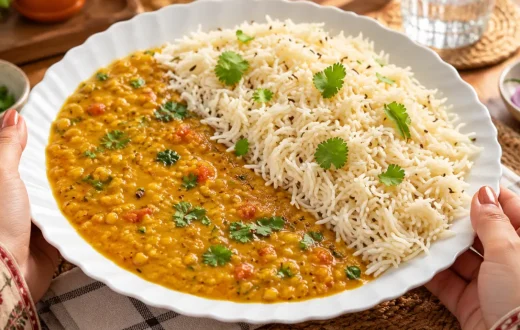
Basmati is usually preferred for its long, separate grains and aromatic flavor, making it suitable for Pakistani and Indian meals such as daal chawal, chicken curry, pulao, and other rice dishes.
A successful result depends on three important factors:
- The water quantity matches the rice and cooking method.
- The cooker setting suits long-grain rice.
- The cooked rice is rested and fluffed carefully.
You do not necessarily need a special basmati rice cooker, but you should check whether your appliance supports long-grain rice.
1. Understand Your Japanese Rice Cooker Settings
Before adding rice and water, check the available cooking modes.
Many Japanese rice cookers include labels such as:
| Japanese setting | English meaning | General purpose |
|---|---|---|
| 白米 (Hakumai) | White Rice | Standard white rice |
| 早炊き (Hayadaki) | Quick Cook | Faster rice cooking |
| 玄米 (Genmai) | Brown Rice | Brown rice |
| 炊き込み (Takikomi) | Mixed Rice | Seasoned or mixed rice |
| おかゆ (Okayu) | Rice Porridge | Soft, water-rich rice |
| 長粒米 (Chōryūmai) | Long-Grain Rice | Long-grain varieties, where supported |
Not all models offer the same settings.
Which Setting Is Best for Basmati Rice?
If your cooker includes a dedicated Basmati or Long-Grain Rice mode, follow its instructions.
Otherwise, refer to your specific model’s manual.
Some Zojirushi models recommend the White Rice setting for basmati, while certain other models recommend a different mode. This means no single setting is guaranteed to work across all Japanese rice cookers.
Avoid automatically choosing Brown Rice or Porridge mode, as these may use cooking conditions unsuitable for ordinary white basmati.
If your cooker is a simple one-switch model, confirm that the manufacturer permits cooking long-grain rice and follow the recommended quantity limits.
2. How Much Water Does Basmati Rice Need in a Rice Cooker?
Water measurement is one of the biggest reasons basmati rice turns out too wet or too dry.
Some manufacturer-tested Japanese rice cooker instructions recommend 1½ measures of water for every 1 measure of white basmati rice.
However, this ratio is a reference point, not an instruction for every rice cooker or variety.
Example Water Ratio for White Basmati Rice
| Uncooked basmati rice | Water at a 1:1.5 starting ratio |
|---|---|
| 1 cup | 1½ cups |
| 1½ cups | 2¼ cups |
| 2 cups | 3 cups |
Use the same measuring cup for both rice and water.
A Japanese rice cooker cup usually holds approximately 180ml, while a standard US kitchen cup holds approximately 240ml. Mixing these cup sizes can change your measurements unexpectedly.
Why the Inner Pot Water Lines May Not Work
The lines marked inside a Japanese rice cooker are often calibrated for specific cooking modes and rice types.
For example, the White Rice line for two Japanese cooker cups of rice is not automatically the correct water level for two cups of basmati.
If your manufacturer supplies separate basmati instructions, use those instead of assuming the standard water lines apply.
Does Soaking Change the Water Requirement?
It can.
Soaked rice has already absorbed some water before cooking. Depending on the brand and appliance, you may need less additional cooking water than you would for unsoaked rice.
Do not apply a fixed unsoaked-rice ratio to every soaked-rice batch.
For consistent results, decide whether you’re cooking soaked or unsoaked basmati, then follow a method appropriate to that condition.
3. How to Cook White Basmati Rice in a Japanese Rice Cooker
This method is intended as a practical starting point for ordinary white basmati rice in a rice cooker that supports this grain.
Before beginning: Check your rice packaging and your appliance manual. If either provides specific instructions, prioritize those.
Ingredients and Equipment
- 1 Japanese rice cooker cup of ordinary white basmati rice
- Water according to your cooker’s recommended basmati method
- Optional salt
- A suitable Japanese electric rice cooker
- A fine-mesh strainer or rinsing bowl
- A rice paddle
Step 1: Measure the Rice
Measure the dry rice using the cup supplied with your cooker.
For a first test, prepare a small batch that meets the minimum cooking quantity specified for your model.
Using the same quantity in later attempts makes it easier to compare results.
Step 2: Rinse Gently
Place the rice in a bowl and add cool water.
Gently move the grains with your hand, then drain the cloudy water.
Repeat a few times until the water becomes noticeably clearer.
Avoid scrubbing the grains aggressively because long basmati grains can break.
Rinsing removes loose surface starch and helps reduce excessive stickiness.
Step 3: Soak Only If Appropriate
Some basmati rice products benefit from soaking, particularly for certain traditional cooking methods.
However, soaking is not mandatory for every rice cooker recipe.
If the manufacturer recommends cooking the rice without soaking, follow that guidance.
If your chosen rice instructions recommend soaking, drain the rice well and use the corresponding water quantity.
Step 4: Add the Correct Water
Transfer the drained rice to the cooking pot.
Measure the water using the instructions appropriate to your cooker and rice type.
Distribute the rice evenly across the bottom of the pot.
For a model where the manufacturer recommends the 1:1.5 ratio for white basmati, one cup of dry rice would be paired with one and a half cups of water.
Do not exceed the cooker’s stated capacity for basmati or long-grain rice.
Step 5: Select the Correct Mode
Choose the manufacturer’s recommended mode for basmati.
Depending on your model, this might be Long-Grain, White Rice, or another supported setting.
Close the lid and start the cooking cycle.
Avoid opening the lid unnecessarily during cooking.
Step 6: Rest and Fluff
Once cooking finishes, follow your model’s resting guidance.
If no specific instructions are provided, a short covered rest of around 5–10 minutes may help remaining moisture distribute through the rice. Avoid an additional rest if the manufacturer explicitly advises immediate fluffing.
Use a rice paddle or fork to gently separate the grains.
Lift and turn the rice rather than vigorously stirring or pressing it.
Serve with your preferred curry, daal, or other dish.
4. Problem: Basmati Rice Turns Sticky or Clumpy
Sticky basmati rice is a common frustration, especially when you’re expecting separate, fluffy grains.
Possible Causes
- Excess water
- Insufficient rinsing
- A cooking mode unsuitable for the rice
- Over-soaking combined with too much cooking water
- Stirring or crushing the rice after cooking
How to Fix It
Reduce the water slightly on your next attempt. Keep the rice quantity, variety, and setting unchanged so you can evaluate the difference.
Rinse gently before cooking to remove loose starch.
Use a manufacturer-approved mode rather than selecting a longer program at random.
After cooking, fluff carefully to avoid breaking the grains.
Can You Fix Already-Sticky Rice?
If the rice is fully cooked but only slightly clumped, gently separate it with a rice paddle.
If it’s very wet, transferring it to a wide serving dish may help excess steam escape.
However, rice that has become genuinely mushy cannot be restored to firm, separate grains simply by stirring or drying.
It may be better suited to another appropriate rice dish.
5. Problem: Basmati Rice Becomes Mushy or Too Soft
Mushy rice usually indicates excess moisture, excessive cooking, or both.
Possible Causes
- Too much water
- Using a ratio intended for another rice variety
- Soaking without adjusting the water
- Using an unsuitable prolonged cooking mode
- Leaving cooked rice on Keep Warm for too long
How to Prevent Mushy Rice
Measure the water precisely rather than estimating by eye.
Confirm the variety of rice you’re using. Standard white basmati, parboiled basmati, and other rice products do not always cook identically.
Avoid adding extra water simply because the grains are long.
If the rice repeatedly turns mushy, make a small reduction in water for the next batch and record the result.
Do not make several changes at the same time, or it will be difficult to identify what helped.
6. Problem: Basmati Rice Is Hard or Undercooked
Sometimes the rice looks cooked from the outside but remains firm or chalky in the center.
This can happen when the grains have not absorbed enough water or the selected program is unsuitable.
Possible Causes
- Insufficient cooking water
- The wrong cooking mode
- Using parboiled or aged rice with unsuitable instructions
- Cooking less than the appliance’s minimum recommended amount
- Unevenly distributed rice and water
How to Fix Hard Rice
If the cooking cycle has finished and some grains are still hard, check the manufacturer’s instructions for correcting undercooked rice.
Where permitted, adding a small amount of water and using an appropriate additional cooking or steaming cycle may help.
Do not repeatedly restart the entire cooking cycle without guidance, as this can cause scorching or damage the result.
For future batches, increase water slightly or switch to the correct model-specific setting.
What If the Rice Is Hard on Top but Soft at the Bottom?
This often points to uneven water distribution or an unsuitable batch size.
Make sure the inner pot is seated correctly and that the rice is evenly spread before cooking.
Check the cooker’s minimum and maximum capacity for the selected rice type.
7. Problem: Rice Sticks to the Bottom of the Cooker
A thin layer of rice can sometimes stick to the bottom of the pot.
Occasional sticking does not necessarily mean the rice itself is poor quality.
Common Reasons
- Too little water
- An unsuitable cooking cycle
- Leaving rice on Keep Warm for an extended period
- A damaged inner-pot coating
- Seasonings or cooking additions settling at the bottom
What to Do
Check that the inner pot is clean and undamaged.
Use the recommended water quantity and cooking mode.
Avoid scraping the nonstick surface with metal utensils.
If sticking is excessive or happens with every type of rice, inspect the appliance and consult its operating instructions.
8. Problem: Rice Comes Out Wet at the Bottom
If the top layer looks acceptable but the bottom is noticeably wet, the cooking process may not have distributed or evaporated moisture as expected.
This may happen because of:
- Excess water
- An overly large batch
- Uneven rice distribution
- An interrupted cooking cycle
- A mismatch between the setting and rice type
First, check whether the rice is thoroughly cooked.
If it’s cooked but too wet, gently fluff it to release steam.
For future batches, adjust the water measurement in small steps while keeping the same setting.
If the appliance is repeatedly leaving uncooked water behind, check the manual and the cooker itself rather than assuming the issue is always the rice.
9. Problem: Basmati Rice Loses Its Aroma
One reason people enjoy basmati rice is its natural fragrance.
However, the finished aroma can vary depending on the grain variety, packaging, freshness, storage, and cooking method.
How to Improve the Result
- Choose a suitable aromatic basmati variety.
- Store uncooked rice according to its packaging instructions.
- Avoid unnecessary extended warming after cooking.
- Use clean water and a clean rice cooker.
- Serve the rice reasonably soon after cooking.
Adding whole spices such as cardamom, cinnamon, or cloves may create a different aromatic rice dish, but it is optional and should only be done if your rice cooker permits those additions.
Natural basmati aroma does not require added spices.
10. Quick Troubleshooting Chart
Use this reference when your rice does not turn out as expected.
| Problem | Likely cause | Adjustment for next time |
|---|---|---|
| Sticky grains | Too much water or loose surface starch | Rinse properly; reduce water slightly |
| Mushy texture | Excess water or unsuitable cooking cycle | Check ratio and setting |
| Hard center | Insufficient water or unsuitable program | Increase water slightly; check mode |
| Dry bottom layer | Too little water or excessive warming | Check measurement and Keep Warm duration |
| Wet bottom layer | Excess water or uneven cooking | Review water quantity and pot setup |
| Broken grains | Aggressive rinsing or stirring | Handle gently |
| Weak aroma | Rice variety, storage or prolonged warming | Review product type and handling |
| Uneven doneness | Poor water distribution or unsuitable batch size | Level rice and check cooker capacity |
Important: Change one variable at a time. For example, if you reduce water, keep the rice amount, brand, soaking method, and cooking mode the same for the next test.
This makes troubleshooting much more reliable.
11. Does the Type of Basmati Rice Matter?
Yes. Different basmati products may cook differently even when prepared in the same appliance.
Ordinary White Basmati
Generally suitable for everyday plain rice, daal chawal, and curry accompaniments.
It may work well in a compatible electric rice cooker when you use the recommended water and setting.
Aged Basmati
Aged varieties may have different moisture characteristics and may require adjustments.
Don’t assume that every aged basmati product needs the same soaking time or water ratio.
Sella or Parboiled Basmati
Sella rice has undergone a parboiling process before milling.
Its preparation requirements can differ from ordinary white basmati, so avoid using a white-basmati cooker recipe without checking the package instructions.
If you want to understand the differences before buying, read Different Types of Basmati Rice Available in Japan.
12. Japanese Rice Cooker vs Traditional Stovetop Cooking
Both methods can produce good basmati rice, but they give you different levels of control.
| Feature | Japanese Rice Cooker | Stovetop Pot |
|---|---|---|
| Temperature control | Mostly automatic | Manually adjusted |
| Cooking supervision | Usually limited | Requires more attention |
| Water measurement | Must suit appliance and rice | Adjusted for the chosen stovetop method |
| Flexibility | Depends on available modes | More control over simmering and draining |
| Convenience | Useful for regular meals | Useful for varied cooking techniques |
For plain basmati rice served with curry or daal, a suitable rice cooker can be convenient.
For biryani recipes requiring partially boiled rice before layering, a stovetop pot may offer better control over the exact degree of cooking.
Traditional biryani is a separate preparation method. For a closer look at rice selection for that dish, read Why Basmati Rice Is Ideal for Traditional Biryani.
13. How to Get Consistent Results Every Time
Once you’ve found a method that works, record the details.
A simple note might look like this:
| Detail | Example |
|---|---|
| Rice type | Ordinary white basmati |
| Dry rice quantity | 2 cooker cups |
| Water quantity | 3 of the same cups |
| Soaking | No additional soak |
| Cooking mode | Manufacturer-recommended White Rice |
| Result | Fluffy, separate grains |
This is an illustrative test record, not a universal setting recommendation.
For your next batch, reproduce the same steps.
If you change the rice brand, grain variety, appliance, or soaking method, the results may also change.
This small habit is especially useful for Pakistani and Indian households preparing rice regularly in Japan.
14. Where to Buy Basmati Rice in Japan
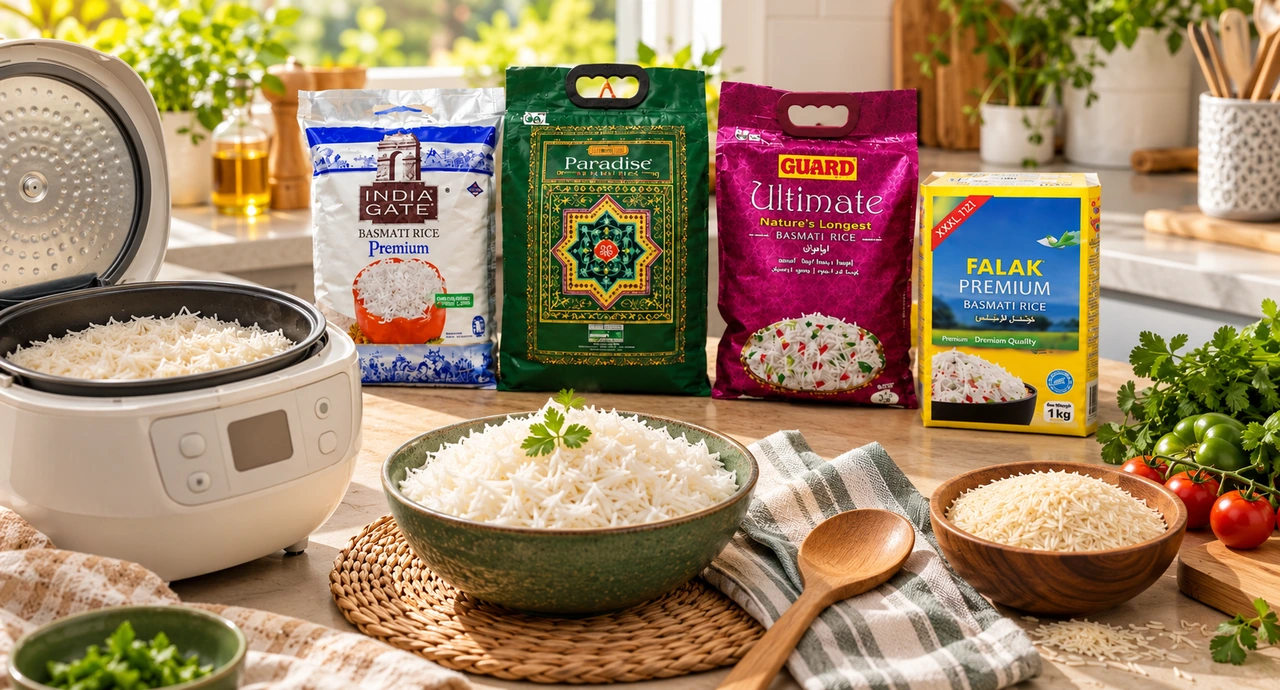
MT Halal Mart offers basmati rice and other South Asian grocery products through its online store with home delivery across Japan and its physical grocery store in Yotsukaido, Chiba.
Its rice selection has included products such as:
- Shahi Qilla Ultimate Basmati Rice 5kg
- Fortune Everyday Basmati Rice 5kg
- Guard Supreme Basmati Rice 5kg
- Guard Paradise Basmati Rice 5kg
- Shahi Sella Rice
The available brands, stock status, prices, and package sizes may change.
Before purchasing, check whether you’re buying ordinary white basmati, aged rice, or parboiled Sella rice, because your cooker instructions may differ.
Explore the MT Halal Rice Collection to review current products.
What to Check Before Ordering Rice
Look for:
- Rice type and variety
- Product brand
- Package weight
- Cooking instructions
- Current stock availability
- Storage recommendations
- Any brand-specific water or soaking guidance
These details can help you choose a product that suits your home cooking needs and rice cooker.
Frequently Asked Questions
Can a Japanese rice cooker cook Pakistani basmati rice?
Yes, many Japanese rice cookers can cook basmati rice. Use a setting and water quantity appropriate to your model and rice variety.
What is the best water ratio for basmati rice in a Japanese rice cooker?
Some manufacturer-tested models recommend 1½ cups of water per cup of white basmati rice, measured using the same cup. However, the correct ratio varies with the cooker, rice type, and whether the rice is soaked.
Should I soak basmati rice before using a Japanese rice cooker?
Not always. Some methods use unsoaked rice. If you soak it, follow instructions that account for the water the grains have already absorbed.
Why does basmati rice become sticky in my rice cooker?
Possible reasons include too much water, insufficient rinsing, an unsuitable cooking mode, or overcooking. Start by checking the water measurement and appliance instructions.
Can I use the regular White Rice mode for basmati?
Some Japanese rice cooker models support basmati using White Rice mode, while others recommend a different program. Check your model’s instructions before selecting a setting.
Is Sella rice cooked the same way as ordinary white basmati?
Not necessarily. Sella is parboiled rice and may have different water and cooking requirements. Follow the specific product and appliance guidance.
Why is my basmati rice dry even when I follow the water line?
The pot’s water line may be designed for Japanese short-grain rice rather than basmati. Confirm the instructions for your rice cooker model and long-grain rice.
Where can I buy basmati rice in Japan?
MT Halal Mart sells basmati and other rice products online with delivery across Japan. Customers can also visit its grocery store in Yotsukaido, Chiba, subject to product availability.
Final Thoughts: Fluffy Basmati Rice Starts with the Right Method
Cooking basmati rice in a Japanese rice cooker becomes easier when you understand the relationship between the rice variety, water quantity, and appliance settings.
If your rice turns sticky, dry, mushy, or unevenly cooked, don’t immediately assume the rice is poor quality.
First, check your cooker’s instructions, measure carefully, rinse gently, and change only one part of your method at a time.
With a consistent approach, you can prepare fluffy basmati rice for everyday Pakistani and Indian home cooking while living in Japan.
For your next batch, browse the MT Halal Rice Collection and choose a suitable basmati rice variety for your kitchen.