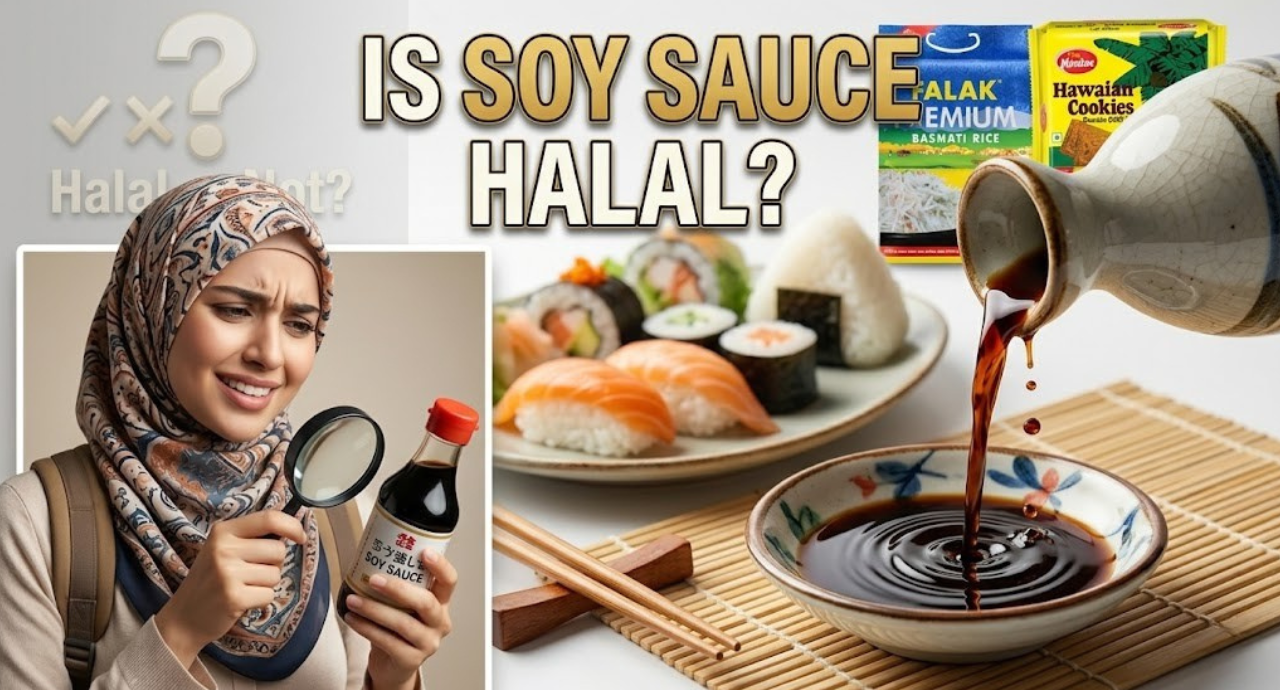
If you’re living in or traveling to Japan, you’ve probably asked yourself: “Is soy sauce halal?” It’s one of the most common concerns for Muslims because soy sauce is used in almost every Japanese dish.
Understanding whether soy sauce is halal requires a closer look at its ingredients and how it’s made. In this guide, we’ll break down everything you need to know about soy sauce, alcohol content, and hidden ingredients in Japanese food.
What Is Soy Sauce Made Of?
Traditional soy sauce is made from:
- Soybeans
- Wheat
- Salt
- Water
These ingredients are fermented over time to create the rich flavor we know. However, the fermentation process naturally produces a small amount of alcohol.
Does Soy Sauce Contain Alcohol?
Yes, most traditional soy sauces contain a small percentage of alcohol due to fermentation. In some cases, additional alcohol may also be added as a preservative.
This is where the concern comes in for Muslims asking: is soy sauce halal or not?
Is Soy Sauce Halal or Haram?
The answer depends on the type of soy sauce:
- Naturally fermented soy sauce:
Many scholars consider it permissible if the alcohol is very minimal and not intoxicating. - Soy sauce with added alcohol:
This may be considered non-halal, especially if alcohol is intentionally added. - Halal-certified soy sauce:
This is the safest option, as it is verified to meet halal standards.
Hidden Ingredients in Japanese Food
Soy sauce is just one example. Many Japanese foods may contain hidden non-halal ingredients such as:
- Mirin (sweet rice wine)
- Cooking sake
- Gelatin
- Animal-based additives
These ingredients are commonly used in sauces, marinades, and even snacks.
How to Identify Halal Soy Sauce in Japan
Here are some practical tips:
- Look for halal certification labels
- Check ingredient lists for alcohol or additives
- Choose alcohol-free soy sauce brands
- Buy from trusted halal stores like MT Halal
Best Halal Alternatives to Soy Sauce
If you want to stay completely safe, you can use:
- Halal-certified soy sauce
- Tamari (check certification)
- Coconut aminos (alcohol-free alternative)
Tips for Muslims in Japan
- Always double-check labels
- Use halal apps or guides
- When dining out, ask about ingredients
- Prefer vegetarian dishes if unsure
Conclusion
So, is soy sauce halal? The answer isn’t always simple. While some types may be permissible due to natural fermentation, others with added alcohol should be avoided.
To stay on the safe side, always choose halal-certified soy sauce or verified alternatives. With awareness and careful choices, you can enjoy Japanese food while staying true to your dietary beliefs.